

U Visa to Green Card Requirements and When to Apply
Table of contents
Moving from U nonimmigrant status to a green card requires more than waiting three years. A principal or derivative U nonimmigrant must meet the physical presence rule, hold valid U status when filing Form I-485, remain physically present through the decision, and merit favorable discretion.
The three-year period begins with admission or the grant of U nonimmigrant status, not with a pending Form I-918, a bona fide determination, or waiting-list placement. Travel, assistance requests, and the filing date can all affect the analysis.
When can the U visa to green card process begin?
A U-1, U-2, U-3, U-4, or U-5 nonimmigrant may file after accumulating at least three years of continuous physical presence following admission in U status. The person must have valid U status when filing and continue to be physically present in the United States until USCIS decides the application.
Obtaining U status is the earlier stage. The separate U visa eligibility analysis addresses the qualifying activity, abuse, information, helpfulness, jurisdiction, and admissibility issues required for the initial petition. Time spent waiting for that decision does not count as time admitted in U status.
The rule is written as at least three years, not a universal 1,095-day shortcut. Admission records, leap years, departures, returns, and the person’s actual grant date all matter. Filing before the requirement is met can result in denial because the applicant cannot establish eligibility at filing.
There is also no universal one-year filing window. The controlling questions are whether U status remains valid when Form I-485 is properly filed and whether every adjustment requirement is met. A proper filing while that status is valid can extend U status during the pending application.
What are the U visa to green card requirements?
U-based adjustment has cumulative requirements. The USCIS official adjustment checklist provides the current agency framework, but the supporting documents must establish how each requirement applies to the individual applicant.
- File Form I-485 correctly. The applicant uses the adjustment application and follows the edition, signature, evidence, and filing instructions in effect at the time of submission.
- Have lawful admission in U status. The applicant must have been admitted as a U-1, U-2, U-3, U-4, or U-5 nonimmigrant.
- Hold valid U status at filing. Waiting-list placement, a bona fide determination, or a pending U petition is not the same as admission in U status.
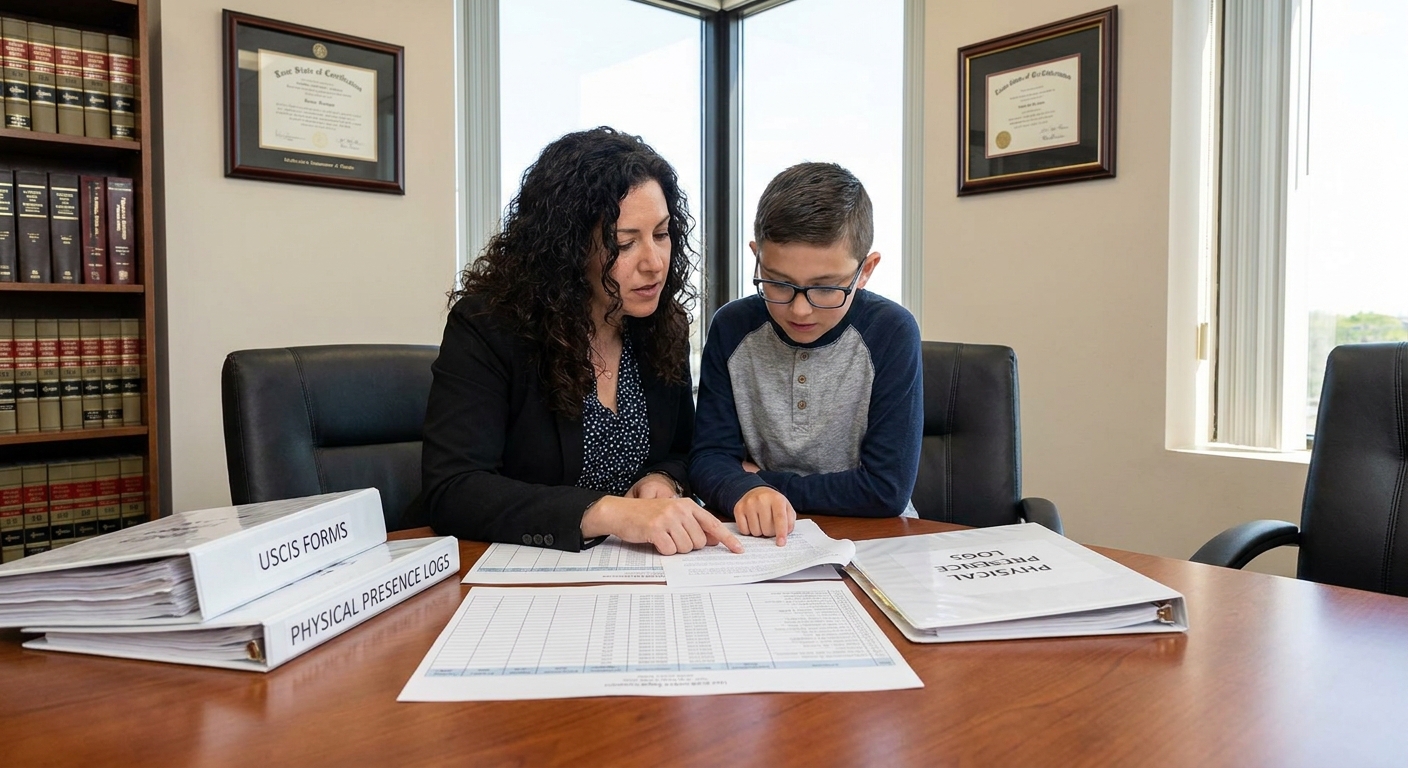
- Meet continuous physical presence. At least three years must have accumulated by filing, and physical presence must continue through the date USCIS decides Form I-485.
- Satisfy the assistance rule. The applicant must not have unreasonably refused a reasonable request for help in an investigation or prosecution after being granted U status.
- Avoid the specified security bar. An applicant cannot be inadmissible under INA 212(a)(3)(E).
- Justify continued presence. The record must support humanitarian grounds, family unity, or public interest.
- Merit favorable discretion. USCIS weighs the complete record, including favorable and adverse factors, before deciding whether to approve adjustment.
Employment, tax payment, and community involvement may be relevant facts in some records, but they are not universal, stand-alone eligibility requirements. The application must address the requirements USCIS actually applies and any case-specific factors that affect discretion.
How do travel and the 90-day and 180-day rules work?
Travel during the U visa to green card process can affect continuous physical presence. Under INA 245(m)(2), one absence longer than 90 days, or combined absences exceeding 180 days, is treated as a failure to maintain continuous physical presence unless the absence was for investigative or prosecutorial assistance or was otherwise certified as justified.
Under the application evidence rule, 8 CFR 245.24(d)(5)(iii) calls for agency certification for one absence over 90 days or combined absences totaling 180 days or more. Exactly 180 aggregate days therefore triggers certification even though the statutory continuous-presence rule uses more than 180 days.
For this purpose, the certifying agency is the agency that signed the original Form I-918 Supplement B supporting U status.

The certification must state that the absences were necessary to assist in the investigation or prosecution, or were otherwise justified. Without the required certification, an applicant whose travel meets either evidence trigger may be unable to establish continuous physical presence.
| Travel situation | What to review | Possible evidence |
|---|---|---|
| One trip of 90 days or less and total travel under 180 days | Exact dates and presence through the USCIS decision | Passports, I-94 records, and travel history |
| One trip longer than 90 days | Whether an agency certification can address the absence | Certification and travel records |
| Combined trips totaling 180 days or more | Whether an agency certification can address the total absences | Certification and a complete chronology |
| Travel after filing Form I-485 | Possible abandonment and continuing physical presence | Advance parole and case-specific travel records |
Travel after filing raises a separate issue. Leaving the United States without advance parole generally abandons a pending Form I-485. Advance parole addresses that abandonment rule, but it does not by itself prove continuous physical presence or replace certification required for one absence over 90 days or aggregate absences totaling 180 days or more.
For an applicant in exclusion, deportation, or removal proceedings, the U-adjustment regulation treats departure as abandonment of Form I-485 even if the person obtained advance parole. Travel therefore requires a review of both the adjustment application and any proceedings.
Evidence for a U visa to green card application
The evidence should establish U admission, physical presence, continued assistance when applicable, and the reasons USCIS should grant adjustment. The current Form I-485 instructions control the required edition, filing materials, and supporting documents.
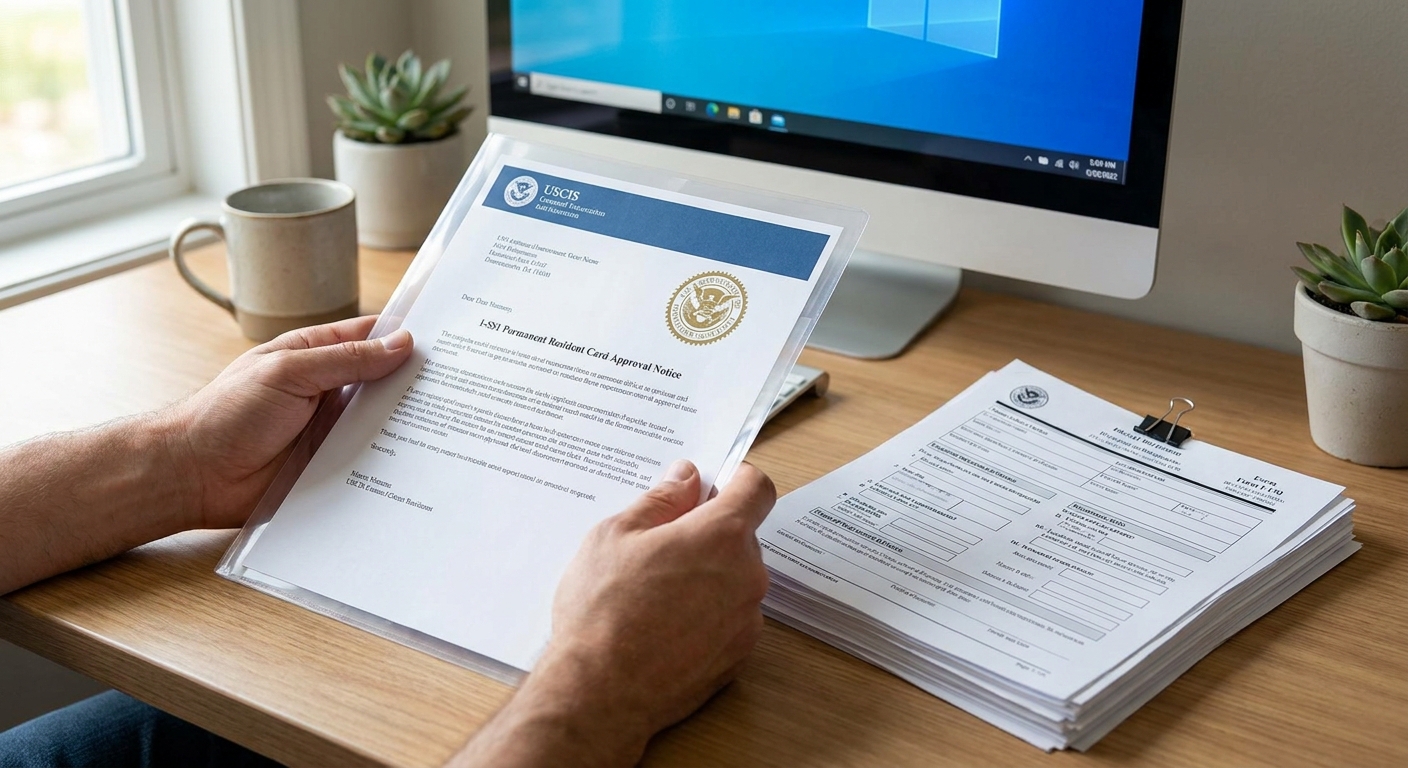
- Proof of U status. Include the U approval notice and Form I-94 or other records showing admission or the grant of U nonimmigrant status.
- Passport records. Provide copies of every page from each passport valid during the required presence period, or a valid explanation with supporting evidence if a passport is unavailable.
- Complete travel chronology. List departures and returns with dates, locations, duration, and reasons, supported by I-94 records, passports, tickets, or other reliable documents.
- Evidence of physical presence. Use a detailed affidavit and records covering the full period without unexplained chronological gaps.
- Assistance evidence. Address any requests from law enforcement after U status was granted and how the applicant responded. A new Supplement B can support this point, but regulations also allow an affidavit and other relevant evidence.
- Reasons supporting adjustment. Document humanitarian grounds, family unity, or public interest, along with favorable factors relevant to discretion.
- Required personal records. Include identity and birth evidence, photographs, Form I-693 under current instructions, and certified records for arrests, charges, or convictions when applicable.
Evidence should tell one consistent timeline. A document is useful when it identifies what happened, when it happened, who created the record, and how it supports a requirement. Missing records should be explained with the alternative evidence available in that case.
How can criminal history and other adverse factors affect the decision?
In a U visa to green card adjustment, applicants are not generally required to prove admissibility under every ground. INA 212(a)(3)(E) is the stated exception. USCIS may still consider conduct that would ordinarily raise admissibility concerns, along with other adverse and favorable facts, when exercising discretion.
An arrest, charge, conviction, dismissed case, immigration violation, or prior statement may require records and an individual analysis. None of those labels alone predicts the outcome. USCIS may examine the underlying facts, the disposition, rehabilitation evidence when relevant, and the rest of the applicant’s record.
An adverse factor does not automatically create a requirement to file a new waiver at this stage. The U-adjustment framework and USCIS’s discretionary review determine what the applicant must address. Required information should be disclosed and documented accurately without assuming that one favorable or adverse fact controls the decision.
If USCIS denies Form I-485, it provides a written decision with its reasons. The available review route depends on that decision and the procedural posture. A denial does not automatically produce a Notice to Appear, and it is not the same as the initial U visa denial reasons.
Related U visa issues in this process
The wait for Form I-918 approval comes before the adjustment clock begins. Questions about the bona fide determination, waiting list, and the time before admission belong in the U visa processing time analysis, not in the three-year adjustment calculation.
Each admitted derivative must independently establish that they meet the applicable requirements. An eligible U-2, U-3, U-4, or U-5 nonimmigrant may file before or after the U-1 principal, and may file even if the principal never does. The rules for U visa derivative beneficiaries explain who actually held derivative status.
A pending Form I-485 may generally allow an applicant to request employment authorization through Form I-765, but filing alone does not create a valid EAD. The separate U visa work permit discussion addresses employment authorization and its evidence.
Before filing, it helps to review the admission date, travel history, assistance requests, and supporting record together. U visa lawyers at Zava Immigration Law Group can assess those facts and explain which requirements need additional evidence without promising a particular decision.
Frequently asked questions about going from a U visa to a green card
Can I apply for a green card exactly three years after U visa approval?
The calculation begins with admission or the grant of U status shown in the individual record, not the Form I-918 filing date or waiting period. The applicant needs at least three years at filing and must account for travel while remaining physically present through the USCIS decision.
What if my U status expires while Form I-485 is pending?
A properly filed Form I-485 submitted while U status was valid can extend that status during the pending application. Filing after U status has already expired is different because the adjustment rules require valid U status on the filing date.
Does a trip over 90 days automatically end eligibility?
Not necessarily. A trip longer than 90 days requires a certification from the agency that signed the Form I-918 Supplement B supporting U status, stating that the absence was necessary to assist the case or was otherwise justified. Advance parole and continuous physical presence remain separate questions, and departure during removal proceedings can abandon Form I-485.
Can a derivative U family member apply before the U-1 principal?
An eligible U-2, U-3, U-4, or U-5 nonimmigrant may apply before or after the U-1 principal. A qualifying derivative may also file even if the U-1 never files Form I-485, but the derivative must establish every applicable requirement independently.
Can I work while my Form I-485 is pending?
A person with a pending Form I-485 may generally apply for employment authorization by filing Form I-765. Filing the adjustment application alone does not replace a valid Employment Authorization Document or independently authorize employment.
Sources and official resources
- USCIS official adjustment checklistOfficial source
- current Form I-485 instructionsOfficial source
- USCIS: Immigration Options for VictimsOfficial source
- USCIS Policy ManualOfficial source

Jessica Anleu (formerly Jessica Lewis) is an experienced immigration lawyer in Phoenix with a decade of immigration experience.
All PostsRelated Posts

An immigration detainer and the 48 hour hold in Maricopa County
What an immigration detainer really means for a 48 hour hold in a Maricopa County jail, and the exact steps families should take before that window closes.

Preparing for your hearing at the Florence immigration court
The Florence immigration court operates inside one facility, but a nearby complex often gets confused with it. Here is how to tell them apart.

How the judge decides if you go home at an immigration bond hearing
An immigration bond hearing decides if you can leave detention while your case continues. Here is what the judge weighs before deciding your case.
Your privacy, your choice
With your permission, Google Analytics and Microsoft Clarity help us understand site use. Google Ads and Meta measure advertising. You can decline all or choose each category. Forms work with any choice.
Checked options stay off until you save them.