

What Vaccines You Need for Your Green Card Medical Exam
Table of contents
8 minute read
Obtaining a green card requires a medical examination that includes specific vaccinations, an admissibility requirement under U.S. immigration law. Missing even one can halt your application.
USCIS and the Centers for Disease Control and Prevention (CDC) strictly outline the necessary immigration vaccines for green card applicants, and working with permanent residence lawyers clarifies your individual needs.
The mandatory U.S. immigration vaccine list for your green card exam
After understanding the significant role vaccines play in your green card application, the immediate concern becomes identifying the specific immunizations required by U.S. immigration law. Fulfilling these requirements is generally a step toward your permanent residency, as waivers are rare exceptions.

The CDC, in conjunction with USCIS, mandates several vaccines to prevent communicable diseases of public health significance. These immigration vaccines for green card applicants generally include:
- Measles, Mumps, Rubella (MMR): Typically administered as a combined vaccine.
- Polio (IPV): A specific update as of May 2024 requires at least one dose of Inactivated Polio Vaccine (IPV) for those not up to date, including adults.
- Tetanus and Diphtheria Toxoids (Td/Tdap): Often combined with Pertussis (whooping cough).
- Pertussis: Protects against whooping cough.
- Haemophilus influenzae type B (Hib): Particularly relevant for children.
- Hepatitis B: A multi-dose series that provides protection against the hepatitis B virus.
- Varicella (Chickenpox): Required unless you have documented immunity from a prior infection.
- Influenza (Seasonal Flu): Mandatory if your medical exam occurs between September 1 and March 31.
- Pneumococcal: Required for specific age groups, including young children and older adults.
- Rotavirus: Primarily for infants.
- Hepatitis A: Generally required for children.
- Meningococcal: Typically for adolescents.
Note that the COVID-19 vaccine is no longer required for immigration medical exams. This change applies as of January 20, 2025, according to USCIS guidance, and as of March 11, 2025, per CDC guidance.
Regarding the polio vaccine, as of May 1, 2024, individuals two months or older who are not currently up to date according to Advisory Committee on Immunization Practices (ACIP) recommendations need at least one dose of Inactivated Polio Vaccine (IPV).
This requirement, for instance, includes adults who may have received Oral Polio Vaccine (OPV) in childhood outside the U.S. and lack full IPV series documentation, making careful review of past records advisable.
Why do age and medical history change your vaccine list?
While a general list of immunizations exists, your specific immigration vaccines for green card requirements are not universally static; they dynamically adapt to your age and existing medical history.
Civil surgeons conducting your medical exam rely on comprehensive age-based charts from the CDC to determine which vaccinations are required for green card applicants. This means an infant will have a different set of mandatory immunizations than an adolescent or an older adult, reflecting typical health schedules.
Factors like pregnancy, severe allergies to vaccine components, or compromised immune systems can also deem a vaccine “not medically appropriate” for you. The civil surgeon carefully evaluates these conditions to ensure your health and safety while meeting immigration criteria.
| Age group/condition | Typical vaccine considerations |
|---|---|
| Infants | Rotavirus, Hepatitis A |
| Adolescents | Meningococcal |
| Children & older adults | Pneumococcal |
| Pregnancy | Certain live vaccines may be contraindicated |
| Allergies/immune issues | Specific vaccines may be medically inappropriate |
This personalized approach means you should bring all relevant medical history and any existing vaccination records to your exam. It helps the civil surgeon accurately assess your unique needs and complete the required documentation.

What happens if you do not have your old vaccine records?
A frequent source of anxiety for many applicants stems from not possessing complete vaccination records from childhood or prior medical care. Losing these documents does not inherently derail your application, but it requires a strategic approach to fulfill the immigration vaccines for green card requirement.
When you attend your medical exam, present any existing vaccination documentation you have, even if it is old or from another country. If not in English, a certified translation is recommended to avoid any processing delays.
- Blood tests (titers): For some diseases, such as Measles, Mumps, Rubella (MMR), Varicella, and Hepatitis B, the civil surgeon can order a blood test to check for existing immunity. If your titer results show immunity, you may not need additional doses for those specific vaccines.
- Receive missing doses: If immunity is not proven by titers or if you lack records for vaccines where titers are not applicable (e.g., Tdap, Polio), you will need to receive the missing doses. The civil surgeon can often administer these during your exam, or you can obtain them from a private medical provider.
- Return with proof: If you receive vaccines from an outside provider, you must return to the civil surgeon with documentation of these new vaccinations. They need to verify and record them on your Form I-693.
Failing to address missing vaccination records promptly can lead to significant delays in your green card process, especially if you are already watching a long green card backlog and priority date. It often results in Requests for Evidence (RFEs) from USCIS, extending your application timeline and potentially requiring additional fees.
When can you get a waiver for vaccination requirements?
Even after meticulously addressing missing records, some individuals may qualify for an exemption from certain vaccination mandates. Understanding when you can obtain a waiver for your green card vaccine requirements can significantly influence your application’s outcome. There are two primary types of waivers available, each with distinct criteria and processes:
- Medical waivers (blanket waivers): These are granted if a vaccine is not medically appropriate for you. Reasons include:
- Not age-appropriate (e.g., a vaccine only for infants given to an adult).
- Medical contraindication (e.g., pregnancy, allergies, immune system compromise).
- Insufficient time to complete a multi-dose series before the immigration interview.
- The seasonal influenza vaccine is required, but the exam occurs outside the typical flu season (September 1 to March 31).
The civil surgeon identifies and documents these medical reasons directly on your Form I-693.
- Religious or moral waivers (individual waivers): These are much more difficult to obtain and require a separate application, Form I-601, Application for Waiver of Grounds of Inadmissibility. To qualify, you must demonstrate a genuine, sincere opposition to all vaccinations, not just a specific one, based on deep-seated religious beliefs or moral convictions (not merely scientific or political objections). This often involves providing compelling evidence of long-held beliefs, and USCIS scrutinizes such claims carefully.
USCIS reviews religious or moral waivers on a discretionary basis, meaning approval is never guaranteed even if you meet the initial criteria. Navigating these complex waiver applications often benefits from the guidance of immigration waivers attorneys.
What happens after your medical exam and immigration vaccines for your green card review?
Once your medical examination, including the review of your immigration vaccines for green card, is complete, the process shifts to the essential documentation and submission phase. This step is as impactful as the exam itself, as errors can lead to significant setbacks.
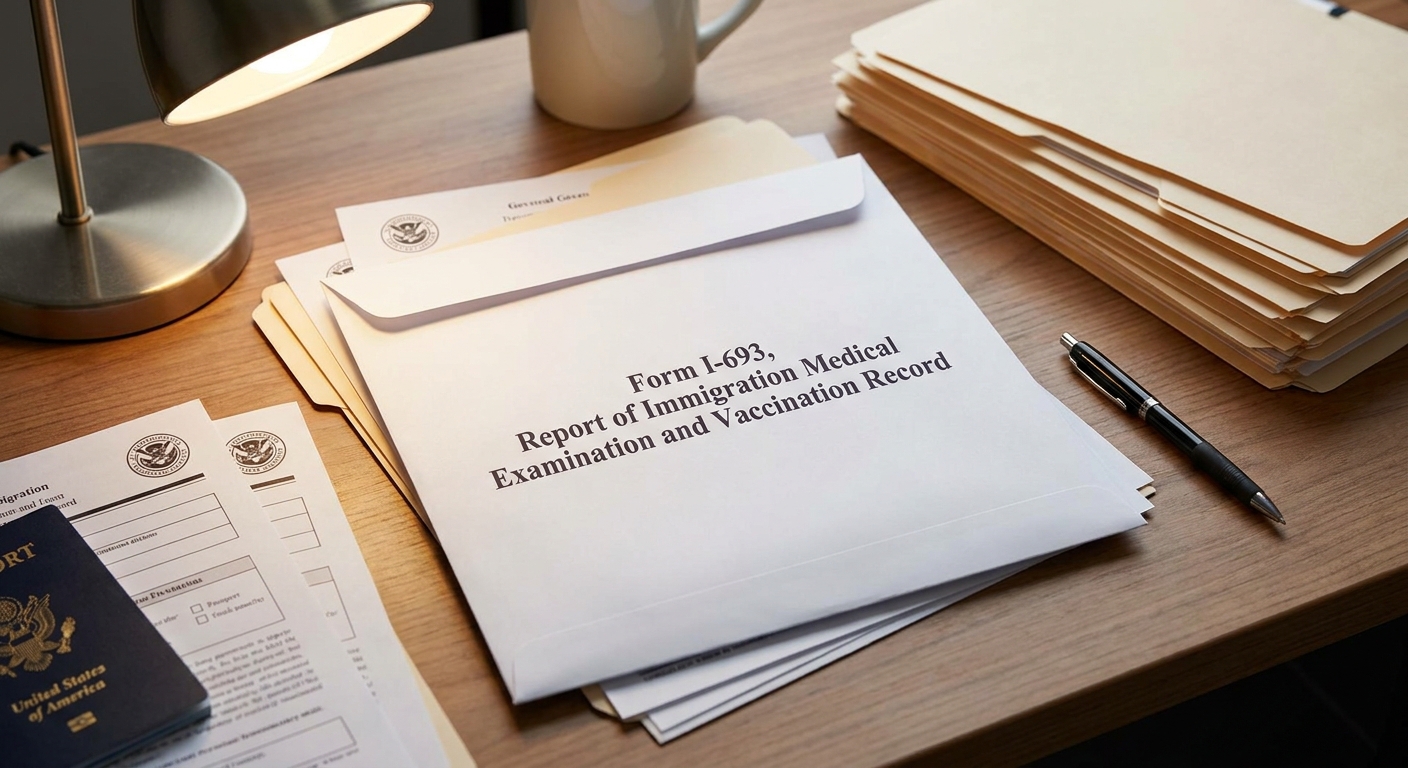
The civil surgeon will complete Form I-693, Report of Medical Examination and Vaccination Record, summarizing their findings and vaccination assessment. They will then seal this form in an envelope, which you must submit to USCIS as part of your adjustment of status application.
It is imperative that the sealed envelope remains unopened. Opening it will invalidate the document, requiring you to get a new sealed form, which means extra time, cost, and potential delays.
- Incomplete or improper submission: An improperly filled-out or unsealed Form I-693 is a common reason for USCIS to issue a Request for Evidence (RFE). This delays your case, requiring you to obtain corrections from the civil surgeon and resubmit.
- Consular processing distinction: For those applying for a green card through consular processing abroad, a panel physician completes Form DS-3025, which is handled directly by the U.S. embassy or consulate. However, the vaccination requirements remain largely consistent with domestic adjustment of status.
- Responding to RFEs: If you receive an RFE related to your medical exam or vaccinations, address it promptly and thoroughly. Our adjustment of status attorneys can help review the RFE and ensure a complete response.
Whether you are navigating consular processing attorneys or applying for adjustment of status within the U.S., precision in submitting your medical exam results helps avoid unnecessary delays. If your case is based on marriage, our guide on green card interview questions can help you prepare for the next step.
Navigating your immigration vaccines for green card requirements demands careful attention to avoid delays or potential inadmissibility. If you face uncertainties like missing records or waiver eligibility, at Zava Immigration Law Group we are immigrants helping immigrants, and we can help clarify your path forward.
Frequently asked questions about green card vaccines
How long do I have to get all my required green card vaccines?
The time required varies significantly depending on your existing vaccination status and whether you need multi-dose series, like Hepatitis B. Some vaccines can be administered on the day of your medical exam. However, completing a series can take several months. For example, Hepatitis B typically requires three doses over six months. Planning proactively ensures you have enough time, as insufficient time to complete a series before your immigration interview can lead to delays or require a medical waiver.
What should adults do about the Polio vaccine if they only received doses as a child outside the U.S.?
If you received oral polio vaccine (OPV) as a child outside the U.S. and lack full Inactivated Polio Vaccine (IPV) series documentation, you will generally need at least one dose of IPV if you’re two months or older and not currently up to date per ACIP recommendations. Your civil surgeon will review your records. If documentation is insufficient, they can administer the required dose during your exam or advise you on where to obtain it, ensuring you meet the current U.S. immigration requirements.
Can I get my required vaccines at my regular doctor instead of the civil surgeon?
Yes, you can generally receive your required vaccines from your regular medical provider or a local health department. After receiving them, you must return to the civil surgeon with complete documentation of the new vaccinations. The civil surgeon needs to verify and record these on your Form I-693. This approach can sometimes be more convenient or cost-effective, but ensure all documentation is properly completed to avoid delays in your green card application process.
Will I automatically be denied a green card if I cannot get all the required vaccines?
Not necessarily. Automatic denial is unlikely if you have a legitimate reason for not receiving a vaccine. If a vaccine is ‘not medically appropriate’ due to age, pregnancy, or a contraindication, your civil surgeon will note this on your Form I-693, and it functions as a blanket medical waiver. For sincere religious or moral objections, you may apply for an individual waiver (Form I-601), though these are more difficult to obtain. Failing to comply without a valid waiver, however, can lead to inadmissibility or significant delays.
How do I find an approved doctor for my immigration medical exam?
You must use a doctor approved by USCIS, known as a civil surgeon. You can find a list of USCIS-designated civil surgeons in your area by visiting the USCIS website and using their ‘Find a Civil Surgeon’ search tool. It’s advisable to schedule your appointment well in advance, as availability can vary. When contacting a civil surgeon, ensure they are aware you need an immigration medical exam for a green card and ask about what records you should bring.
Sources and official resources
- USCIS: Green CardOfficial source
- USCIS Policy ManualOfficial source

Jessica Anleu (formerly Jessica Lewis) is an experienced immigration lawyer in Phoenix with a decade of immigration experience.
All PostsRelated Posts
An immigration detainer and the 48 hour hold in Maricopa County
What an immigration detainer really means for a 48 hour hold in a Maricopa County jail, and the exact steps families should take before that window closes.
Preparing for your hearing at the Florence immigration court
The Florence immigration court operates inside one facility, but a nearby complex often gets confused with it. Here is how to tell them apart.

How the judge decides if you go home at an immigration bond hearing
An immigration bond hearing decides if you can leave detention while your case continues. Here is what the judge weighs before deciding your case.
Your privacy, your choice
With your permission, Google Analytics and Microsoft Clarity help us understand site use. Google Ads and Meta measure advertising. You can decline all or choose each category. Forms work with any choice.
Checked options stay off until you save them.