
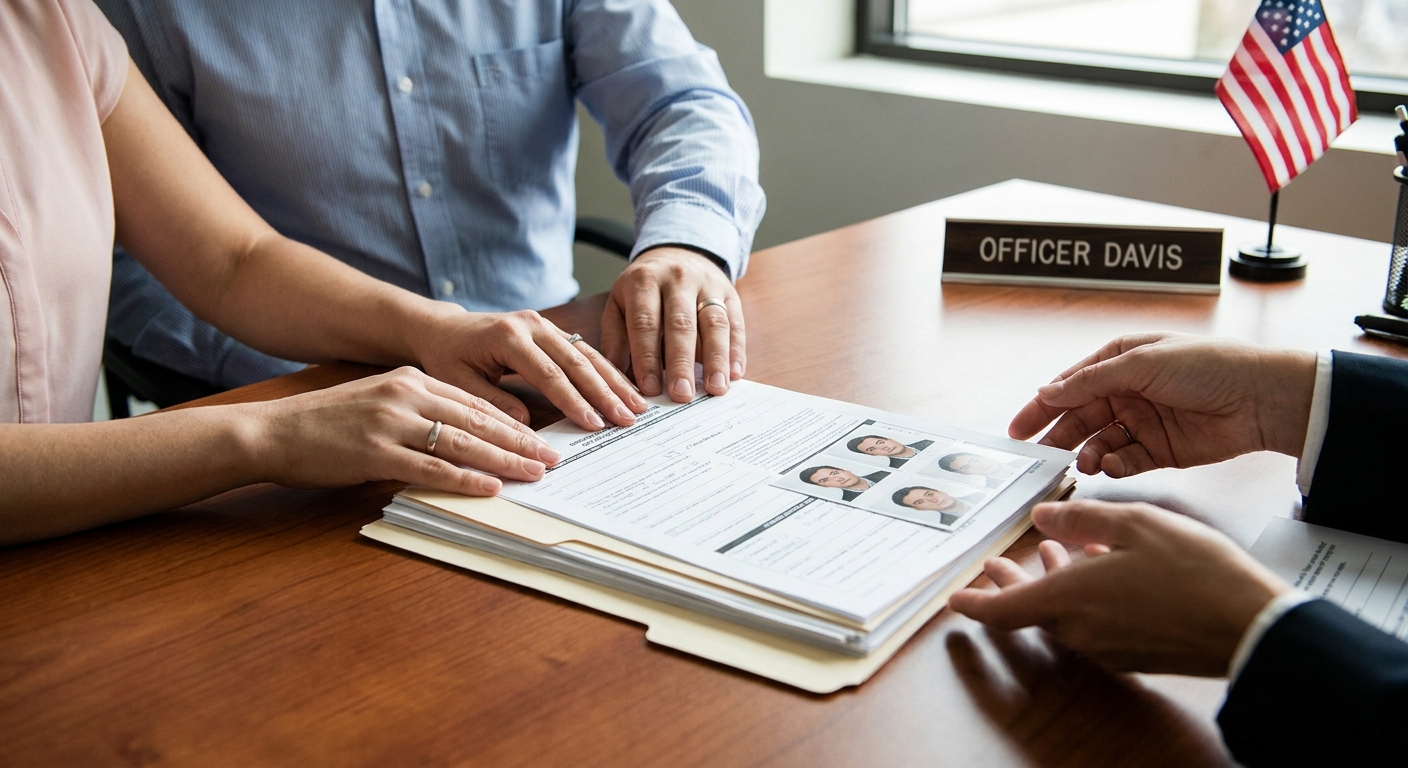
Marriage green card interview questions and how to prepare
Table of contents
8 minute read
Many couples approach their marriage green card interview expecting a simple conversation, but it frequently involves highly detailed questions designed to verify the authenticity of your relationship. USCIS officers are trained to look beyond surface-level answers to confirm that your marriage is genuine, meaning thorough preparation for green card interview questions marriage cases significantly impacts the outcome.
Navigating the complexities of family-based immigration can feel overwhelming, especially when preparing for an interview that determines your future in the United States. Understanding the process and what to expect is a necessary step to avoid delays, and our family-based immigration attorneys can provide guidance to help you through each stage.

What green card interview questions marriage cases help USCIS understand about your relationship?
USCIS officers do not simply want to confirm that you are legally married; their primary goal is to determine if your marriage is bona fide. This means they are scrutinizing whether you and your spouse entered the marriage with the genuine intent to establish a life together, rather than solely to obtain an immigration benefit.
The types of green card interview questions marriage cases present are designed to reveal the depth of your shared life. Officers look for evidence of a shared life and mutual commitment. This extends beyond legal documents to the practical realities of your daily existence as a couple. Without proof of a genuine relationship, your application faces significant challenges.
- Intent to build a life together: Officers look for evidence that you both intend to share a future, including long-term plans, joint decision-making, and emotional commitment.
- Shared life and daily routines: This involves questions about how you interact, spend your time, manage household responsibilities, and support each other.
- Financial commingling: USCIS expects to see intertwined finances, indicating a genuine merging of lives. This includes joint bank accounts, shared bills, and mutual financial responsibilities.
What kind of questions will you hear in your interview?
Moving from the underlying intent, the interview itself will feature a range of questions covering different aspects of your relationship. These questions aim to create a comprehensive picture of your life together, often diving into intimate details that might feel intrusive but are standard for a marriage green card interview.
Applicants often underestimate the depth and specificity of questions USCIS asks about their daily life and shared history. You may find questions probing your dating period, your wedding day, and your current household arrangements. Consistency in your answers between spouses and with your application forms helps prevent discrepancies that could lead to further scrutiny.
- Relationship history: Questions often start with how you met, where you went on your first date, and when you decided to marry. Expect inquiries about your courtship, engagement, and wedding specifics, including who attended and what traditions you followed.
- Daily life and routines: Officers will ask about your morning routines, who does what chores, what you eat for breakfast, and how you spend evenings and weekends together. They may ask about your bedroom, shared hobbies, and how you communicate throughout the day.
- Shared finances and responsibilities: Be prepared to discuss joint bank accounts, how you split bills, who pays for what, and any shared assets or debts. Questions about insurance policies, tax returns, and beneficiaries are common.
- Future plans: Officers may ask about your plans for children, career goals, vacations, and how you envision your life together in the coming years.

How to prepare your documents and yourself
Understanding the types of questions is only the first step; effective preparation for your marriage green card interview requires both thorough document gathering and mental readiness. Many genuine couples face difficulties due to insufficient evidence or nervousness, highlighting the need for comprehensive preparation.
Many couples find the detailed nature of USCIS inquiries about their shared history challenging, even when their marriage is genuine. To minimize stress and avoid inconsistencies, a structured approach to preparation, encompassing both your paperwork and reviewing your shared story, proves beneficial.
This structured approach is particularly helpful in navigating the complex documentation requirements and ensuring your shared narrative is presented clearly. Our green card attorneys can provide comprehensive guidance on documentation and preparation for your interview.
- Review your application forms: Go over your submitted Forms I-130 (your spouse’s family-based residency petition) and I-485, along with all supporting documents, to refresh your memory of every detail you provided. Ensure your interview answers align with the information already on file.
- Gather new evidence: Collect any additional proof of your bona fide marriage accumulated since you filed your application. This might include new photos, joint utility bills, updated bank statements, or new lease agreements.
- Organize your documents: Arrange your evidence clearly, ideally in a binder with tabs, making it easy for both you and the officer to review. Ensure you bring both original documents and copies.
- Practice answering questions: Discuss with your spouse the potential questions you might face, focusing on specific details of your relationship. Practice telling your story together to ensure consistency without memorizing answers verbatim.
- Prepare emotionally: The interview can be stressful. Approach it with honesty and confidence. If you don’t know an answer, it is better to say so rather than guess, as guessing can lead to discrepancies.
What if USCIS suspects your marriage is not real?
Sometimes, even in genuine marriages, certain circumstances can raise red flags for USCIS officers, leading to heightened scrutiny. These situations can range from significant age differences to living arrangements that appear unconventional, prompting officers to question the authenticity of the relationship. When this happens, the interview process often changes significantly.
If an officer suspects that a marriage is not bona fide, they might initiate a Stokes interview. This separate questioning process aims to catch inconsistencies by asking each spouse highly detailed, identical questions while keeping them apart.
If you face a Stokes interview, answering truthfully and consistently is key to a favorable outcome, especially under pressure. Any discrepancy, however minor, could raise further doubts about your relationship’s authenticity.
- Common red flags: Factors like a significant age gap, a language barrier, different religious backgrounds without shared practice, or marriage shortly after a visa overstay can trigger more intense questioning. Living separately, even for valid reasons, can also be a concern.
- The Stokes interview process: During a Stokes interview, each spouse is interviewed individually, often in different rooms, and asked identical questions about their relationship and daily life. The officer then compares the answers for any discrepancies, no matter how minor.
- The role of legal counsel: Having an attorney present during a Stokes interview is a protected right and can significantly improve your chances. legal counsel for removal of conditions can help ensure the process is fair, address any unfair questioning, and clarify complex answers that might otherwise be misunderstood.
What outcomes follow your green card interview questions marriage?
Once your USCIS marriage interview concludes, the waiting period begins. While many applicants hope for immediate approval, the outcome can vary, and understanding the possible next steps prevents unnecessary anxiety.
USCIS typically needs time to review all information and make a final determination based on the evidence and interview responses. This waiting period can extend from a few weeks to several months.
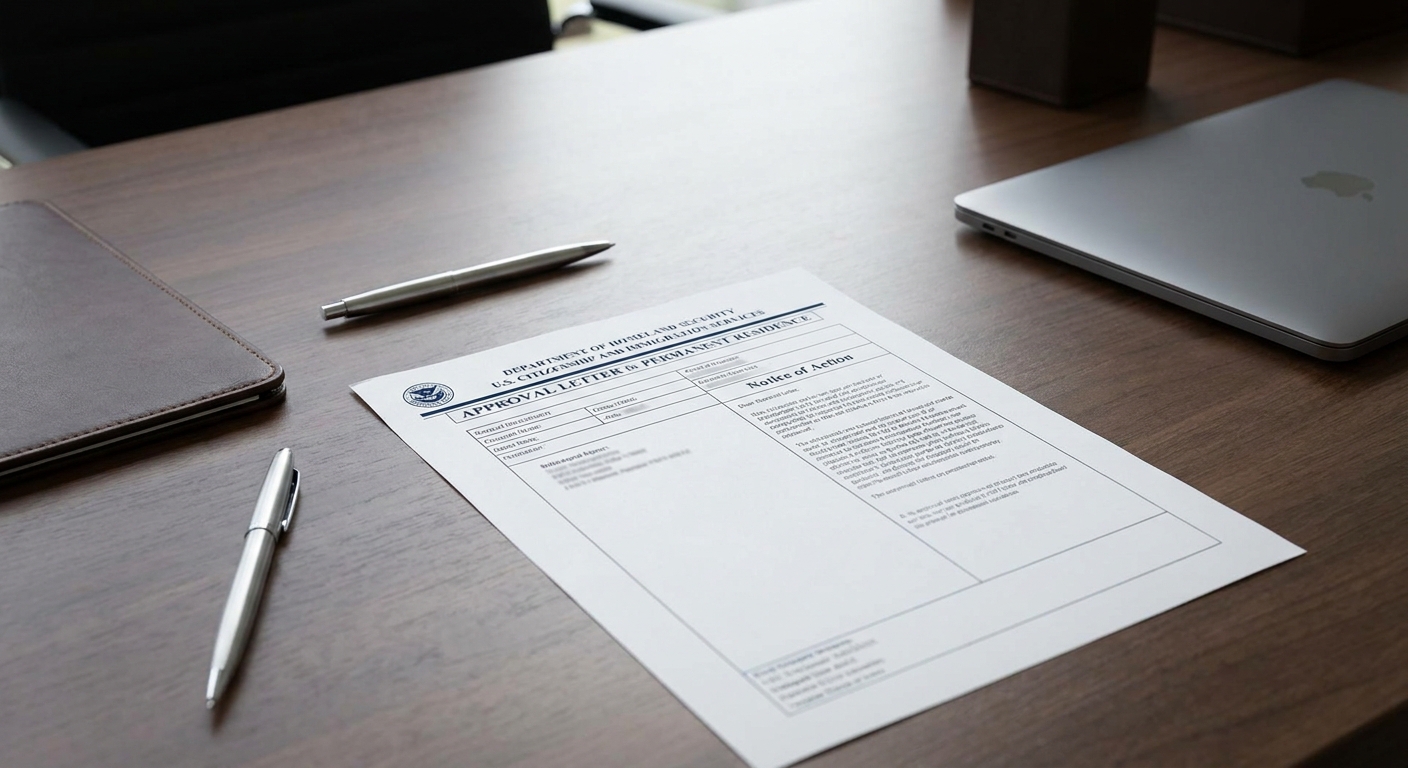
- Approval: If USCIS is satisfied that your marriage is bona fide and you meet all eligibility requirements, your green card application will be approved. You will then typically receive your green card by mail, which will be a conditional green card if your marriage is less than two years old. our team specializing in adjustment of status assists with various post-interview processes.
- Request for Evidence (RFE): If the officer needs more proof to make a decision, they will issue an RFE, requesting specific documents or information. You will have a deadline to submit the requested evidence.
- Notice of Intent to Deny (NOID): A NOID indicates that USCIS intends to deny your application and provides the reasons why. You will have an opportunity to submit a response and additional evidence to persuade USCIS to change its decision.
- Second interview: In some cases, USCIS might schedule a second interview if there are lingering concerns or if they need further clarification. This could be another joint interview or a Stokes interview.
The process of preparing for green card interview questions marriage cases can be complex and emotionally demanding. We understand these challenges intimately, as immigrants helping immigrants navigate intricate immigration procedures. If you are ready to discuss your specific situation and plan your next steps, contact our team for dedicated support to pursue a positive outcome for your future in Phoenix, AZ.
Frequently asked questions about marriage green card interviews
Can my attorney be present during my marriage green card interview?
Yes, you have the right to have legal counsel accompany you to your marriage green card interview. While legal presence is often seen as most essential for situations like a Stokes interview, an attorney can provide guidance and support in any interview setting. Our team frequently attends these interviews with clients to ensure fairness, clarify questions, and represent your best interests throughout the process.
What if my spouse and I accidentally give different answers?
Inconsistencies between your answers and your spouse’s, or with your application forms, can raise concerns for USCIS and potentially lead to further scrutiny. It is always best to be truthful and avoid memorizing answers verbatim. If you genuinely do not recall a specific detail, it is better to state that honestly rather than guessing, as an incorrect guess can create more serious discrepancies. Our preparation helps you consistently present your shared story.
Do we absolutely need joint bank accounts to prove our marriage?
While joint bank accounts are considered strong evidence of a bona fide marriage and financial commingling, they are not the only type of proof. USCIS evaluates all evidence holistically. If you do not have joint accounts, you can still provide other compelling documentation of shared finances, such as joint utility bills, shared lease agreements, mortgage statements, insurance policies listing each other as beneficiaries, or jointly filed tax returns. We can help you identify and organize alternative evidence.
What is the difference between a conditional and permanent green card through marriage?
If your marriage is less than two years old on the day your green card application is approved, USCIS typically grants a conditional green card valid for two years. To receive a permanent 10-year green card, you must file Form I-751 (Petition to Remove Conditions on Residence) before the conditional card expires. This second step is crucial to demonstrate your marriage remains genuine and ongoing, proving it was not solely for immigration benefits.
What kind of photos are best to include as evidence?
The most compelling photos demonstrate the progression and genuineness of your relationship over time. We recommend including pictures from your dating period, engagement, wedding ceremony, family gatherings, holidays, and trips you have taken together. Dating and captioning these photos to provide context for the officer can significantly strengthen your case. The goal is to visually illustrate your shared life and connections.
What happens if our marriage green card application is denied?
A denial means USCIS has determined there isn’t sufficient evidence of a bona fide marriage or that you do not meet other eligibility requirements. This outcome can have serious consequences, including potential placement into removal proceedings. However, a denial is not necessarily the final word. Depending on the specific reasons for the denial, there may be options to appeal the decision or refile the application. Our team can help assess your options.
How should we address a significant age difference with USCIS?
A significant age difference can sometimes be considered a ‘red flag’ by USCIS, potentially leading to increased scrutiny during your interview. The most effective way to address this is by providing comprehensive evidence that strongly demonstrates your marriage’s bona fide nature. We advise clients to be prepared to thoroughly explain the history of their relationship, their daily life, and their mutual commitment, supported by ample documentation, to alleviate any concerns.
Sources and official resources
- USCIS: Green CardOfficial source
- USCIS Policy ManualOfficial source

Jessica Anleu (formerly Jessica Lewis) is an experienced immigration lawyer in Phoenix with a decade of immigration experience.
All PostsRelated Posts
An immigration detainer and the 48 hour hold in Maricopa County
What an immigration detainer really means for a 48 hour hold in a Maricopa County jail, and the exact steps families should take before that window closes.
Preparing for your hearing at the Florence immigration court
The Florence immigration court operates inside one facility, but a nearby complex often gets confused with it. Here is how to tell them apart.

How the judge decides if you go home at an immigration bond hearing
An immigration bond hearing decides if you can leave detention while your case continues. Here is what the judge weighs before deciding your case.
Your privacy, your choice
With your permission, Google Analytics and Microsoft Clarity help us understand site use. Google Ads and Meta measure advertising. You can decline all or choose each category. Forms work with any choice.
Checked options stay off until you save them.