

How long can an immigrant be detained in the United States?
Table of contents
How long can an immigrant be detained in the United States? There is no single maximum that covers every case. The answer depends on who is holding the person, the legal authority for custody, and the stage of the immigration case.
As of September 2026, a 48-hour immigration detainer, the 90-day removal period, and the six-month benchmark discussed by the Supreme Court describe different situations. None is a universal release date. Identifying the correct legal stage is the first step toward evaluating the timeline.
How Long Can an Immigrant Be Detained at Each Legal Stage
Immigration detention can last days, months, or longer because federal law uses different custody rules at different stages. A person awaiting removal proceedings is not necessarily detained under the same authority as someone who already has a final removal order.

| Custody stage | What controls the timeline | What the number means |
|---|---|---|
| Applicant for admission under INA 235 | Matter of Yajure Hurtado holds that an immigration judge lacks authority to hear or grant bond requests for people detained under INA 235(b)(2)(A). That rule is being litigated in Maldonado Bautista v. Santacruz. A March 31, 2026 Ninth Circuit stay left the district court’s bond-hearing judgment in effect only within the Central District of California while the appeal proceeds; Arizona is outside that district. EOIR nevertheless followed Yajure again in Matter of N-A-G-C- in June 2026. Location and later orders therefore matter. | There is no general 48-hour, 90-day, or six-month release deadline for this pre-order stage. |
| Proceedings under INA 236 | INA section 236 permits detention pending a removal decision. Section 236(a) allows possible bond or conditional parole, while section 236(c) requires custody for covered categories and sharply limits release. | The case can remain pending through hearings, motions, and appeals. Eligibility for release is a separate legal question. |
| Final removal order under INA 241 | A 90-day removal period begins under statutory rules. Detention can continue after that period for certain people, and conduct that prevents removal can extend the removal period. | Ninety days is a removal period, not an automatic release date. |
The charging document, custody decision, and immigration orders help identify the governing authority. Labels such as “mandatory detention” or “bond eligible” should not be assumed from the length of custody alone. They require review of the person’s admission history, charges, records, and procedural posture.
A family may ask, “How long can an immigrant be detained?” after receiving only a facility name or an ICE notice. The legal documents identify the custody stage and the rules that may apply.
Why 48 Hours Is Not the ICE Detention Limit
An immigration detainer is not the same as federal immigration detention. As ICE explains, a detainer asks a federal, state, or local law enforcement agency to notify ICE and hold a person for up to 48 additional hours beyond the time of ordinary release.
That additional period gives DHS time to assume custody. If ICE takes the person into federal immigration custody, the 48-hour detainer period does not become a deadline for release from that new custody. The applicable immigration statute and case stage then control the timeline.
When a family hears that an “ICE hold” was filed, ask whether the person remains in criminal custody, is held beyond scheduled release, or has transferred to ICE. Each answer raises a different issue.
How Long Can an Immigrant Be Detained and What Adds Time
No single factor predicts how long an immigrant can be detained. The authority for custody comes first, but procedural and practical events can affect how long the case or removal process remains unresolved.

- The detention authority. INA 235, 236, and 241 create different rules for custody and release.
- The posture of removal proceedings. Master calendar hearings, evidence deadlines, individual hearings, motions, and decisions take time.
- Appeals or court proceedings. An appeal may keep the immigration case unresolved longer, but it does not prove that every appellant will remain detained throughout the process.
- Criminal or immigration records. Missing dispositions, identity questions, or disputed legal classifications may require additional review.
- Removal logistics after a final order. Travel documents, cooperation, stays, and whether removal is reasonably foreseeable can affect post-order custody.
Court scheduling can affect the pace, but a longer timeline may reflect several events. It does not prove that ICE violated a deadline or that a particular release procedure is available.
What Changes After a Final Removal Order
After an order becomes administratively final, INA section 241 generally gives the government a 90-day removal period. The law requires detention during that period for covered cases and permits continued detention for certain categories after the period ends.
When asking “How long can an immigrant be detained after a final order?” start with the removal period and rules for continued custody. The judge’s decision date does not always begin that period.
The 90-day period may extend if a person fails to make timely efforts needed for removal or acts to prevent it. Its start date follows rules involving finality, a court stay, or release from nonimmigration confinement.

The Supreme Court’s decision in Zadvydas v. Davis describes six months as a presumptively reasonable period for the detention it analyzed. After that point, a person must provide good reason to believe there is no significant likelihood of removal in the reasonably foreseeable future. The government then may respond with evidence.
Six months is not an automatic release date, and the rule does not create release for every person in post-order custody. In Johnson v. Arteaga-Martinez, the Supreme Court held that INA 241(a)(6) does not itself require periodic bond hearings with the government carrying a clear-and-convincing-evidence burden.
Current BIA precedent adds a jurisdictional limit. Matter of W-F-D- states that immigration judges generally lack jurisdiction to redetermine custody after an administratively final removal order. Administrative review or a federal court remedy may still require separate analysis.
How Release Options Differ
Bond, parole, post-order custody review, and habeas corpus are not interchangeable. DHS initially sets bond in cases governed by the bond regulations. Under EOIR’s current bond guidance, an immigration judge may redetermine it only in certain circumstances and lacks jurisdiction over several listed categories.
The answer to “How long can an immigrant be detained?” cannot be separated from who has authority to order release. A process that is available under INA 236 may be unavailable under INA 235 or after an order becomes final.
Whether a person is among those who may qualify for immigration bond depends on the custody authority and any mandatory-detention rule. When the judge has jurisdiction, what happens at an immigration bond hearing includes a separate review of eligibility, danger, flight risk, and national security.
Parole is an administrative form of release that may be available under specific legal authority. It is not a substitute that every person can request from an immigration judge. The relevant standard, decision-maker, and evidence depend on how DHS has classified the person’s custody.
For people with final removal orders, ICE’s post-order custody review guidance describes administrative reviews around the 90-day and 180-day points. Those reviews arise from post-order custody, not from an unsuccessful bond request, and current facts must be checked before relying on a timeline.
A federal habeas petition may challenge the legality of detention in an appropriate case. It does not guarantee release or begin automatically at a fixed day. The question of how habeas corpus works in immigration detention turns on the custody authority, duration, controlling court law, and individual record.
What Families Can Do While Someone Is Detained
Good records help an attorney determine which clock and release rules apply. They do not guarantee release, but they can prevent the analysis from being based on incomplete information.
- Confirm the person’s full name, date of birth, A-number, and current facility.
- Obtain the Notice to Appear, custody determination, bond paperwork, and immigration court orders.
- Gather certified criminal dispositions if any arrest or conviction may affect custody.
- Record the next hearing date, appeal deadline, and whether an appeal or court stay is pending.
- For a final order, identify when it became final and whether ICE has issued custody review notices.
- Preserve travel-document requests and proof of cooperation with removal arrangements.
Families can also maintain reliable communication with counsel and the detained person, subject to facility rules. Before submitting support letters or financial records, ask what legal decision the evidence is intended to address. Evidence relevant to bond may not answer a parole, post-order review, or habeas question.
If a loved one is in ICE custody, Zava Immigration can review the detention authority, procedural stage, and available records to assess possible detention and bond options. The available path and timing depend on the facts and current law.
Frequently Asked Questions About Immigration Detention
Is 48 hours the maximum ICE can detain someone?
No. The 48-hour period concerns an ICE detainer requesting that another law enforcement agency hold someone briefly beyond an ordinary release time. If DHS assumes federal immigration custody, a different legal authority controls how long that detention can continue.
Does ICE have to release someone after 90 days?
No. Ninety days is the statutory removal period after a final order, not a universal release deadline. Federal law permits continued detention for certain people, and the period may be extended when a person acts to prevent removal.
Is six months the maximum for immigration detention?
No. The Supreme Court described six months as a presumptively reasonable period in the post-order detention setting it reviewed. After that point, the legal analysis includes whether removal is significantly likely in the reasonably foreseeable future. Release is not automatic.
Can every detained immigrant ask a judge for bond?
No. Matter of Yajure Hurtado limits immigration-judge bond jurisdiction for people detained under INA 235(b)(2)(A), not every detained immigrant. The rule remains in litigation. A Ninth Circuit stay preserved a limited district-court exception only within the Central District of California, which does not include Arizona.
Can an appeal make detention last longer?
It can extend the time before an immigration case becomes final, which may also lengthen custody. It does not prove that every person will remain detained for the entire appeal. Custody authority, bond jurisdiction, court orders, and individual facts still matter.
Sources and official resources
- INA section 241Official source
- Zadvydas v. DavisOfficial source
- Matter of W-F-D-Official source
- EOIR: Learn About Immigration CourtOfficial source
- USCIS Policy ManualOfficial source

Jessica Anleu (formerly Jessica Lewis) is an experienced immigration lawyer in Phoenix with a decade of immigration experience.
All PostsRelated Posts
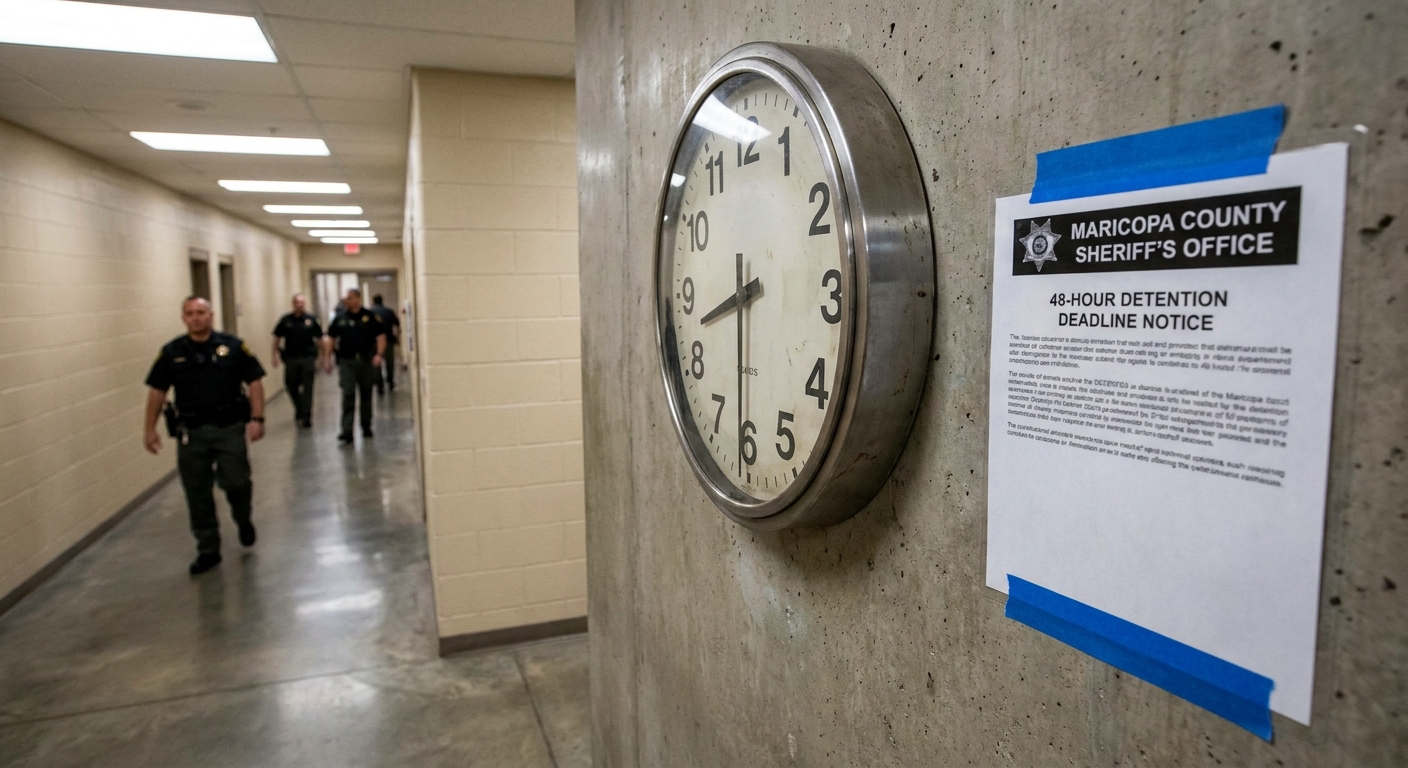
An immigration detainer and the 48 hour hold in Maricopa County
What an immigration detainer really means for a 48 hour hold in a Maricopa County jail, and the exact steps families should take before that window closes.

Preparing for your hearing at the Florence immigration court
The Florence immigration court operates inside one facility, but a nearby complex often gets confused with it. Here is how to tell them apart.

How the judge decides if you go home at an immigration bond hearing
An immigration bond hearing decides if you can leave detention while your case continues. Here is what the judge weighs before deciding your case.
Your privacy, your choice
With your permission, Google Analytics and Microsoft Clarity help us understand site use. Google Ads and Meta measure advertising. You can decline all or choose each category. Forms work with any choice.
Checked options stay off until you save them.