How to file a motion to reopen your immigration court case
Table of contents
A motion to reopen your immigration case asks for another review based on new facts or evidence. It can also be used to ask that an order issued because you missed a hearing be set aside, with special requirements for explaining your absence.
Start by reviewing the decision you received, its date, and who has authority over your case. An immigration appeals lawyer from our team can help you identify the right procedure and prepare the evidence it requires. Filing the motion, by itself, generally does not stop deportation.
What can you request, and where do you file?
Reopening allows proceedings to resume so that facts that could change the outcome can be considered. Under EOIR's requirements for reopening, the evidence must be material to the decision. It must also have been unavailable, with no earlier opportunity to discover or present it. Meeting that requirement does not guarantee approval of the motion or the immigration benefit you seek.
When an immigration judge decided the case and no appeal was filed, the motion normally goes to the court that has the record. If the Board of Immigration Appeals, known as the BIA, has already decided an appeal, the motion may belong before the Board. A pending appeal requires a different analysis: new evidence is generally raised through a request to send the case back, called a motion to remand.
Your home address alone does not determine where to file. Even if you live in Arizona, confirm which court holds the record before sending documents to the immigration court in Phoenix. You also do not file this motion with USCIS to ask it to change a court decision.
To choose a procedure, first distinguish what you want to change. Each option has its own purpose and requirements.
| Procedure | What it asks for | Who considers it |
|---|---|---|
| Motion to reopen | Consideration of new facts or evidence; it can also seek rescission of an order issued in your absence. | The immigration judge or the BIA, depending on the stage and jurisdiction. |
| Motion to reconsider | Correction of factual or legal errors in the decision, based on the existing record. | The authority whose decision you want reconsidered. |
| Appeal to the BIA | Review of an appealable decision by an immigration judge. | The BIA. |
| Stay of removal | A pause in enforcement of an order. | The authority with power to grant the requested stay. |
If you need to appeal a deportation order, filing a motion to reopen does not preserve or extend the appeal deadline. Before choosing a route, compare the decision, the record, and the deadline for each procedure.
How long do you have to request reopening?
The general rule is one motion to reopen within 90 days of the final administrative order. To calculate the deadline, identify which decision is final and whether you need to act before the judge or the BIA. Important evidence that appears later does not, by itself, remove the time limit.
There are exceptions. In particular, the rules for reopening orders issued in your absence distinguish lack of notice from a hearing missed because of exceptional circumstances. This table summarizes common situations in removal proceedings; older deportation or exclusion proceedings may follow different rules.
| Ground for reopening | General deadline or exception | What you need to establish |
|---|---|---|
| Ordinary reopening | 90 days from the final administrative order. | New facts and material evidence that was not available and could not have been discovered or presented earlier. |
| Order issued in your absence because of exceptional circumstances | 180 days from the order issued in your absence. | A sufficiently serious circumstance beyond your control that caused you to miss the hearing. |
| Order issued in your absence without proper notice | A motion can be filed at any time. | That you did not receive the notice required by law, considering the notices and your address obligations. |
| Order issued in your absence while you were in federal or state custody | You may file at any time. | That you were in custody and your failure to appear was not your fault. |
| Changed country conditions for asylum or other protection covered by the exception | Can provide an exception to the time and numerical limits. | A material change in the country and previously unavailable evidence; a personal change alone is not enough. |
| Joint motion with the government | Motions agreed to by all parties and filed jointly are not subject to the time and numerical limits. | The agreement and joint filing, along with grounds for reopening. |
A serious illness can support an explanation of exceptional circumstances, but it must be documented and connected to the missed hearing. For lack of notice, also review what your representative received and whether your address was properly reported. Not personally seeing a letter does not settle that question by itself.
Other special rules exist, including certain requests involving battery or extreme cruelty. If the deadline has passed, or fraud or ineffective legal representation occurred, we need to examine whether an exception or a recognized basis for tolling the deadline applies. Do not assume the case is lost without that review, or that the deadline has been extended without a legal basis.
When the judge has jurisdiction, an immigration judge can also decide to reopen a case on the judge's own initiative, known as sua sponte reopening. We need to distinguish that authority from exceptions or motions available to you; it does not make every late motion admissible.
The Ninth Circuit's decision in Sanchez Rosales v. Barr distinguishes rescission of an in absentia order caused by ineffective assistance: it does not require a showing of prejudice in that situation. The exception does not remove other requirements or extend to every ineffective assistance claim.
How do you prepare and file the request?
The motion is submitted in writing; there is no single court reopening form. EOIR's guidance on filing a motion requires you to explain the grounds and the decision you are requesting. A statement that you want another chance does not replace evidence.
- Gather the decision and notices. Identify your A-number, the court, the dates, and any earlier appeals or motions. Keep copies of the documents you received.
- Identify the grounds. Explain what changed or why you missed the hearing, which rule allows the filing, and how you meet the deadline or the exception you rely on.
- Attach supporting materials. Include declarations, documents, and, when applicable, the application for the immigration benefit you seek with its supporting materials. Documents in another language require an English translation with the appropriate certification.
- Check the filing requirements. Review the signature, cover page, contact information, proof of service on the other party when required, and any applicable representation or change-of-address forms.
- Use the filing method required for the case. Confirm whether electronic filing is required or paper filing is allowed, and keep proof of receipt. A stay request, when needed, requires separate attention.
Check whether your motion requires a filing fee or a fee waiver request. EOIR publishes the types of motions and their current fees; the amount and exceptions depend on the procedure. Check that resource when preparing the filing, rather than relying on a figure from an earlier submission.
A complete filing allows the authority to evaluate the request and the government to respond. The motion may then be granted or denied in writing. If it is granted, you must follow the instructions for continuing proceedings: reopening is not approval of asylum, permanent residence, or a waiver.
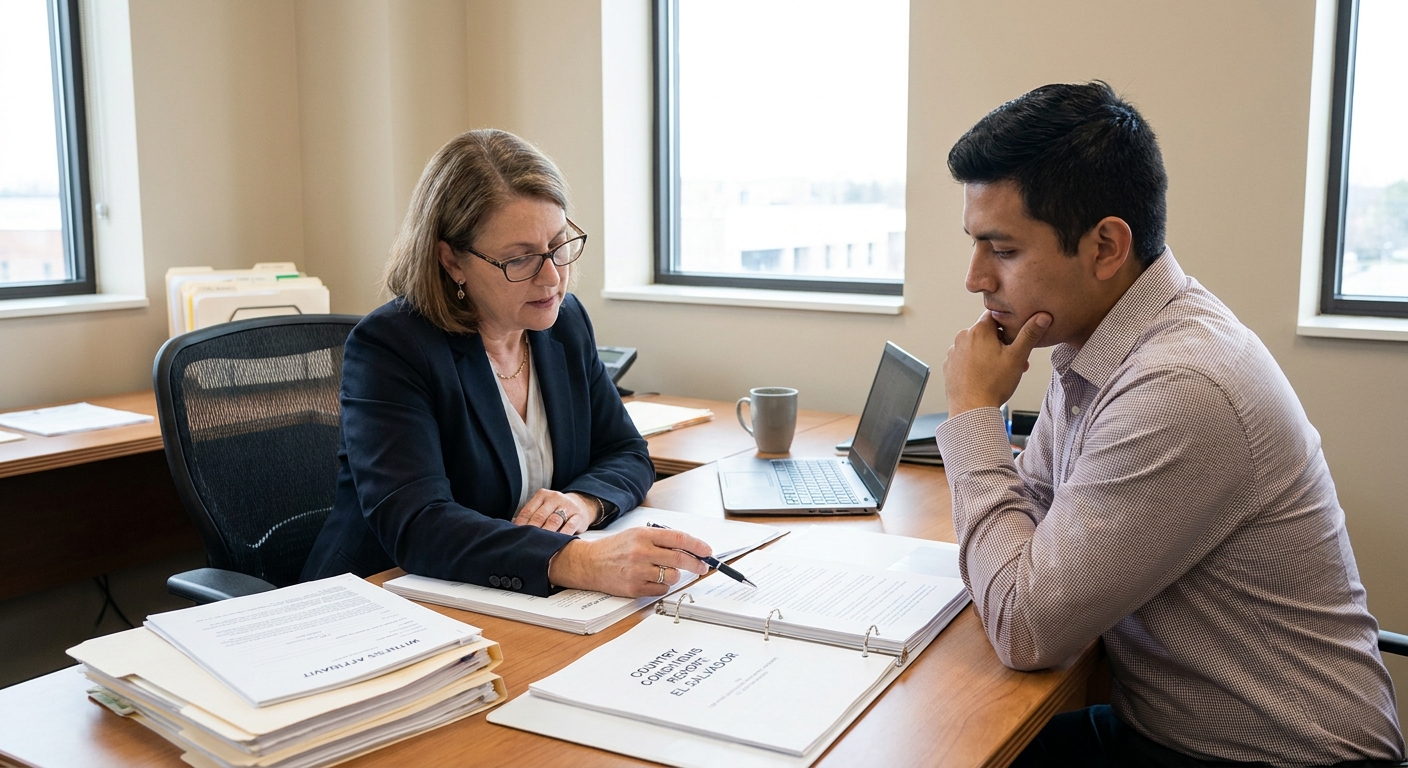
Organizing the record helps distinguish what the court already considered from what may now justify another review. Also keep track of when you obtained each document and the steps you took to get it; those dates may explain why it was not submitted earlier.
What evidence can support the motion?
The value of a piece of evidence depends on the grounds for reopening and the benefit you seek. A medical report may explain an absence or support a requirement for another form of relief, but an illness does not create a path to reopening on its own. The same is true of a marriage or the birth of a child.
- Country reports and specific documents. These can support a change in conditions relevant to asylum or protection by comparing the earlier situation with the current one.
- Witness declarations. These should explain specific facts, how the person knows them, and, when relevant, why the information could not have been presented earlier.
- Notices, envelopes, and address records. These help assess a claim of lack of notice.
- Medical or custody records. These can corroborate what happened on the hearing date and how it affected your ability to appear.
- Documents for an identified immigration path. A family petition and its notices may be relevant if reopening seeks adjustment of status for which you qualify.
For that reason, getting married while you have a deportation order requires reviewing more than the marriage certificate. We need to determine whether an immigration path is available and whether reopening can be requested at your stage of the case.
A clear declaration should be consistent with the rest of the record and include available supporting evidence. The BIA's October 19, 2026 decision in Matter of J-E-D-C- addresses the evaluation of declarations in reopening requests. Its relationship with Ninth Circuit precedent requires legal analysis in Arizona cases; you should not assume an account will be accepted without scrutiny.
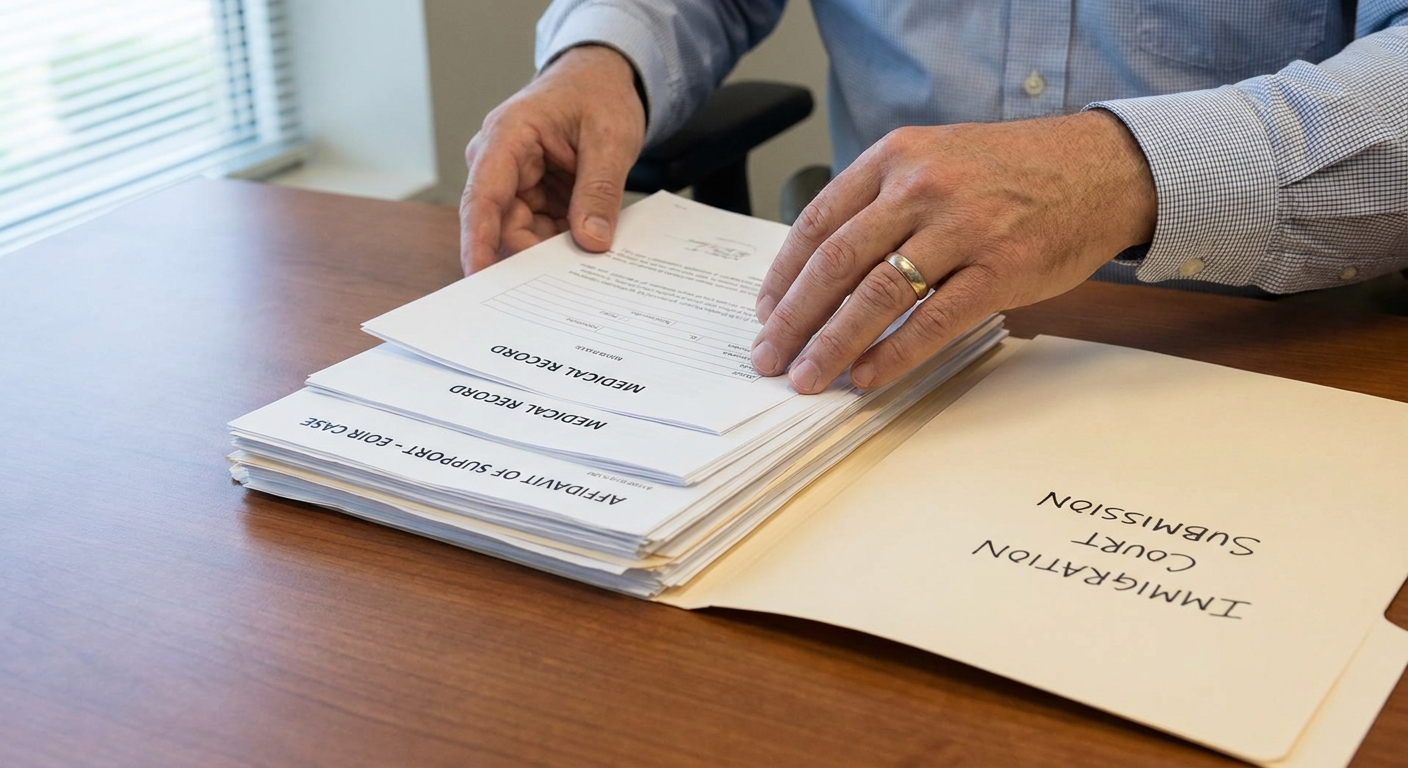
If a criminal conviction is part of the basis for the order, gather the criminal judgment and any later decision that changes it. An intention to challenge the conviction does not establish that it has already been vacated. Coordinating the review with a criminal defense attorney handling immigration consequences helps determine what effect that change actually has on the immigration case.
What happens to deportation while you wait?
An ordinary motion does not automatically stay removal. When you need a pause, determine whether a stay applies by law or must be requested from the proper authority. Requesting a stay and obtaining one are different steps. If a requested stay is granted, keep the decision showing its scope and duration.
A specific protection applies when you file a motion with the judge to reopen and rescind an in absentia removal order: enforcement is stayed while the judge decides that motion. This rule covers the grounds provided for that request, not just lack of notice. If the motion is denied and you appeal, the stay does not automatically continue through that appeal in current removal proceedings.
This distinction changes your next step. The table summarizes the effect of filing; you still need to check which order exists in your record.
| Situation | Is removal automatically stayed? | What to review |
|---|---|---|
| Ordinary reopening motion before the judge or BIA | Generally no. | Whether a stay request is needed and who can grant it. |
| Motion before the judge to rescind an in absentia order in removal proceedings | Yes, while the judge decides that motion. | Whether it is the request covered by the rule and the status of the decision. |
| Appeal from denial of that motion in removal proceedings | Not through that appeal alone. | A granted stay or another specific applicable exception. |
Older proceedings and certain special requests can have different effects. Also, a stay of removal pauses enforcement; it does not itself grant reopening. An administrative request to ICE using Form I-246 is also separate from a motion addressed to the court or the BIA.
If reopening is denied
First read who made the decision and why it was denied. A judge's denial can generally be appealed to the BIA, with an ordinary deadline of 30 calendar days after the oral decision or mailing of the written decision; the appeal must be received within the applicable deadline. A denial by the BIA itself requires examining other avenues, including federal judicial review when available.
Reconsideration is another possibility when a factual or legal error in the decision is identified: its general deadline is 30 days, and it relies on the existing record. It does not replace an appeal or allow you to repeat the same request indefinitely. Also review whether you need a stay during that next procedure.
When the issue requires comparing several alternatives, the broader question of whether a deportation order can be lifted helps distinguish the purpose of each route. Reopening makes sense when its grounds and requirements fit your record.
Frequently asked questions about reopening immigration cases
Can I request reopening if I have already been deported?
It may be possible in certain cases. Departure from the country, jurisdiction, deadlines, and applicable case law require review; Ninth Circuit decisions allow certain requests to continue after involuntary removal. Obtaining reopening does not, by itself, authorize a return to the United States.
Does filing the motion renew my work permit?
No. Filing does not automatically grant or renew a work permit. Authorization depends on your immigration category and the requirements for that permit. You also should not assume every permit is invalid simply because a motion was filed; its basis and specific circumstances need to be reviewed.
Can I file a second motion if another attorney filed the first?
Changing attorneys does not restart the general limit of one motion to reopen. A second request needs an applicable exception or legal basis. Joint motions and certain requests based on changed country conditions have special rules; orders issued in your absence retain their own limits.
What if I missed court because my attorney did not tell me about it?
This may require an ineffective assistance of counsel claim. Generally, you need to document your agreement with the attorney, inform them of the allegations and give them an opportunity to respond, and establish that you filed a complaint with the disciplinary authority or explain why you did not.
In the Ninth Circuit, which includes Arizona, if ineffective assistance caused the in absentia removal order, you do not need to show prejudice to request rescission of that order.
That causal connection must be established, and the deadline and other applicable requirements reviewed; reopening is not automatic. An attorney's omission also does not, by itself, mean legally inadequate notice.
Does reopening erase a criminal conviction?
No. Reopening immigration proceedings does not erase the criminal conviction. If a criminal court vacates or modifies it, you need to document that decision and analyze its immigration effect before relying on it in a motion. Neither the criminal case change nor reopening guarantees that you will regain immigration status.
To evaluate your case, we need to see the decision, hearing notices, and the evidence you now have. Contact our deportation defense attorneys to review whether reopening is appropriate and which documents we need to prepare.

Jessica Anleu (formerly Jessica Lewis) is an experienced immigration lawyer in Phoenix with a decade of immigration experience.
All Posts