
How the Phoenix immigration court works and how to check your case status
Table of contents
7 minute read
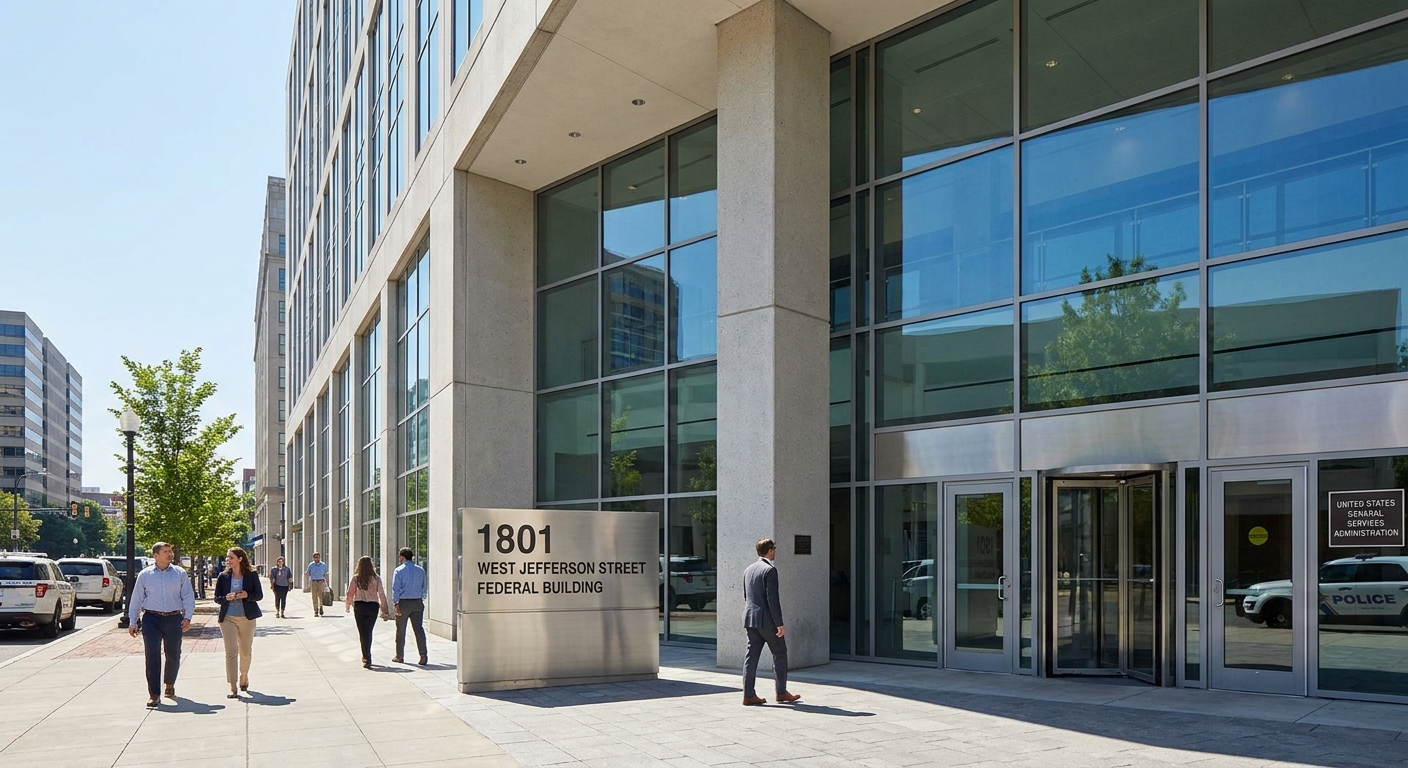
The Phoenix immigration court sits at 250 N. Seventh Ave., Suite 300, Phoenix, AZ 85007. Getting to the right building, at the right time, with your case number in hand is what separates a routine hearing from a serious problem.
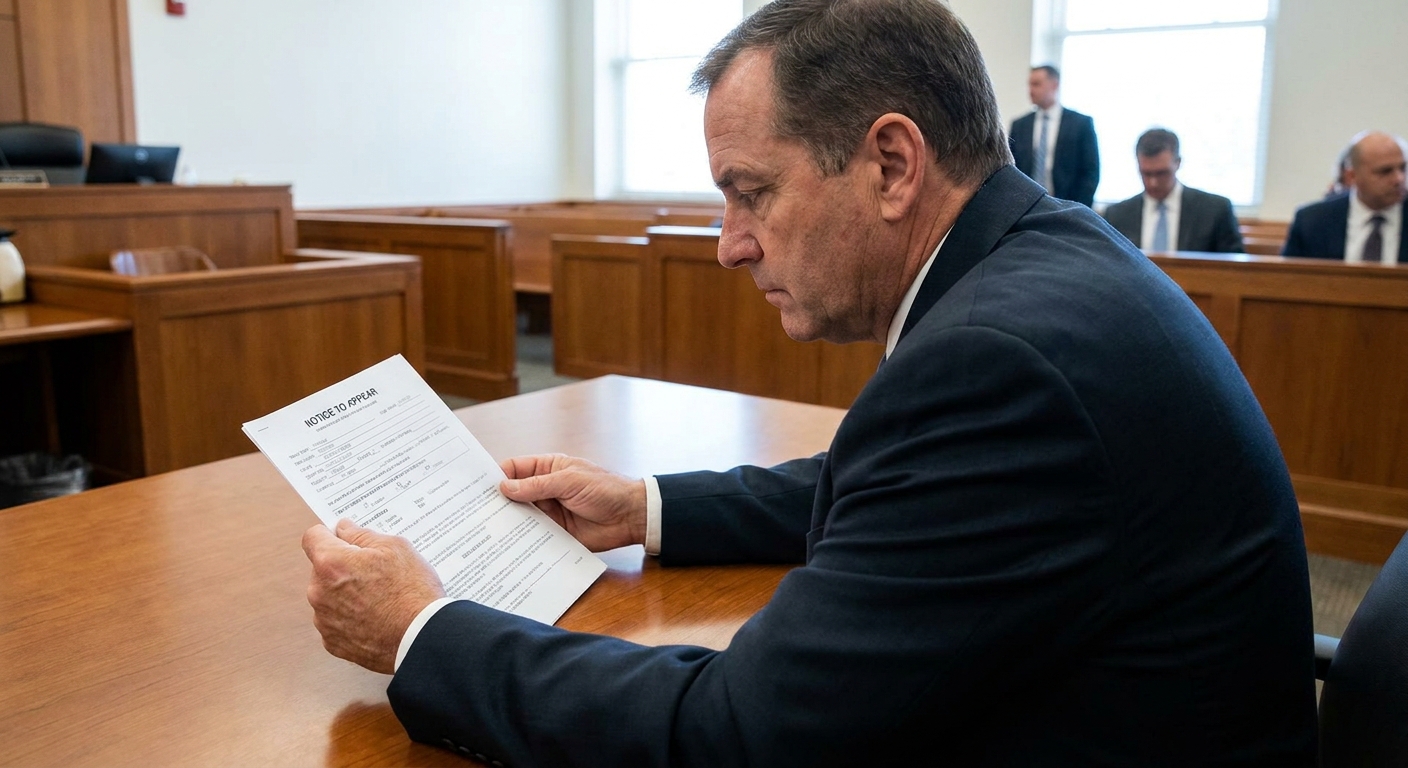
Missing a scheduled hearing can end in a removal order issued in your absence, so confirm the date and the location before you travel. If your case is already in court, deportation defense attorneys can review the record and tell you exactly what is coming.
Where the Phoenix immigration court is and when it is open
The court is run by the Executive Office for Immigration Review (EOIR), part of the Department of Justice. It operates separately from the ICE offices where some people report periodically: they are two different things.
- Address: 250 N. Seventh Ave., Suite 300, Phoenix, AZ 85007.
- Public hours: 8 a.m. to 4:30 p.m.
- Window filing hours: 8 a.m. to 4 p.m.
- Days: Monday through Friday, except federal holidays.
- Phone: 602-640-2747. Email: Phoenix.Immigration.Court@usdoj.gov.
The court can close unexpectedly for weather or another emergency, and EOIR posts those changes on its operational status page. Worth checking the day before if your hearing is early.
What to expect walking in
This is a federal facility and every visitor goes through security screening on each visit: a metal detector and a handbag check. You may be asked to remove your shoes. Leave extra time, because the line grows before morning sessions.
- Food and drink: not allowed, except when the immigration judge specifically permits it.
- Cameras and recording devices: prohibited in courtrooms and other EOIR space.
- Phones: silence them before entering the courtroom.
- Parking: visitor parking signs are posted at the building.
How to check your case status
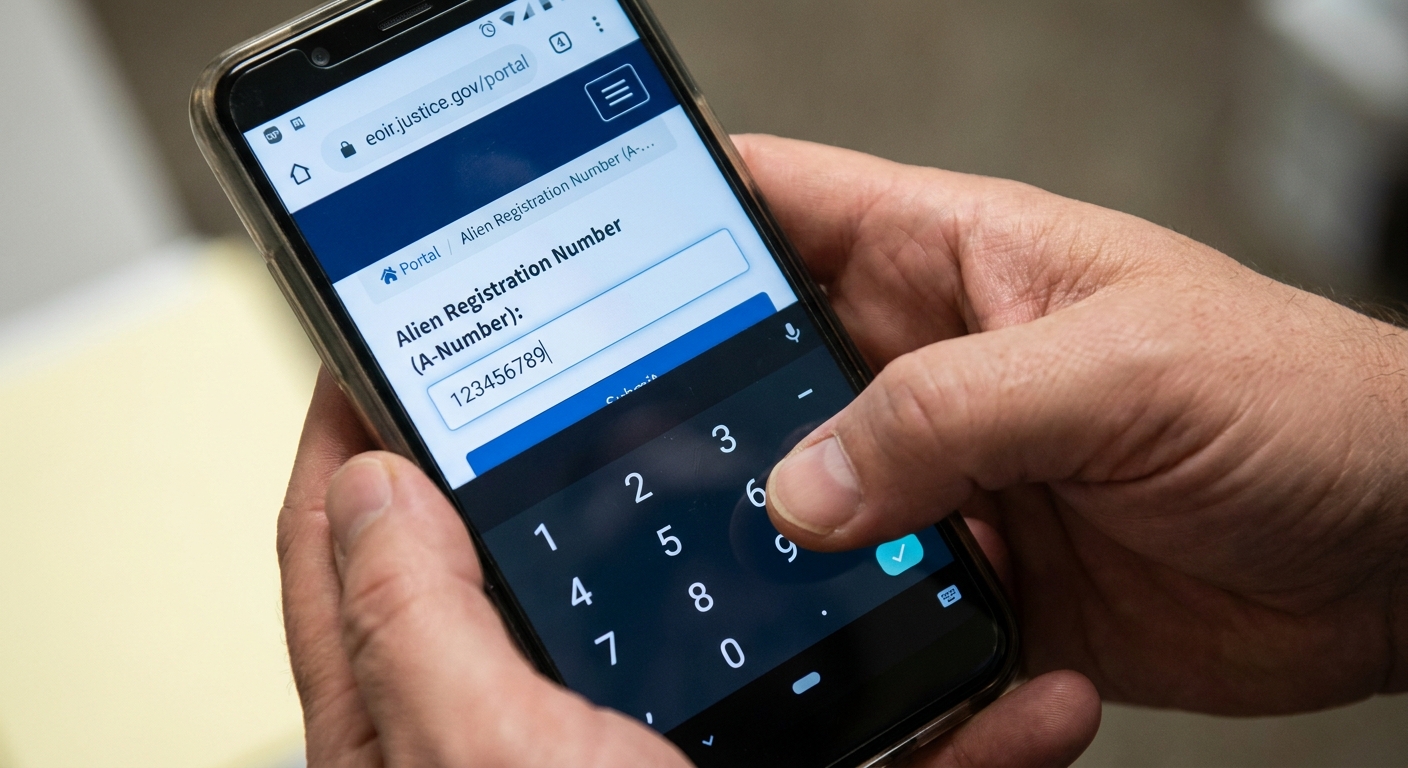
You do not need to travel to the Phoenix immigration court to find out when your next hearing is. What you need is your alien registration number, the A-number, which has eight or nine digits and appears on your immigration documents.
There are three official, free channels:
- The EOIR automated line at 1-800-898-7180. Available 24 hours a day in English and Spanish, with your next hearing date and case status.
- The EOIR case information portal, which reads the same database from a browser.
- The hearing search at portal.ice.gov/eoir, a second official way to locate your case.
Keep in mind there can be a lag between a hearing being scheduled and it showing up in the system. If you want to understand what each field actually means, we walk through it in our guide on how to check your immigration case status.
Some hearings are held online. EOIR publishes access information for internet-based hearings by court, and your notice will tell you whether yours is in person or virtual.
What it means when the system cannot find your A-number
If the system does not find your number, it does not mean your case was closed or that you have no court date. The most common reason is that ICE has not yet filed your Notice to Appear with the court, and that handoff between agencies can take weeks or months.
In the meantime, check regularly. The date that governs is the one on your document, and a hearing you did not know about is still a hearing you can miss.
- Read your document: the Notice to Appear may already carry a specific date and time, even if the system is empty.
- Call the court: if your date is close and the automated line still has nothing, call 602-640-2747 and ask about the filing status.
- Check again: once a week is a reasonable rhythm until the case appears.
Why your hearing might be in Tucson, Eloy, or Florence
A common mistake is driving downtown only to find the case is assigned somewhere else. Arizona has four immigration courts, and the Phoenix immigration court is only one of them: which one hears your case depends on where you live and, above all, on whether the person is detained.
| Court | Address | Type of case |
|---|---|---|
| Phoenix | 250 N. Seventh Ave., Suite 300 | Non-detained individuals and families |
| Tucson | 300 W. Congress St., Suite 300 | Cases from southern Arizona |
| Eloy | 1705 E. Hanna Rd., Suite 366 | People detained at Eloy |
| Florence | 3260 N. Pinal Parkway | People detained at Florence |
Eloy and Florence sit inside facilities controlled by the Department of Homeland Security, more than an hour from downtown Phoenix, with their own visitation rules. If a relative is detained there and you want them out before the case moves forward, that is the work of immigration bond attorneys, and knowing what to do when ICE detains someone matters in the first hours.
If the hearing is at Eloy, our guide to the Eloy immigration court covers the security gate, what the judge does at the Master Calendar hearing, and what follows the ruling.
When someone is transferred between detention centers, the case generally follows them. Changing venue because you moved is not automatic: it takes a motion to change venue and a judge who grants it for good cause. Always confirm which court holds your case before you drive.
Master calendar hearing or individual hearing, what is the difference
Cases are not resolved in a single appointment. There are two kinds of hearing and they do very different jobs.
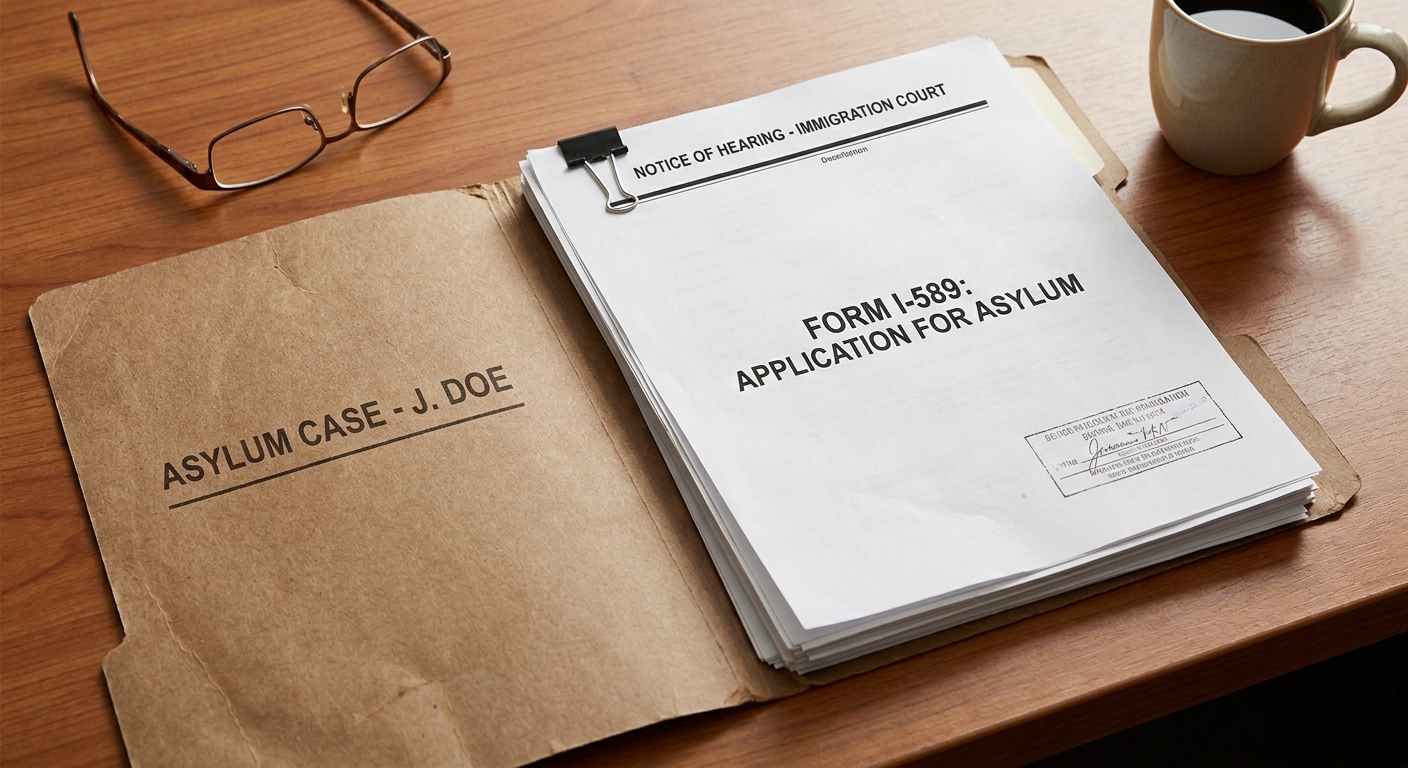
The master calendar hearing is short and procedural. The judge handles several cases in the same session, confirms your information, takes your pleadings to the charges, and sets deadlines for your applications. What happens in that first appearance is covered in our guide to the Notice to Appear and your first hearing.
The individual hearing, also called the merits hearing, is the real one. The judge blocks time for your case alone, you testify, evidence and witnesses come in, and the decision is made there. It is the one to prepare in depth, and everything done well or badly at the master calendar shows up in it.
What happens if you appear without a lawyer
You have the right to represent yourself, but it is worth knowing the terms. The judge is not there to explain the law to you or build your defense, and across the room is a government attorney who appears at the Phoenix immigration court for a living. If you arrive unrepresented, you can ask the judge for a continuance to find counsel.
Everything you say in the courtroom is recorded and becomes part of the record. An improvised answer at the master calendar can close a door that does not reopen, and once an order is entered against you the options narrow and the deadlines of an immigration appeals lawyer come into play.
Showing up at the Phoenix immigration court with the right address, a confirmed date, and your documents in order is the baseline. What decides a case is the work done before you walk in.
At Zava Immigration Law Group we are immigrants helping immigrants, and we know this court from the inside. Contact us to review your documents before your next hearing date.
Frequently asked questions about the Phoenix immigration court
Can I move my case to another city if I no longer live in Arizona?
Changing venue requires a formal motion before the judge who currently holds your case, and updating your address does not do it automatically. You have to show good cause for another court to take over, usually that this is where you live and where your evidence and witnesses are. The judge can grant it or deny it. Filing it well drafted and with supporting documentation changes the odds considerably.
What should I do if I receive a notice for a hearing that already passed?
This is serious and time matters. First confirm whether a removal order was entered in your absence, by calling 1-800-898-7180 or checking the EOIR portal. If an order exists, the route is usually a motion to reopen, and one of the strongest arguments is precisely that the notice did not reach you in time through no fault of your own. Keep the envelope with the postmark: it is evidence.
Can family members attend my hearing?
Immigration hearings are open to the public, with limited exceptions set by law, so relatives can generally sit in the gallery. The judge keeps the authority to close a hearing for privacy reasons, particularly in asylum cases or where protected information is involved. Courtroom space is limited, so large groups may be asked to wait outside. Nobody attending needs to notify the court in advance.
How do I correct my address after moving?
File Form EOIR-33/IC with the court handling your case within five days of the move. It is the step that keeps future notices arriving at your real address, and skipping it is one of the most common reasons people miss a hearing without ever knowing about it. Send a copy to the government attorney as well and keep your proof of filing.
Can I request a different date if I have a conflict?
Yes, through a written motion explaining the specific reason. Judges look for good cause, such as a medical emergency or the need for time to obtain legal representation. A work conflict or lack of transportation rarely qualifies. File as far in advance as you can: asking the day before almost never works, and simply not appearing without authorization is treated as a failure to appear.
Can I have an interpreter if my English is limited?
Yes. The court works with interpreters and does not charge you for that service at your hearing. Tell the judge your language at your first appearance so it is noted in the record and an interpreter is scheduled for later dates. Relying on a relative to translate your testimony is not advisable: what goes into the record has to be exactly what you said.
Is it true that ICE has been arresting people at immigration courts?
Arrests by ICE around immigration courts in Arizona and other states have been documented, and several legal organizations have challenged the practice in court. It is a situation that shifts with each judicial decision. Skipping your hearing is not the answer, because failing to appear produces a removal order against you. The sensible step is to speak with an attorney before your date, so you know where your case stands and you arrive with legal representation.
Sources and official resources
- EOIR: Learn About Immigration CourtOfficial source
- USCIS Policy ManualOfficial source

Jessica Anleu (formerly Jessica Lewis) is an experienced immigration lawyer in Phoenix with a decade of immigration experience.
All PostsRelated Posts
An immigration detainer and the 48 hour hold in Maricopa County
What an immigration detainer really means for a 48 hour hold in a Maricopa County jail, and the exact steps families should take before that window closes.
Preparing for your hearing at the Florence immigration court
The Florence immigration court operates inside one facility, but a nearby complex often gets confused with it. Here is how to tell them apart.
How the judge decides if you go home at an immigration bond hearing
An immigration bond hearing decides if you can leave detention while your case continues. Here is what the judge weighs before deciding your case.
Your privacy, your choice
With your permission, Google Analytics and Microsoft Clarity help us understand site use. Google Ads and Meta measure advertising. You can decline all or choose each category. Forms work with any choice.
Checked options stay off until you save them.