
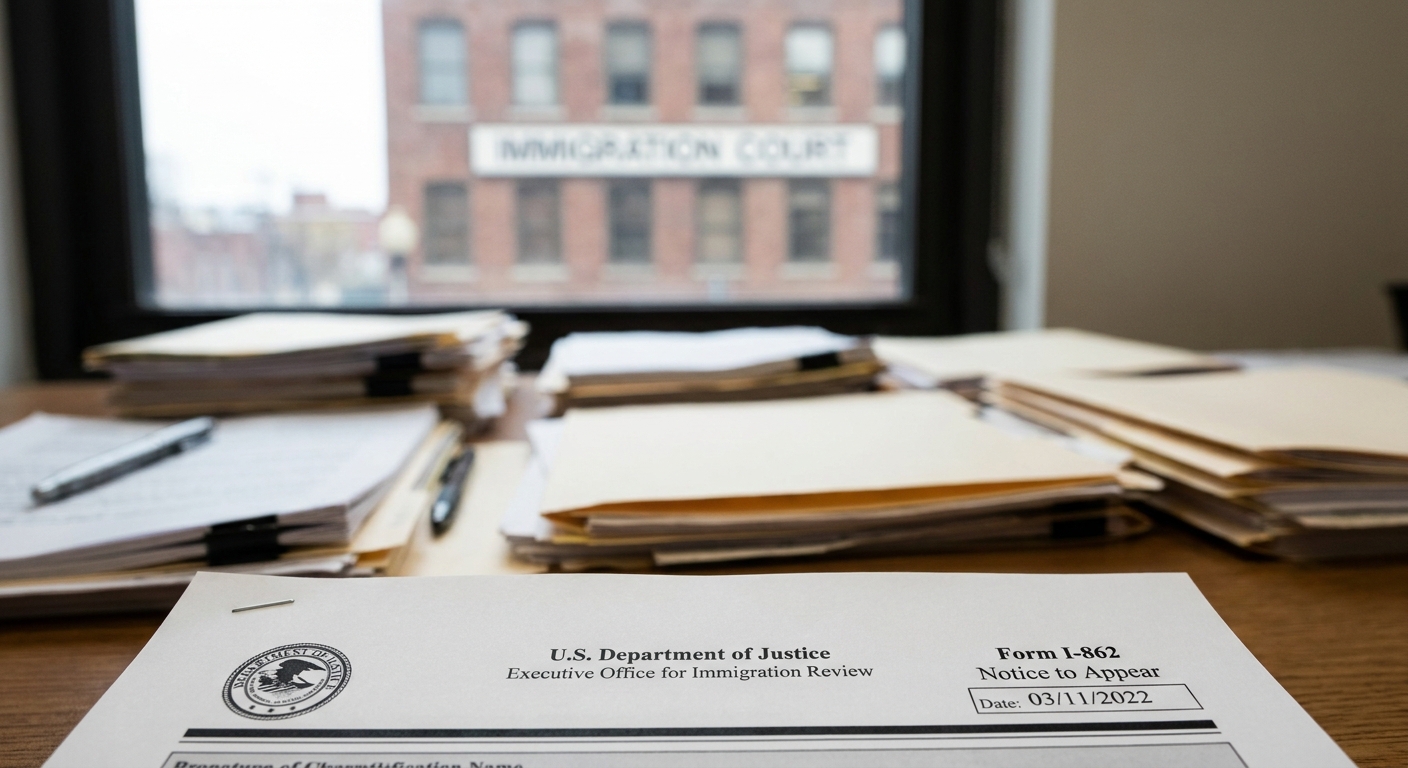
Notice to Appear (NTA): What It Means and What to Do
Table of contents
8 minute read
Receiving a Notice to Appear, officially Form I-862, formally begins your deportation proceedings in immigration court. Understanding its immediate implications and the steps you take can significantly affect your ability to remain in the United States, as our deportation defense attorneys often emphasize.
Many people who receive a Notice to Appear initially misunderstand its gravity, sometimes mistaking this specific document, the Form I-862 Notice to Appear, for a minor administrative letter. This common misconception can lead to missed court dates or delayed legal action, jeopardizing your immigration future.

How a Notice to Appear starts your removal proceedings
Receiving a Notice to Appear is a formal notification from the Department of Homeland Security (DHS), typically issued by ICE, signaling the government’s intent to remove you from the United States. It is not a final order of deportation, but rather a summons to appear before an immigration judge.
The document outlines the specific immigration law violations you are alleged to have committed and the legal basis for why the government believes you are removable.
This includes details such as your non-citizen status, the date and manner of your entry into the U.S., and any alleged transgressions like overstaying a visa or committing certain offenses. If you want to confirm your current immigration situation before taking action, learning how to check your immigration case status can help you understand the real state of your case.
- It formally initiates removal proceedings.
- It lists the alleged violations of immigration law.
- It orders your appearance before an immigration judge.
- It is designated as Form I-862.
Your immediate steps after receiving a Notice to Appear
The moment you receive a Notice to Appear is when immediate, decisive action becomes paramount. The primary risk of inaction is that failing to respond or appear in court can result in an order of removal issued against you in absentia, meaning without you present.
Your first step involves thoroughly examining the details listed on your Form I-862 Notice to Appear. Note the issuing agency, the date and time of your scheduled hearing (if provided), and the location of the immigration court. It is essential to keep all copies of the NTA and any other documents you receive from immigration authorities.
Seeking legal counsel promptly is the next essential action. An immigration attorney can help you understand the charges against you, identify potential defenses, and prepare you for your initial court appearance. This early intervention can make a significant difference in how your case proceeds.
Prioritize these immediate actions:
- Read the NTA carefully: understand the allegations and ensure your personal details are correct.
- Note the court and date: mark your calendar for any scheduled court dates and locate the court’s address.
- Keep all copies: never discard any official immigration documents, as they are all part of your legal record.
- Seek legal counsel: contact an experienced immigration attorney without delay to discuss your situation.

What happens at your first immigration court hearing?
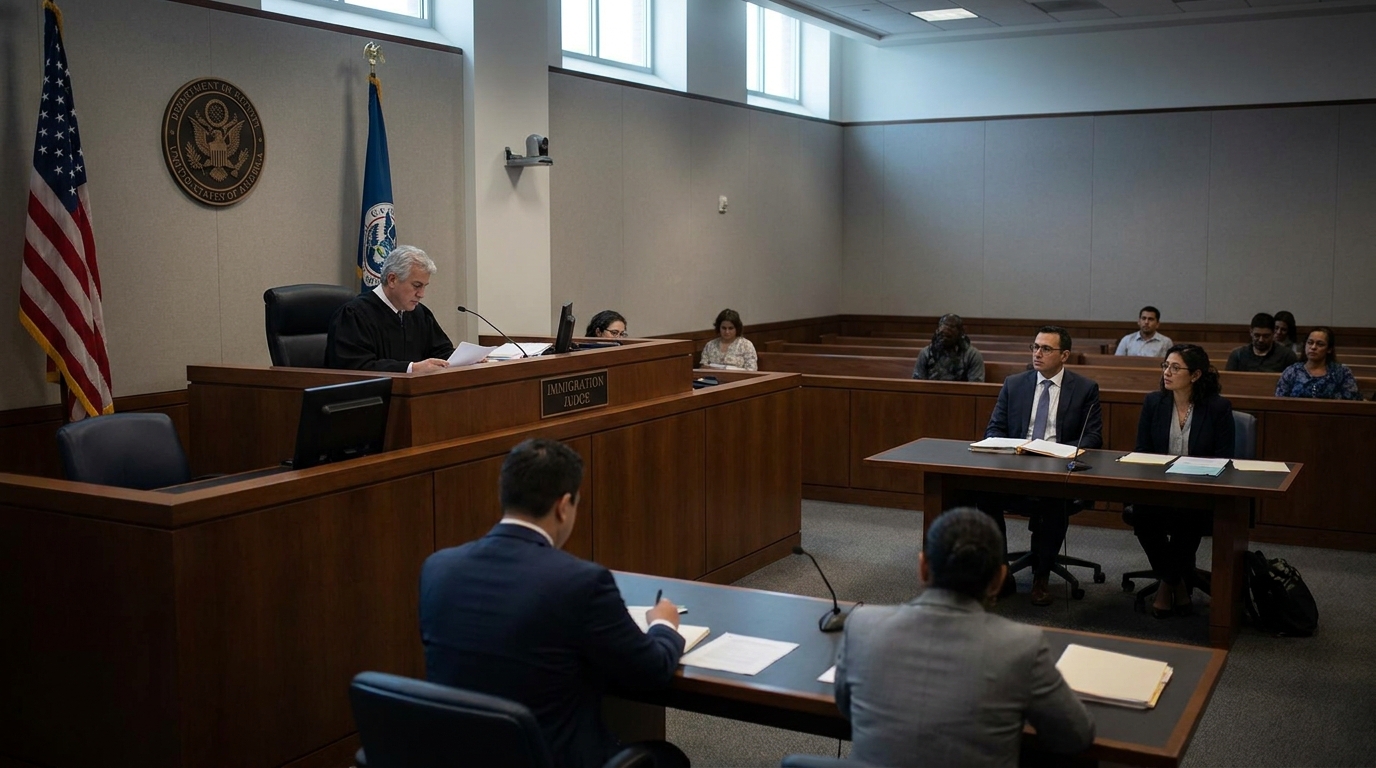
Your initial appearance before an immigration judge is known as a Master Calendar Hearing (MCH). This is typically a brief procedural hearing, not a full trial. You will appear before the judge alongside other individuals whose cases are also being called.
During the Master Calendar Hearing, the judge will confirm your identity and ensure you have received a copy of the Notice to Appear.
You will be asked if you understand the allegations against you and whether you admit or deny the charges of removability. The judge will also ask if you intend to seek legal representation.
Having an attorney by your side at this hearing is highly beneficial. An attorney can advise you on how to respond to the charges and explain your rights.
They can also request a continuance if more time is needed to prepare your defense or find legal counsel. This initial hearing sets the stage for all future proceedings in your case, and may even influence how long a cancellation of removal case takes if that ends up being your form of relief.
- You will acknowledge receipt of the NTA before the immigration judge.
- The judge will verify your identity and confirm the allegations.
- You will be asked to admit or deny the charges of removability.
- The court will confirm if you have legal representation or intend to seek it.
Could an NTA lead to detention, and what about bond?
It is not uncommon for a Form I-862 Notice to Appear to be issued to someone who is already in immigration detention. In other situations, receiving an NTA can sometimes lead to subsequent detention by immigration authorities if you are considered a flight risk or a danger to the community.
If you or a loved one are detained, the possibility of an immigration bond may arise. A bond is a sum of money paid to the government to secure a detainee’s release, with the promise that they will appear for all future court hearings.
The amount of the bond is set by an immigration judge. The judge considers factors such as flight risk, ties to the community, and criminal history when determining the amount.
Securing an immigration bond can be a complex process, often requiring a formal request to the court or an administrative bond application through ICE. Our immigration bond attorneys can help assess eligibility and advocate for a reasonable bond amount, facilitating release while the removal proceedings continue.
| Detention scenario | Impact of NTA |
|---|---|
| Already detained | The NTA formally notifies you of charges and starts the court process while you are in custody. |
| Not detained | The NTA initiates proceedings; potential for future detention based on individual risk assessment. |
| Bond eligibility | The immigration judge may set a bond, allowing release from detention during proceedings. |
| Bond process | Requires legal representation to argue for bond eligibility and an appropriate amount. |
What choices do you have when facing an NTA?
Once removal proceedings officially begin with an NTA, your case is not without options. The specific choices available to you depend heavily on your individual circumstances, including your immigration history, family ties, and any criminal record.
Common strategies include challenging the government’s allegations of removability or applying for various forms of relief from deportation. The options available depend on your particular situation.
These options can range from asylum for those fearing persecution, to cancellation of removal for long-term residents with U.S. citizen or permanent resident family members. Another path is adjustment of status for individuals eligible for a green card.
Waivers of inadmissibility are another path if you have certain grounds that would otherwise prevent you from obtaining a green card or other immigration benefit. These waivers can resolve specific issues that might affect your eligibility.
Understanding these legal avenues requires skilled guidance. Our team also works with close relatives who can activate relief options: if you qualify, our family-based petition attorneys can help explore eligibility for these protections and plan your next steps.
- Challenging the factual or legal basis of removability.
- Applying for various forms of relief from removal (e.g., asylum, cancellation of removal).
- Seeking adjustment of status to lawful permanent resident.
- Filing waivers of inadmissibility for certain past issues.
What happens if your Notice to Appear has missing information?
It is not uncommon for a Notice to Appear to be issued with incomplete information, particularly regarding the date, time, or specific location of your initial court hearing.
You should not assume that an NTA with missing details is automatically invalid or that you can disregard it.
In cases where the NTA lacks a hearing date or time, the Department of Justice’s Executive Office for Immigration Review (EOIR) will typically mail a separate hearing notice to the address on file. This notice provides the essential scheduling information you need to appear in court.
Failing to receive this separate notice due to an outdated address can still lead to an in absentia removal order.
Therefore, if your NTA arrives without these necessary details, your immediate steps remain the same: consult with an attorney.
They can help you verify the NTA’s status, track your case with the immigration court, and ensure your address is current with both DHS and EOIR to prevent any missed communications. If a final order is eventually issued, they can also assess whether an immigration appeal before the Board of Immigration Appeals is viable within the 30-day filing deadline.
The path after receiving an NTA is complex and demands immediate, informed action. Navigating immigration court without knowledgeable support can have severe consequences. As immigrants helping immigrants, we provide the precise legal guidance you need to defend your rights. If you have just received a Notice to Appear, schedule a consultation with our legal team as soon as possible to review your options.
Frequently asked questions about your Notice to Appear
How long do I have to respond to a Notice to Appear?
There is not a specific response deadline for the Notice to Appear itself, but the document typically includes a scheduled initial Master Calendar Hearing. Attending this hearing is critical. Failing to appear can lead to a deportation order issued against you in your absence. If your NTA lacks a court date, a separate notice will be mailed. We strongly advise contacting an attorney immediately upon receiving an NTA to understand deadlines, track your case, and prepare your defense, ensuring you meet all court requirements.
What happens if I miss my immigration court hearing?
Missing a scheduled immigration court hearing, including your Master Calendar Hearing, typically results in the immigration judge issuing an in absentia order of removal against you. This means you are ordered deported without being present in court. While it may be possible to file a motion to reopen your case, doing so is challenging and has strict deadlines. Preventing an in absentia order by appearing or having legal representation is usually far more effective. Our attorneys can help ensure you meet court obligations.
Can I apply for a green card even if I have a Notice to Appear?
Yes, in many situations it is possible to apply for a green card (adjustment of status) or other forms of relief while in removal proceedings. Your eligibility depends on various factors, including your immigration history, family ties, and the specific grounds of removability alleged in your Notice to Appear. Options like asylum, cancellation of removal, or waivers of inadmissibility are also potential paths. Our team assesses your unique circumstances to determine which forms of relief you may qualify for and can help you pursue them in court.
How can I find out my court date if my Notice to Appear doesn’t list it?
If your Notice to Appear is missing the date, time, or location of your initial hearing, the Executive Office for Immigration Review (EOIR) will generally mail a separate hearing notice. Do not assume the NTA is invalid. You should immediately contact an experienced immigration attorney. We can help you check your case status with the immigration court, verify your address with both DHS and EOIR, and ensure you receive all critical updates. This prevents missed court dates and potential in absentia deportation orders.
Is it possible to appeal a final deportation order from an NTA case?
Yes, if an immigration judge issues a final order of removal, you generally have the right to appeal that decision to the Board of Immigration Appeals (BIA). There are strict deadlines for filing an appeal, typically 30 days from the judge’s decision. Appealing is a complex legal process that requires a thorough understanding of immigration law and detailed brief writing. Our attorneys can evaluate the grounds for an appeal and represent you through this process, striving to overturn the removal order.
Sources and official resources
- EOIR: Learn About Immigration CourtOfficial source
- USCIS Policy ManualOfficial source

Jessica Anleu (formerly Jessica Lewis) is an experienced immigration lawyer in Phoenix with a decade of immigration experience.
All PostsRelated Posts

An immigration detainer and the 48 hour hold in Maricopa County
What an immigration detainer really means for a 48 hour hold in a Maricopa County jail, and the exact steps families should take before that window closes.

Preparing for your hearing at the Florence immigration court
The Florence immigration court operates inside one facility, but a nearby complex often gets confused with it. Here is how to tell them apart.

How the judge decides if you go home at an immigration bond hearing
An immigration bond hearing decides if you can leave detention while your case continues. Here is what the judge weighs before deciding your case.
Your privacy, your choice
With your permission, Google Analytics and Microsoft Clarity help us understand site use. Google Ads and Meta measure advertising. You can decline all or choose each category. Forms work with any choice.
Checked options stay off until you save them.