
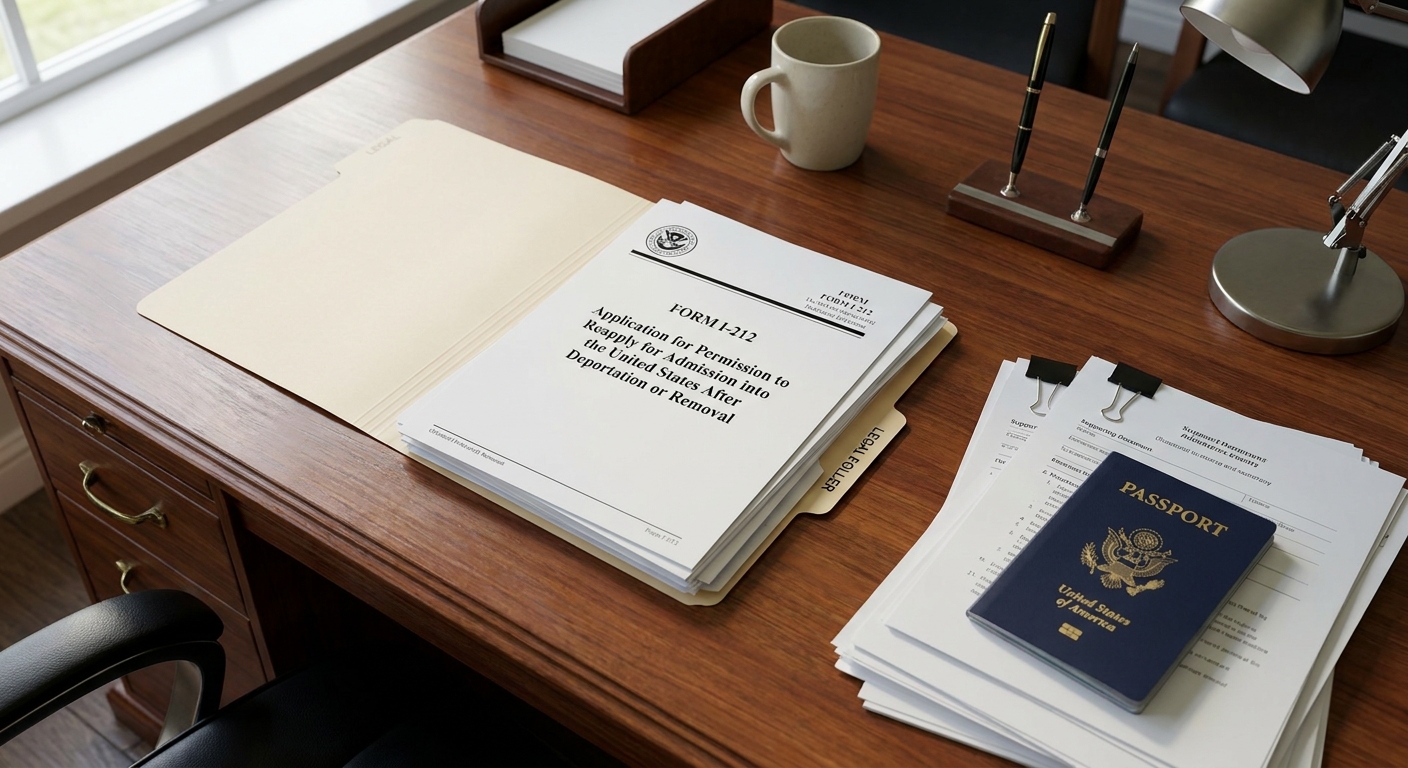
How the I-212 waiver lets you return legally after a deportation
Table of contents
7 minute read
A deportation order does not necessarily close the door on coming back. Removal triggers a bar of 5, 10, or 20 years, but the I-212 waiver lets you ask the government for permission to return before that time runs out.
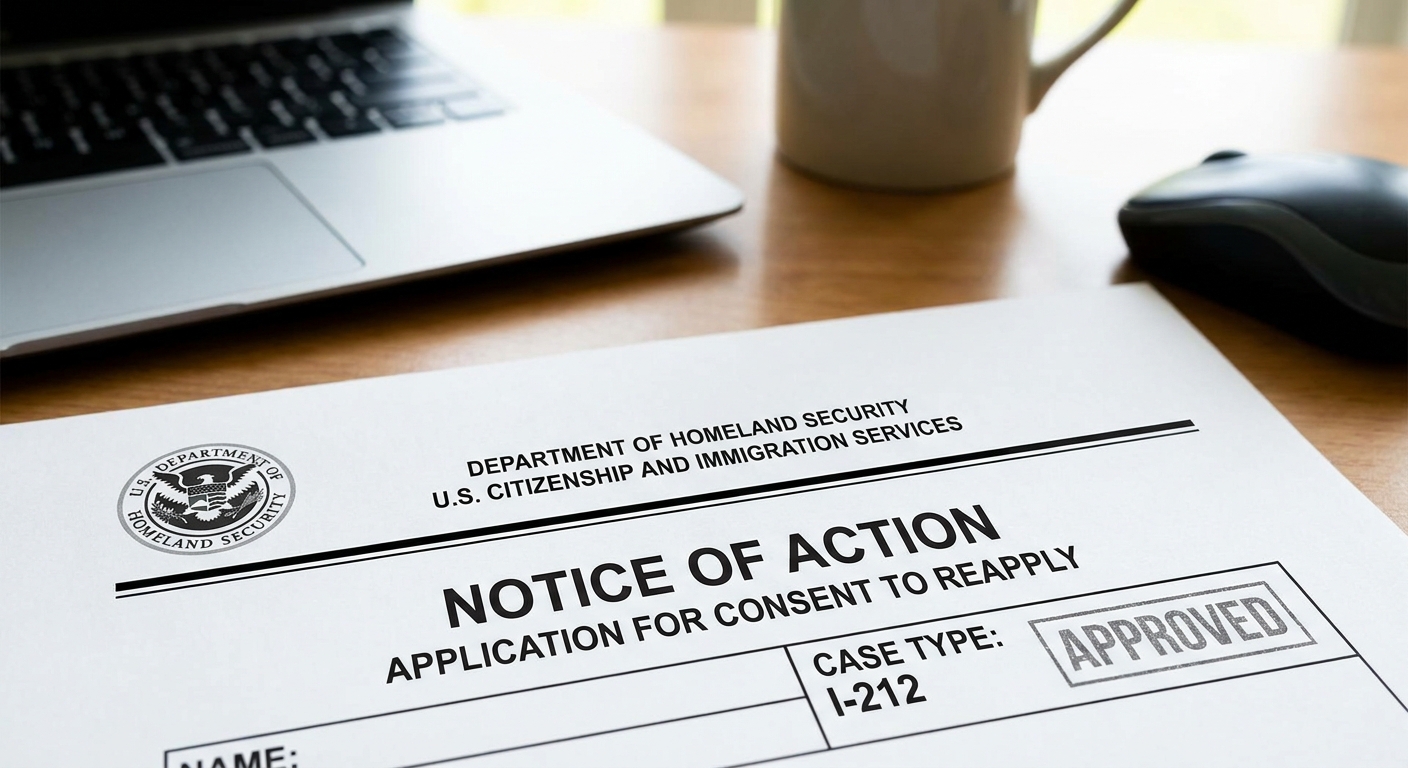
Its official name at USCIS is the Application for Permission to Reapply for Admission into the United States After Deportation or Removal, and in practice it is called consent to reapply. Working out whether it applies to you, and when to file it, is what experienced waiver of inadmissibility lawyers do first.
Why a ten-year bar might not last that long
How long you have to stay out depends on how you left. A removal order from an immigration judge usually carries a 10-year bar, someone removed at a port of entry may face 5 years, and two or more removals push it to 20.
- Five-year bar: if you were removed on arrival at the border or a port of entry.
- Ten-year bar: the standard penalty after a removal order from an immigration judge.
- Twenty-year bar: triggered by two or more removals.
- Permanent bar: applies under section 212(a)(9)(C) if you reentered or attempted to reenter without inspection after a prior removal, or after accruing more than one year of unlawful presence in total.
- A separate permanent ground: under section 212(a)(9)(A), someone removed after an aggravated felony conviction is inadmissible at any time, with no bar period that eventually expires.
Filing an I-212 waiver does not erase the deportation. What it does is lift that time bar, so you can pursue a visa as though the period had already been served.
When to file the I-212 waiver
It is generally filed once you are pursuing a visa, immigrant or nonimmigrant, and the prior deportation is what stands between you and entry. Filing it with no underlying petition behind it usually ends in a quick administrative rejection.
- Get the underlying petition: normally a relative or employer files a petition on your behalf first.
- Wait for the consular signal: many applicants file once the consulate confirms the deportation bar is the reason for the visa refusal.
- File in the right place: for an immigrant visa from abroad the I-212 generally goes to USCIS, and it can be filed together with the I-601 when both are needed. For a nonimmigrant visa, the route runs through CBP.
Waiting out the entire bar abroad is a common mistake that keeps families apart longer than necessary. If your record has been clean since the removal and you have solid reasons to return, it can be filed years before the bar expires on its own.
One thing to be clear about from the start: this decision is discretionary. Meeting the requirements lets you ask; it does not entitle you to a yes. The officer weighs your case and can deny it.

What factors weigh on the decision
The government applies a balancing test that comes from Matter of Tin: favorable factors on one side, unfavorable on the other, and a judgment call. There is no formula and no score. That is why two similar cases can end differently.
Unlike the I-601, an I-212 waiver requires no qualifying relative and no showing of extreme hardship. Your family ties count as a favorable factor, but they are not an eligibility requirement.
| Criterion | Favorable factors | Unfavorable factors |
|---|---|---|
| Family unity | Close relatives who are citizens or residents | No family ties in the United States |
| Residence history | Long residence and steady employment | Brief stay or unauthorized work history |
| Moral character | Demonstrable rehabilitation and tax compliance | Criminal record or repeated fraud |
| Circumstances of removal | The removal involved a minor violation | The removal involved serious crimes |
Filing the bare forms tends to end badly. A strong case builds a narrative: what changed since then, what you contribute, and what your family loses through the separation.
How it differs from the I-601 waiver
This is the most common confusion, and it matters because many cases need both. The I-212 addresses the deportation itself. Accrued unlawful presence is a separate ground with its own bar, and that one is handled with the I-601.
Which of those two waivers of inadmissibility applies to you, and how the I-601 differs from the I-601A, is covered in our guide to the I-601 and I-601A waivers.
One detail changes the order of operations: if you have a removal order, the provisional I-601A waiver cannot be filed while that order stands. The I-212 has to be approved first. Knowing this prevents filing in the wrong sequence and losing months.
Watch for the permanent bar trap under section 212(a)(9)(C). If you were deported and then reentered or tried to reenter without inspection, the rule changes: you must spend ten full years outside the country before you can even ask for permission. If your case sits in that scenario, review it with a deportation defense lawyer before filing anything.
If what you are looking for is the wider set of options once an order already exists, they are gathered in can a deportation order be lifted and in how to arrange your papers after a deportation.
What evidence an I-212 waiver needs
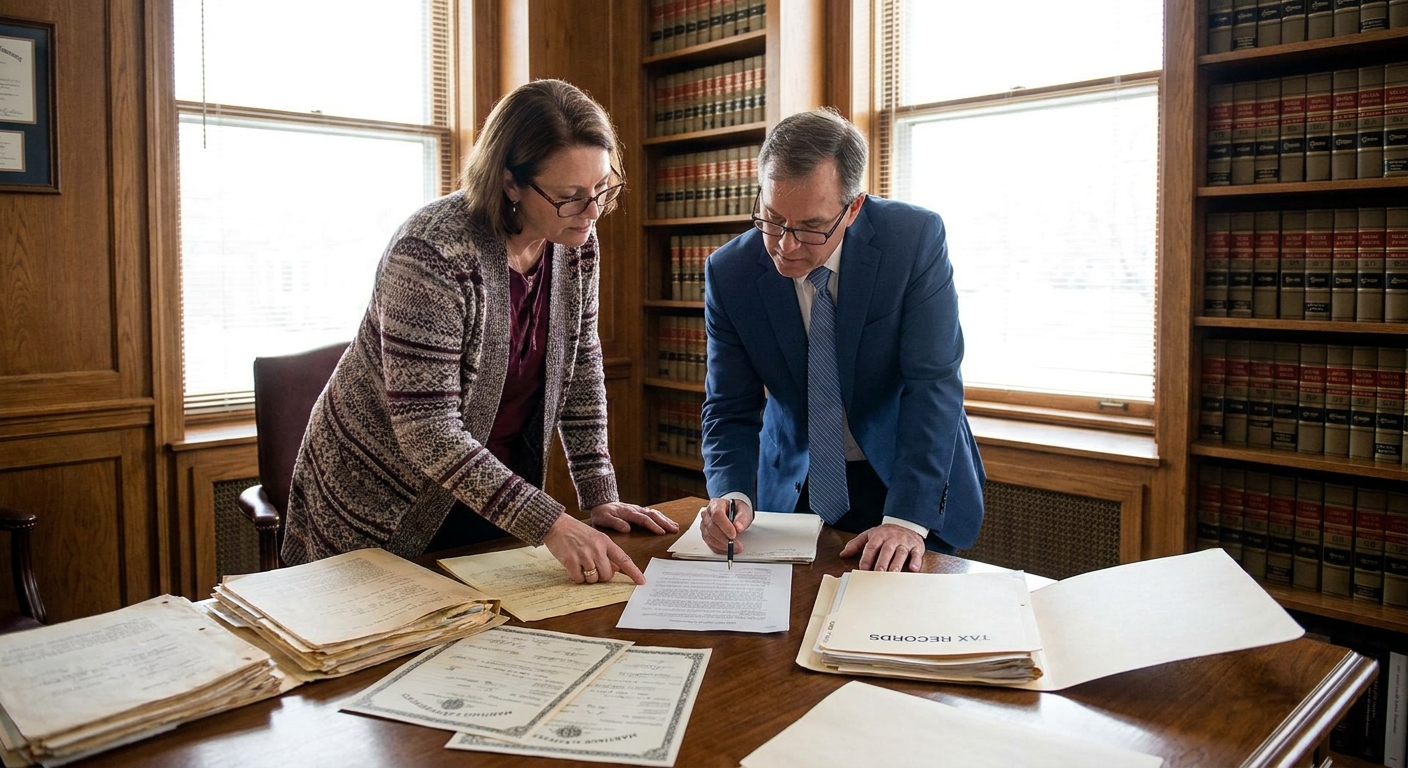
The application stands on what you can document. You have to show your return is justified and that you are not a risk, with specific records rather than general statements.
- Identity and relationship documents: birth certificates of U.S. citizen children or a marriage certificate with a resident.
- Financial records: tax compliance and current financial stability.
- Medical evidence: records showing a relative in the United States needs your presence for their care.
- Sworn statements: letters from community leaders or employers vouching for your character.
Everything has to be translated and organized to federal standards. And the first step, before gathering anything, is reading the original removal order: it tells you which legal ground actually needs to be waived.
What happens after you file
Processing times vary widely depending on which office has jurisdiction, and they shift from year to year, so check the current figures on the USCIS processing times page rather than trusting a fixed number. An approved I-212 waiver generally remains valid for that specific bar on future entries.
While the government reviews it, you have to remain eligible for the underlying visa. If the application is denied, your options depend on who decided it: a USCIS denial can be appealed to the Administrative Appeals Office within 30 days of the decision, or 33 if it was served by mail. Consular decisions are not appealable through that route, and if an immigration judge decided your case, the appeal goes to the Board of Immigration Appeals.
Refiling with a stronger record is also on the table, particularly if your circumstances have changed. And if what you need is to halt a removal that is still in motion, that is a different mechanism, explained in stay of removal.
A removal order feels final, and often it is not. What is final is letting years pass without checking what your record actually says.
At Zava Immigration Law Group we are immigrants helping immigrants. Contact us in Phoenix, AZ to review your removal order and find out which route back is available to you.
Frequently asked questions about returning after a deportation
Can I file an I-212 waiver if I currently live in the United States without status?
It depends on whether your case is resolved inside the country or at a consulate. If you are eligible to adjust status here through a specific family category, in some cases it can be filed without leaving. But many people with a prior removal order have to process at a consulate abroad, where the waiver becomes a required step before a visa can be issued. Which scenario is yours depends on your order and on how you entered the country.
Does an approved I-212 waiver also fix the permanent bar for entering without inspection?
Not automatically. Consent to reapply addresses the prior deportation, but the permanent bar under section 212(a)(9)(C) has its own rule. Someone who reentered or attempted to reenter without inspection after a removal order generally faces a mandatory ten-year wait outside the United States, and only after completing it can they request permission to return. This is the distinction that most surprises families who expected one waiver to resolve everything.
What can I do if my request for permission to reapply is denied?
A denial leaves the deportation bar in place, so the visa cannot be issued. If USCIS made the decision, it can be appealed to the Administrative Appeals Office within 30 days, or 33 if the notice came by mail. Consular decisions are not appealable through that route. You can also refile with stronger evidence if your circumstances changed. Reading the exact reasons for the refusal is what determines which of the two paths makes sense.
Do I have to wait until my five or ten-year bar is nearly over to apply?
No. Waiting out the full period is not a requirement, and in many cases it makes sense to file once you have an approved petition and a clear reason to return: getting ahead of that deadline is precisely what the I-212 exists for. What does not work is filing without an active visa route, because the government needs the legal context of your admission to evaluate it. The exception is the permanent bar, which does require the ten years abroad.
Will a criminal record from years ago cause an automatic denial?
Not automatic, but it weighs. Prior convictions enter the balancing test as unfavorable factors, and offsetting them takes substantial evidence of rehabilitation. The officer looks at the nature of the offense, how much time has passed, and what you have done since. Keep in mind the decision is discretionary in every case: even with a favorable record, approval is never guaranteed.
Sources and official resources
- EOIR: Learn About Immigration CourtOfficial source
- USCIS Policy ManualOfficial source

Jessica Anleu (formerly Jessica Lewis) is an experienced immigration lawyer in Phoenix with a decade of immigration experience.
All PostsRelated Posts
An immigration detainer and the 48 hour hold in Maricopa County
What an immigration detainer really means for a 48 hour hold in a Maricopa County jail, and the exact steps families should take before that window closes.
Preparing for your hearing at the Florence immigration court
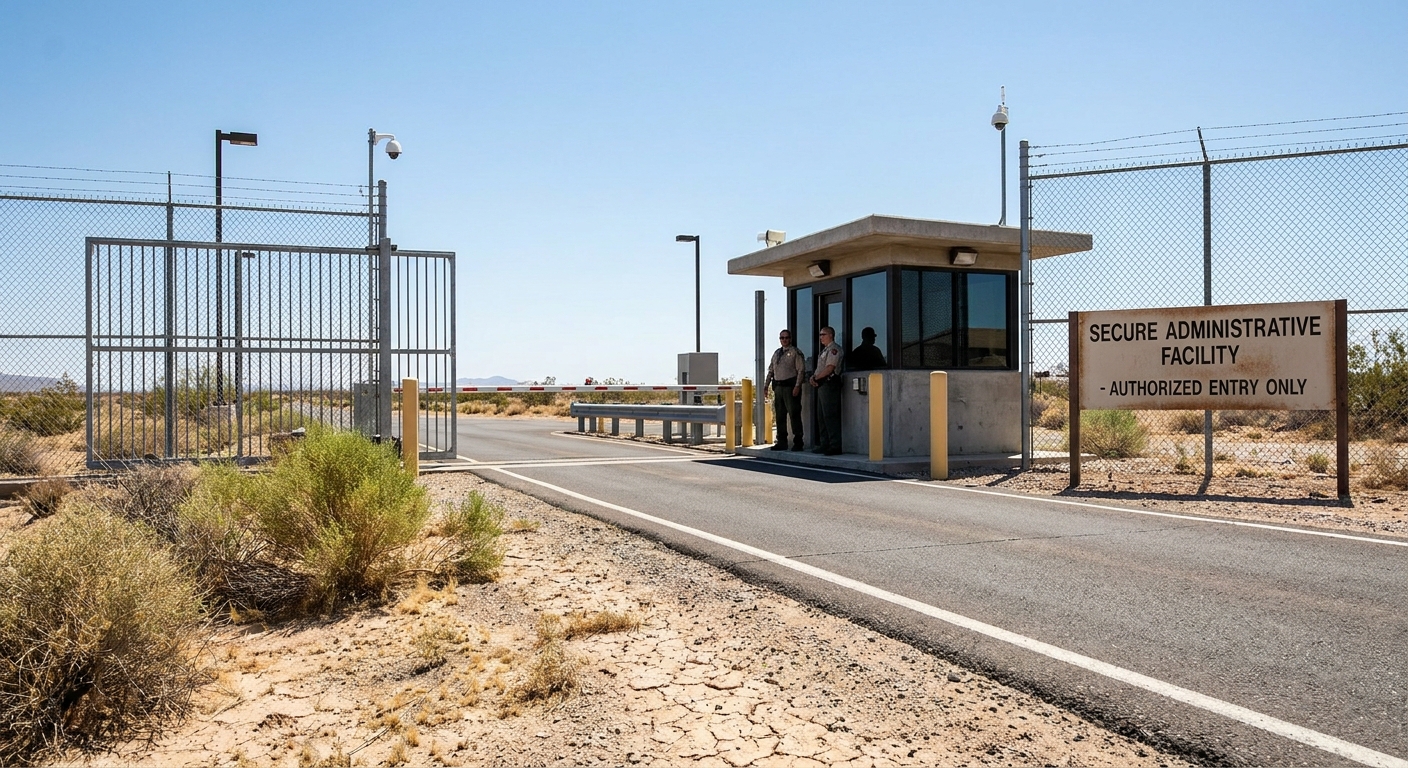
The Florence immigration court operates inside one facility, but a nearby complex often gets confused with it. Here is how to tell them apart.

How the judge decides if you go home at an immigration bond hearing
An immigration bond hearing decides if you can leave detention while your case continues. Here is what the judge weighs before deciding your case.
Your privacy, your choice
With your permission, Google Analytics and Microsoft Clarity help us understand site use. Google Ads and Meta measure advertising. You can decline all or choose each category. Forms work with any choice.
Checked options stay off until you save them.