
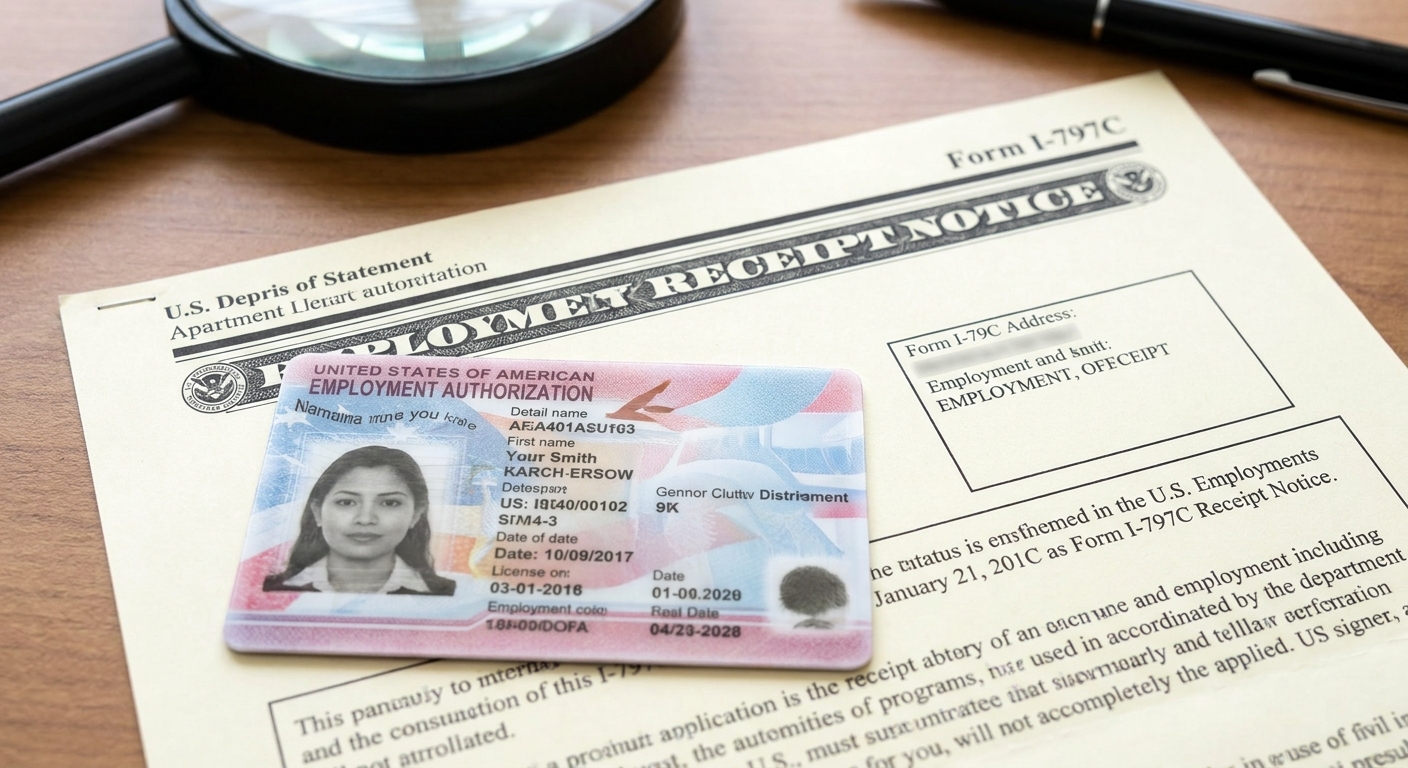
How to renew your work permit and what happened to the 540-day extension
Table of contents
8 minute read
If your Employment Authorization Document is nearing its expiration date, timing matters more than ever. USCIS ended blanket automatic extensions for most renewals filed after October 30, 2025, so a late employment authorization card renewal can mean an unexpected gap in your ability to work.
Filing early and understanding your category still gives you the strongest protection. Coordinating with work permit lawyers to confirm your eligibility before you submit Form I-765 helps you avoid a preventable interruption to your income and your legal right to work.
Is the 540-day automatic extension still available in 2026?
The short answer: usually not for new filings. On October 30, 2025, USCIS published an interim final rule ending automatic extensions for most employment authorization card renewal applications filed on or after that date. Renewals filed earlier that are still pending may keep their extension.

If you file today, you generally will not receive an automatic extension once your card expires, with narrow exceptions set by law or a Federal Register notice, mainly for TPS re-registration. That makes early filing the only real safety net you have.
This guide covers renewals only. If this is your first Employment Authorization Document rather than a renewal, our guide to the work permit application process walks through the different eligibility rules and timeline.
Qualifying categories for an employment authorization card renewal extension
If your renewal was filed before October 30, 2025, eligibility for the up-to-540-day extension still depends on the code printed on your current card. Your expiring category must match the code on your new application, or your employer may not be able to accept the extension notice as proof.
The rule targeted categories that faced the heaviest USCIS delays, including asylum, adjustment of status, and VAWA self-petitioners. If you are tracking a VAWA work permit timeline, the same category-matching rule applies to your renewal.
| Category code | Description | Automatic extension period |
|---|---|---|
| A12 or C19 | Temporary Protected Status (TPS) | Up to 540 days |
| C08 | Asylum seekers | Up to 540 days |
| C09 | Adjustment of status (green card) applicants | Up to 540 days |
| A10 | Withholding of deportation or removal | Up to 540 days |
| C31 | VAWA self-petitioners | Up to 540 days |
If you belong to a category not listed above, such as C33 (DACA), or if you filed on or after October 30, 2025, you likely will not receive an automatic extension beyond the physical date on your card. Understanding this in advance prevents an unwelcome surprise from your employer.
Some categories outside this table, like U visa-based work permits, follow separate timing rules. Our team supporting U visa applications can confirm how your specific renewal timeline works if your authorization is tied to a pending U visa case.
When is the right time to start your work permit renewal
Filing early is now the only way to avoid a gap, since most employment authorization card renewal filings made after October 30, 2025 do not receive an automatic extension. USCIS recommends submitting your renewal up to 180 days before your card expires. Waiting until the final month adds risk, since any rejection could cost you your filing date and your buffer.
- Review the expiration date: Check the front of your current EAD and subtract 180 days to find your earliest filing window.
- Confirm your category: Verify that your eligibility has not changed since your last application (such as a change in your underlying immigration case).
- Submit Form I-765: Mail the application to the correct USCIS lockbox based on your category and location.
- Secure the receipt notice: Wait for the I-797C, Notice of Action, which serves as your legal proof of filing.
Whether an automatic extension applies to your renewal now depends on your filing date relative to October 30, 2025, and your category. Processing times fluctuate according to USCIS data, so filing as early as your category allows gives you the largest possible buffer against a gap in your authorization.

What documents will you need for an employment authorization card renewal
Explaining that an expired plastic card can remain valid proof of authorization is a common hurdle for many workers. To prove your employment authorization card renewal is active, you must present specific documents to your HR department. Providing only one of these items typically leads to a rejection during the Form I-9 verification process.
- Expired EAD: Your physical work permit card with the qualifying category code (like C08 or C09).
- Form I-797C receipt notice: The official letter from USCIS acknowledging your renewal application was received.
- Notice of extension language (if applicable): The receipt notice only shows automatic extension language if your filing date and category qualify under the pre-October 30, 2025 rule.
- Identification: A secondary form of ID if requested by the employer for standard I-9 updates.
If your renewal qualifies for the automatic extension, your employer updates your Form I-9 by adding up to 540 days to your card’s original expiration date. If it does not qualify, your employer must generally treat your authorization as expired once that date passes, unless another exception applies.
Failing to present valid proof before your card expires leaves the employer with no legal choice but to remove you from the payroll. Even if you are a valued employee, companies face heavy fines for employing individuals without verifiable authorization. Taking responsibility for providing this proof protects both your income and your employer’s compliance.
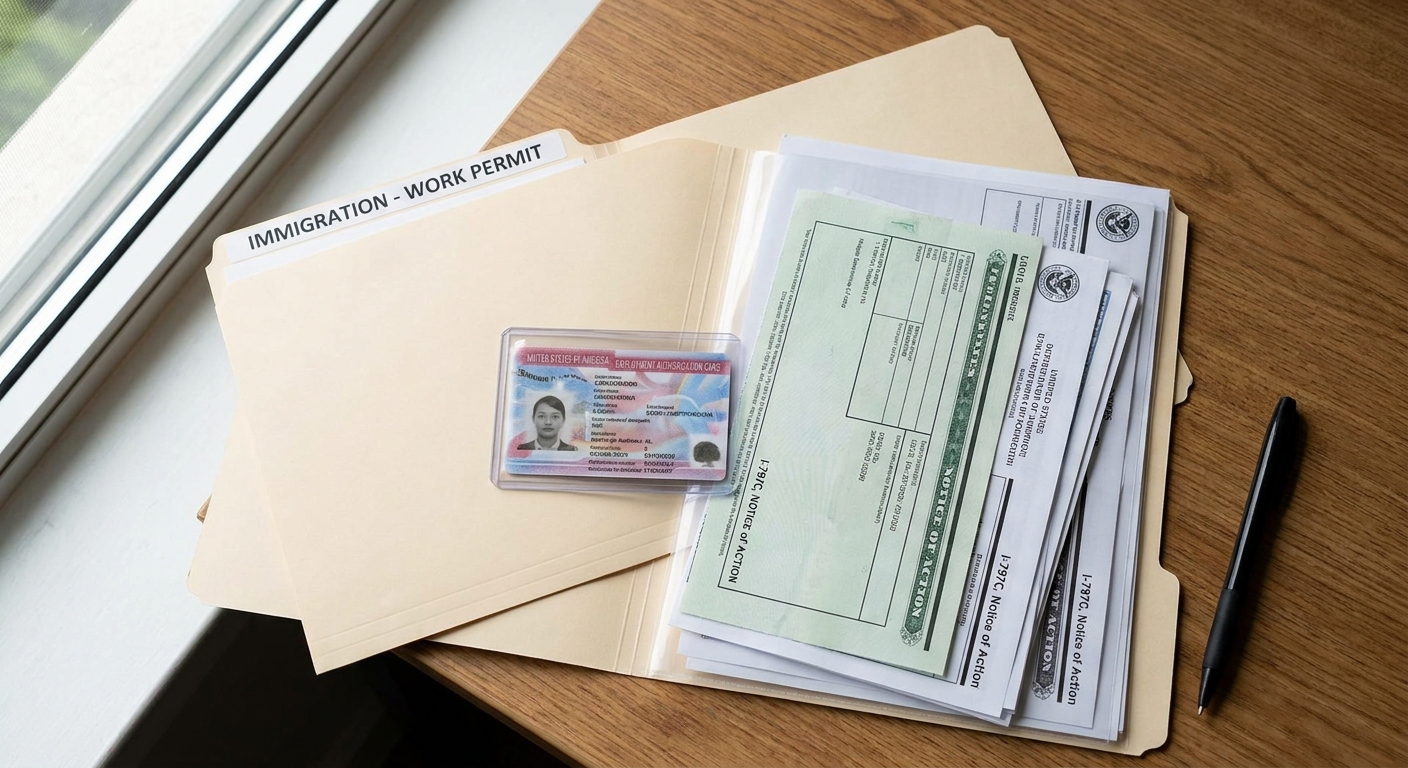
How to handle a situation where your employer doesn’t understand the new extension rules
Many employers still assume every EAD renewal comes with an automatic extension, a holdover from the rule that applied through October 29, 2025. HR teams may not realize that renewals filed after that date usually do not qualify, which can create confusion during Form I-9 verification.
- Refer to the USCIS handbook: Direct your employer to the M-274, Handbook for Employers, which explains the current automatic extension rules.
- Show the official announcement: Use a tablet or computer to show the USCIS announcement on the October 30, 2025 rule change.
- Highlight the receipt notice: Point out the specific language on your I-797C that confirms whether your category qualifies for an extension.
- Consult legal counsel: If a lapse in authorization creates a real risk to your immigration status, deportation defense lawyers can help you understand the options available to protect your case.
Losing your job due to a misunderstanding of the current rules often has ripple effects on your legal standing. If an employer incorrectly terminates you, the loss of income could make it difficult to maintain the financial requirements of your underlying case. Clear documentation is your best defense against administrative errors that threaten your livelihood.
We often see workers assume any lapse instantly leads to removal. Understanding how your work permit connects to deportation risk in your specific case helps you respond calmly instead of panicking over a paperwork gap.
What happens if your renewal stays pending past the 540 days
If you filed on or after October 30, 2025, you generally have no automatic extension once your card expires, and you must stop working until USCIS approves your renewal. If you filed earlier and are still inside an active extension, that protection still runs out at 540 days from your card’s expiration date.
If you are within 60 days of losing that protection, or your renewal is simply taking longer than expected, use your USCIS online account or the Contact Center to request an updated status. In persistent cases, the CIS Ombudsman can help move a stalled application forward.
- Case inquiry: Submit a formal inquiry for an application that is outside of normal processing times.
- Expedite request: If you face severe financial loss, you might qualify for an expedited review of your I-765.
- Ombudsman assistance: File Form DHS-7001 if USCIS has failed to resolve your case after multiple inquiries.
- Legal review: Reach out for guidance if your work permit is tied to a pending green card or other underlying application.
The days of blanket 540-day extensions are largely over for new filings, so accurate, timely renewals matter more than ever. Missing a deadline can mean an immediate loss of income and legal complications. At Zava Immigration Law Group, we understand a work permit is the foundation of your life. Contact our Phoenix, AZ-based firm to confirm your renewal timeline.
Frequently asked questions about work permit extensions
Am I still eligible for the 540-day automatic extension if I renew my work permit in 2026?
Usually not. USCIS ended blanket automatic extensions for Form I-765 renewals filed on or after October 30, 2025, with narrow exceptions set by law or a Federal Register notice, mainly for TPS re-registration. If your renewal was filed before that date and is still pending, your extension may continue for up to 540 days from your card’s expiration date. Filing as early as possible, up to 180 days before your card expires, is now the best way to avoid a gap.
Can I travel outside the U.S. if I am using the 540-day extension?
Traveling internationally with an expired card and a receipt notice often results in significant complications at the border. While a valid extension allows you to work domestically, Customs and Border Protection agents might not recognize the receipt notice as a valid entry document. It is generally safer to stay within the country while a renewal is pending unless you hold an alternative travel document like Advance Parole. Leaving without proper documentation could jeopardize your ability to return.
Will the Arizona MVD accept my expired card and receipt notice to renew my license?
Arizona Motor Vehicle Division offices typically follow federal guidelines regarding work permit extensions, but individual clerk knowledge varies. Bring your expired card, the I-797C receipt notice, and proof that your category qualifies for an automatic extension. In some cases, the MVD may issue a temporary license that matches the extension period. Requesting a supervisor is often useful if the clerk is unfamiliar with these rules.
What should I do if I never received or lost my I-797C receipt notice?
Without the physical I-797C notice, you cannot easily prove your filing date or extension status to an employer, which frequently leads to a suspension of pay. Check your USCIS online account immediately to print a copy of the notice if it is available. If you do not have an online account, you can request a duplicate notice or contact the USCIS Contact Center to track the missing document. Having a physical backup is necessary for employment verification.
Does the extension apply if I am changing from an asylum work permit to a green card permit?
Automatic extensions usually require the category code on your expiring card to match the code on your renewal application. If you are switching from category C08 to C09, you likely do not qualify for the 540-day automatic extension, even if you filed before October 30, 2025. In these situations, a gap in work authorization is a significant risk. Consulting an immigration attorney can help determine whether there is a way to bridge the timing between your different applications.
Do I need to update my Social Security card after my renewal is approved?
If your previous Social Security card has the restriction ‘Valid for work only with DHS authorization,’ you generally do not need a new card after your renewal. However, if your immigration status changed during this time, updating your records with the Social Security Administration helps ensure your earnings are correctly reported. This step avoids future administrative hurdles with government benefits and ensures your record matches your current legal standing in the United States.
Sources and official resources
- USCIS: Working in the United StatesOfficial source
- USCIS Policy ManualOfficial source

Jessica Anleu (formerly Jessica Lewis) is an experienced immigration lawyer in Phoenix with a decade of immigration experience.
All PostsRelated Posts
An immigration detainer and the 48 hour hold in Maricopa County
What an immigration detainer really means for a 48 hour hold in a Maricopa County jail, and the exact steps families should take before that window closes.
Preparing for your hearing at the Florence immigration court
The Florence immigration court operates inside one facility, but a nearby complex often gets confused with it. Here is how to tell them apart.
How the judge decides if you go home at an immigration bond hearing
An immigration bond hearing decides if you can leave detention while your case continues. Here is what the judge weighs before deciding your case.
Your privacy, your choice
With your permission, Google Analytics and Microsoft Clarity help us understand site use. Google Ads and Meta measure advertising. You can decline all or choose each category. Forms work with any choice.
Checked options stay off until you save them.