
How to apply for a work permit step by step
Table of contents
7 minute read
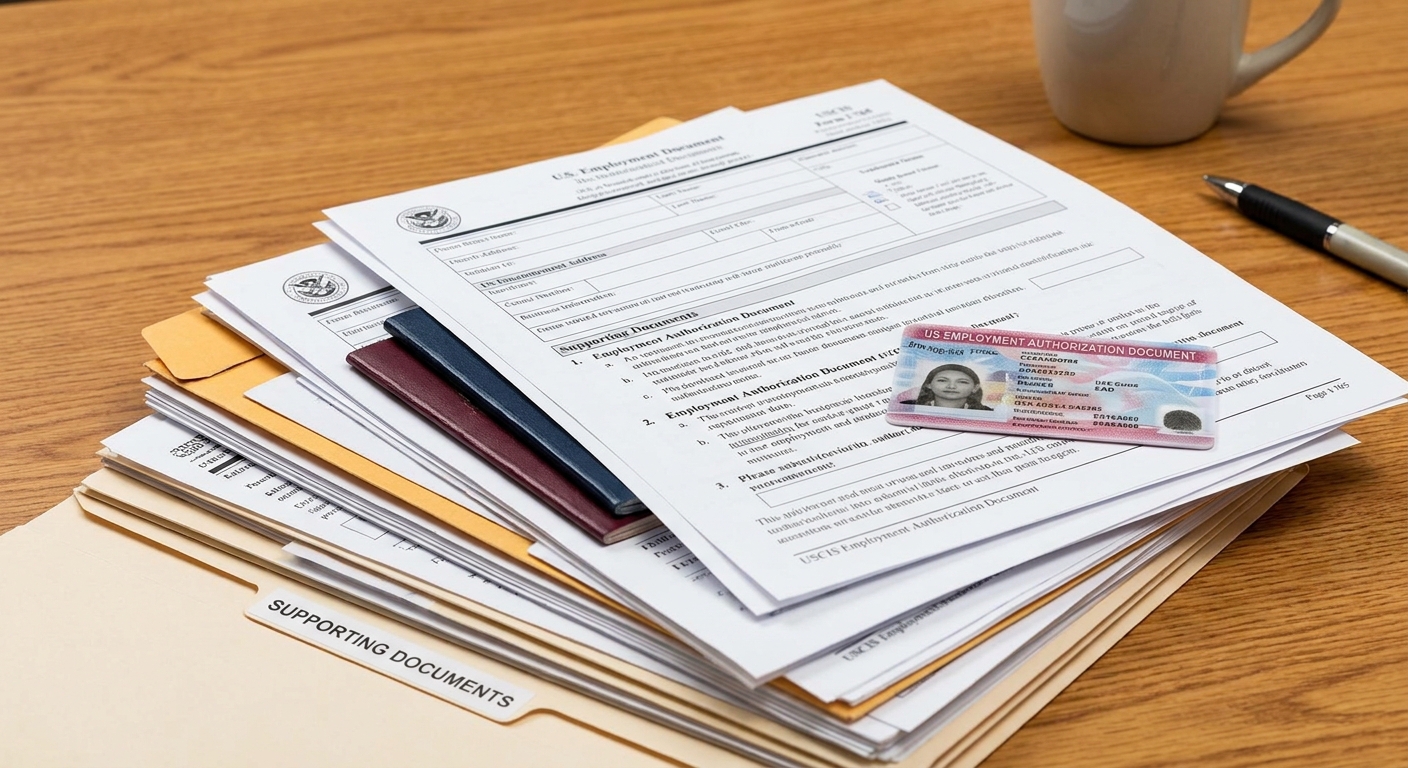
Many individuals seeking to work in the United States often assume a work permit is a standalone application. However, an Employment Authorization Document (EAD), commonly known as a work permit, is nearly always connected to an existing underlying immigration status or another pending application. The journey to securing employment authorization requires a precise understanding of your eligibility and a careful approach to the entire work permit application process.
Navigating the specific requirements and correct procedures can be complex, and errors often lead to significant delays or even outright rejection. To ensure your path to legal employment is as smooth as possible, understanding each step prevents errors that could lead to delays. Our dedicated our work permit attorneys are here to help clarify this process and guide you through your unique circumstances.

What makes you eligible for a work permit?
Your ability to obtain a work permit in the United States depends entirely on your specific immigration status or a pending application with U.S. Citizenship and Immigration Services (USCIS). There is no universal work permit for all non-citizens. USCIS has defined numerous eligibility categories, each with its own set of criteria and a corresponding code that you must correctly identify on your Form I-765.
One of the most common struggles we observe among applicants is accurately determining their eligibility category, which can directly cause delays or rejections. Each category has specific timing requirements you must consider.
For instance, asylum seekers must typically wait at least 150 days after filing their asylum application before they can apply for an EAD. Those adjusting status to lawful permanent resident (green card applicants) can often file their work permit application concurrently with their Form I-485.
Common Work Permit Eligibility Categories
The following are examples of immigration statuses or applications that may confer eligibility for an EAD:
- Applicants for Adjustment of Status (pending green card applications)
- Asylum seekers and asylees
- Refugees
- Temporary Protected Status (TPS) holders
- Certain family members of visa holders (e.g., spouses of E, L, or J visa holders)
- Recipients of Deferred Action for Childhood Arrivals (DACA)
- U visa and VAWA self-petitioners
Each category has a specific code (e.g., c9 for adjustment of status applicants, c8 for asylum applicants) that you must enter correctly on your Form I-765. Misidentifying your category can quickly lead to an RFE (Request for Evidence) or a denial.
Eligibility depends on the underlying immigration category that qualifies you for employment authorization. Common pathways include pending asylum applications, VAWA self-petitions, U visa derivatives, adjustment of status, and deferred action. Our asylum attorneys and VAWA attorneys can confirm which category applies to your situation and what waiting period the regulations impose for each.
How do you prepare your Form I-765 application?
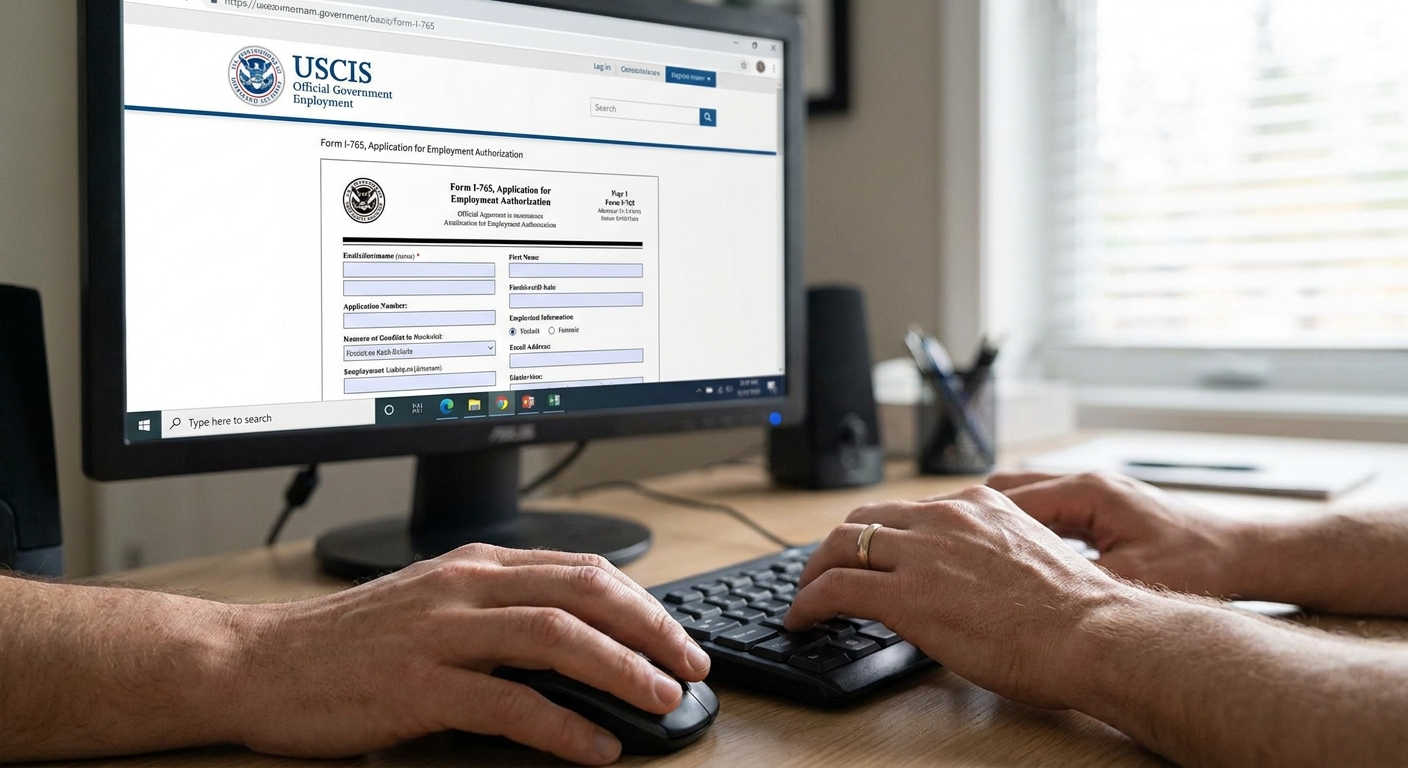
Once you have identified your correct eligibility category, the next step involves meticulously completing the Form I-765, Application for Employment Authorization. Using the most current version of the form, directly from the USCIS website, prevents rejection. As of March 5, 2026, USCIS will only accept the version released on August 21, 2025, or later.
Carefully fill out all sections with accurate personal information, including your full legal name, address, date of birth, and country of birth.
You must provide all requested immigration details, such as your Alien Registration Number (A-Number), I-94 arrival record information, and the specific eligibility category code you identified.
Any discrepancies or omissions in this official i 765 form can trigger delays or requests for additional information from USCIS, prolonging your wait for an employment authorization document.
What documents do you need to send with your work permit application?
After completing your Form I-765, gathering the necessary supporting documents helps avoid Requests for Evidence (RFEs) or denials. The precise documents required will vary based on your specific eligibility category, so always consult the I-765 instructions for your code. However, several documents are commonly required for most work permit applications:
- A copy of your Form I-94, Arrival/Departure Record, proving your legal entry and status in the U.S.
- A copy of a government-issued photo identification, such as your passport biographic page or a previous EAD.
- Two identical, passport-style photographs taken within 30 days of filing. These must meet USCIS specifications for size and background.
- A copy of your most recent Employment Authorization Document (EAD) if you have previously held one.
- Evidence of your underlying immigration status or pending application that qualifies you for a work permit. For example, if you are applying for adjustment of status, you would include a copy of your Form I-485 receipt notice or a copy of the I-485 itself if filing concurrently. Asylum applicants would include their Form I-589 receipt notice.
Failing to provide complete and accurate supporting evidence is a frequent cause of Requests for Evidence (RFEs) or denials, potentially extending your wait time significantly.
Therefore, you should double-check that every document is legible and meets the specific requirements outlined in the instructions for the i 765 form before submission.
Where and when do you send your application?
The submission logistics for your work permit application involve knowing where to send it and, equally important, when.
You can typically submit Form I-765 either by mail or, for certain categories, through online filing. Online submission can sometimes expedite the receipt process, but it is not available for all eligibility categories. For example, if you plan to request a fee waiver, you must submit your application by mail.
Filing fees for the work permit application vary and are subject to change, so always verify the current amount on the USCIS website. Fee waivers are available for certain applicants who demonstrate an inability to pay, but you must submit Form I-912, Request for Fee Waiver, along with your paper application.
The timing of your submission prevents rejection and delays. If you are applying for adjustment of status, you can often file your work permit application concurrently with your Form I-485.
Asylum seekers, however, generally must wait at least 150 days after properly filing their asylum application before they are eligible to submit their I-765.
For renewals of an existing employment authorization document, it is advisable to file up to 180 days before your current EAD expires, ensuring continuous work authorization.
Filing too early or too late for specific categories can lead to the rejection of your application, forcing you to restart the process and potentially lose precious time.
What happens after you submit your work permit application?
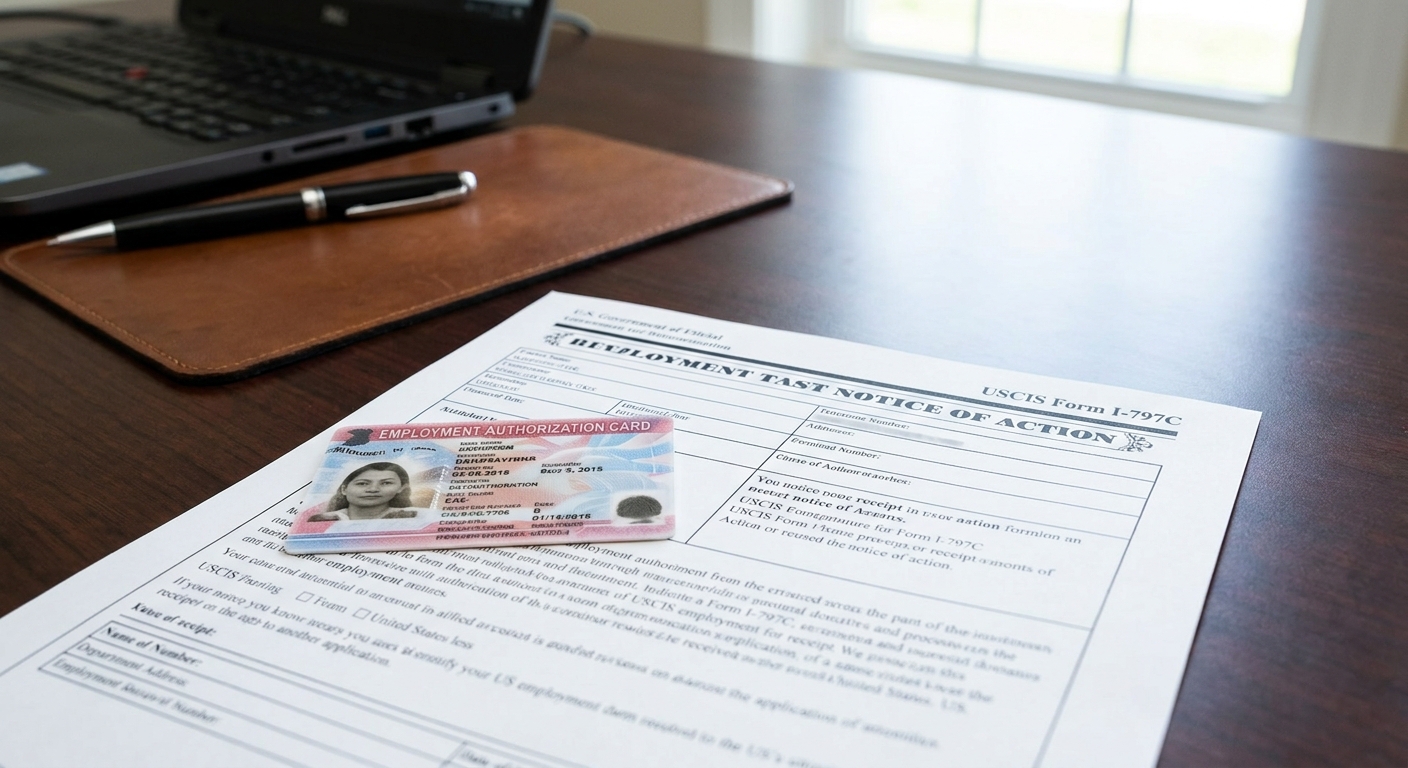
After you submit your work permit application, USCIS will issue a receipt notice, typically Form I-797C, confirming they have received your application. This notice will also include a receipt number that allows you to track your case status online.
The process generally unfolds as follows:
| Stage | Description |
|---|---|
| Receipt Notice | USCIS sends confirmation of application receipt, often within a few weeks. |
| Biometrics Appointment | Some applicants may receive an appointment notice for fingerprinting and photographs. This is not universally required, especially for certain F-1 students or renewals. |
| USCIS Review | Your application undergoes review by a USCIS officer. Processing times vary significantly based on your eligibility category and the service center handling your case, ranging from 1 to 19.5 months as of May 2026. |
| Request for Evidence (RFE) | If USCIS requires additional information or documents, they will send an RFE. Prompt and thorough responses prevent further delays. |
| Approval & Card Production | Upon approval, USCIS produces the EAD card, typically within two weeks, and mails it via USPS Priority Mail. You should allow 30 days from the approval date before contacting USCIS about non-receipt. |
Failing to keep your address updated with USCIS throughout this process could result in a lost EAD, requiring you to reapply and causing significant delays.
While you may receive an approval notice, you typically cannot begin legal employment until you have the physical employment authorization document in hand.
Many applicants worry about their immigration status while the EAD is pending. Whether you can be deported with a work permit depends on the underlying category, not on the EAD itself, so understanding that distinction matters before you start working.
What if your work permit application faces challenges?
Despite careful preparation, your work permit application can sometimes encounter challenges that lead to delays or rejections. Common issues include submitting an incomplete i 765 form, missing signatures, using outdated form versions, incorrect passport-style photos, or insufficient supporting evidence.
USCIS may issue a Request for Evidence (RFE) if they need more information. Responding to an RFE accurately and within the given timeframe helps keep your case moving forward and avoids further complications.
In the event of a denial, while disappointing, it is not always the end of the road. Depending on the reason for the denial, you may be able to file a motion to reopen or reconsider, or in some cases, an appeal.
These processes are highly complex and often require a deep understanding of immigration law. Navigating the specific legal arguments and procedural requirements for an appeal or motion can be challenging without proper legal guidance.
Facing delays or a denial for your employment authorization can be disheartening and significantly impact your ability to support yourself and your family.
If you are considering seeking employment authorization or facing challenges with your current case, our work permit attorneys at Zava Immigration Law Group are here to provide guidance and support, helping you understand your options and secure your future in Phoenix, AZ and beyond.
If USCIS denies the application, the review channels are limited. Reopening with new evidence or going to immigration appeal attorneys may be possible depending on the denial reason, but many denials require restarting the underlying category. How long a work permit takes through VAWA illustrates how the timeline depends on the parent petition, not on the EAD review alone.
Frequently asked questions about work permit applications
Do spouses of H-1B visa holders qualify for work permits?
Spouses of H-1B visa holders are generally eligible for work permits (EADs) under the H-4 classification if the H-1B spouse has an approved Form I-140, Immigrant Petition for Alien Worker, or has been granted H-1B status under the American Competitiveness in the 21st Century Act (AC21). This allows them to seek employment in the U.S. and helps families maintain financial stability. Our attorneys can help you determine specific eligibility based on your spouse’s H-1B status and any pending petitions.
What happens if my EAD expires before my renewal application is approved?
If your existing EAD expires before your renewal is approved, you may be granted an automatic extension of your work authorization for up to 540 days. This applies if you filed your renewal application on time, are applying under the same eligibility category, and your category is eligible for the extension. The extension allows you to continue working legally while USCIS processes your renewal. It is important to verify if your specific eligibility category qualifies for this benefit to prevent work interruptions.
How do I get a Social Security card after my work permit is approved?
Once your work permit (EAD) is approved and you receive your physical card, you can apply for a Social Security card. You can typically do this by visiting a local Social Security Administration (SSA) office with your EAD and other identity documents. If you indicated on your Form I-765 that you wished to apply for an SSN, the SSA might mail it to you automatically after your EAD approval. However, directly applying at an SSA office is a reliable way to ensure you receive it promptly for employment.
Can I start working once USCIS approves my work permit, or do I need the physical card?
You generally cannot begin legal employment until you have the physical Employment Authorization Document (EAD) in hand. While receiving an approval notice is a positive step, it is the physical card that serves as official proof to employers that you are authorized to work in the U.S. Some employers may accept other forms of proof in limited circumstances, but having your EAD card prevents misunderstandings and ensures compliance with federal law regarding employment eligibility verification.
What should I do if my approved work permit card gets lost in the mail?
If your approved EAD card is lost in the mail, you will typically need to file a new Form I-765 application, along with all supporting documents and the applicable fee, to request a replacement. It is important to allow up to 30 days from the approval notice date before contacting USCIS about non-receipt. If USCIS confirms it was mailed and not received, the replacement process becomes necessary, which can cause significant delays in obtaining your employment authorization.
Should I file my work permit application online or by mail?
Your filing method depends on your eligibility category and whether you are requesting a fee waiver. Online filing can sometimes expedite the receipt process for certain categories (like asylum or TPS applicants) and may have a slightly lower fee for renewals. However, if your category does not support online filing or if you plan to request a fee waiver (using Form I-912), you must submit your application by mail. Always check the USCIS website for current guidelines to ensure proper submission.
Sources and official resources
- USCIS: Working in the United StatesOfficial source
- USCIS Policy ManualOfficial source

Jessica Anleu (formerly Jessica Lewis) is an experienced immigration lawyer in Phoenix with a decade of immigration experience.
All PostsRelated Posts
An immigration detainer and the 48 hour hold in Maricopa County
What an immigration detainer really means for a 48 hour hold in a Maricopa County jail, and the exact steps families should take before that window closes.
Preparing for your hearing at the Florence immigration court
The Florence immigration court operates inside one facility, but a nearby complex often gets confused with it. Here is how to tell them apart.
How the judge decides if you go home at an immigration bond hearing
An immigration bond hearing decides if you can leave detention while your case continues. Here is what the judge weighs before deciding your case.
Your privacy, your choice
With your permission, Google Analytics and Microsoft Clarity help us understand site use. Google Ads and Meta measure advertising. You can decline all or choose each category. Forms work with any choice.
Checked options stay off until you save them.