
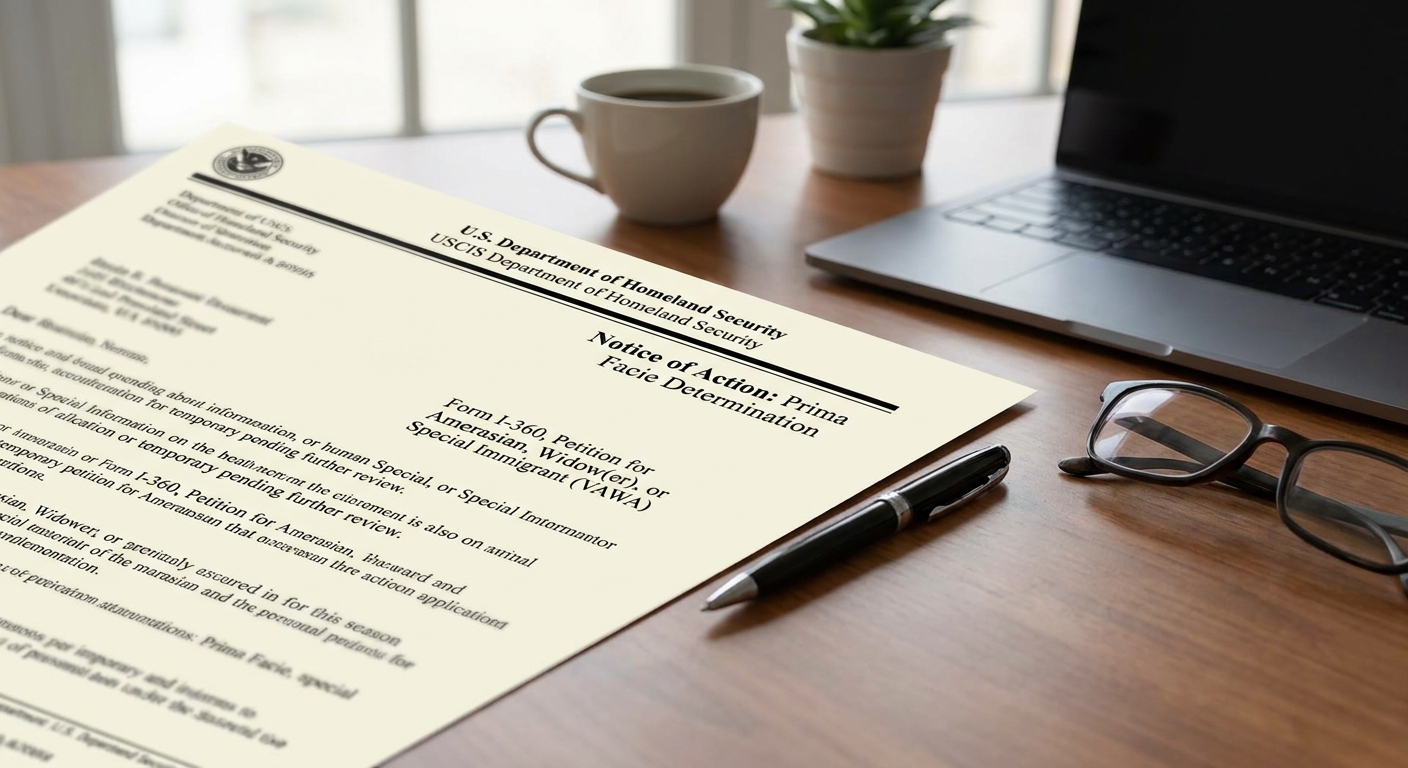
What VAWA prima facie determination means and what benefits it gives
Table of contents
8 minute read
A prima facie determination VAWA signals that USCIS has found enough initial evidence to suggest your self-petition is valid under the Violence Against Women Act, offering a significant, though temporary, step towards safety. This initial finding confirms the credibility of your application at first glance, often opening immediate avenues for stability and protection while your full case is reviewed.
While this determination is not a final approval of your immigration status, it provides temporary relief, allowing you to access certain benefits and protections. Understanding its specific implications is necessary to navigate the ongoing process.
Our VAWA attorneys assist survivors in comprehending each stage of their journey. We help ensure they maximize the temporary advantages offered by this determination.
Understanding your VAWA prima facie determination
When you receive a prima facie determination VAWA letter from USCIS, it means your VAWA self-petition (Form I-360) has been reviewed, and the agency believes, based on the evidence provided, that your case is likely to be approved. The term “prima facie” literally translates to “at first sight” or “on the face of it,” indicating that your application appears credible and complete enough to warrant further consideration.
This determination is a positive milestone, signifying that USCIS has acknowledged the initial validity of your claims of abuse and eligibility for VAWA. It is a formal recognition that you have submitted sufficient evidence to meet the initial legal requirements, setting your petition on the path toward full adjudication.
It is important to remember that this is an interim step, not a final decision on your immigration status. USCIS issues a Notice of Prima Facie Case to confirm that your VAWA self-petition meets this preliminary standard, allowing you to access certain temporary benefits.
This temporary protection often raises practical questions about travel. Leaving the country with a VAWA petition is generally not recommended before final approval, because international departure can trigger inadmissibility issues that complicate the case.
What this determination allows you to do while your VAWA petition is pending
Receiving a prima facie determination can unlock several temporary advantages, providing a measure of security and stability while your full VAWA petition is pending. These benefits are designed to assist survivors during a vulnerable period.
Here are some of the benefits you may experience:
- Work authorization: With a prima facie determination, you become eligible to apply for a work permit (Employment Authorization Document, or EAD) by filing Form I-765. This is often contingent on having a concurrently filed Form I-485 (Application to Register Permanent Residence or Adjust Status), allowing you to legally work in the U.S. while your VAWA case proceeds.
Our our team specializing in work permits can help you understand the requirements for obtaining your EAD. The prima facie determination VAWA strengthens your request for an EAD, providing a basis for temporary employment authorization.
- Public benefits eligibility: The determination may make you eligible for certain public benefits, such as food assistance, shelter, housing assistance, medical care (like Medicaid), and educational programs.
Eligibility can vary significantly by state and local agencies, as they have discretion in granting these benefits. USCIS itself does not directly grant these social services; rather, the prima facie determination VAWA provides a basis for you to apply for them.
- Protection from removal: A prima facie determination can provide a level of protection from deportation or removal proceedings. While it doesn’t automatically halt all actions, it serves as strong evidence of a pending, credible VAWA petition, which immigration judges and ICE may consider when making decisions about your case.
These temporary VAWA benefits allow you to establish independence and rebuild your life, offering valuable support during the often lengthy adjudication process.

How a VAWA prima facie determination differs from final approval
A common misconception among applicants is to equate a prima facie determination VAWA with final approval. While undeniably a positive sign, these two stages carry distinct implications and offer different levels of security.
The table below highlights the key differences:
| Feature | Prima facie determination | Final VAWA approval |
|---|---|---|
| Status | Initial finding that the petition is credible and meets basic requirements. | Petition is fully adjudicated and granted; leads to lawful immigration status. |
| Duration | Temporary; valid while the full petition is pending. | Permanent (for the I-360 self-petition); leads to eligibility for a green card. |
| Benefits | Eligibility for temporary work authorization (EAD) and some public benefits. | Confers lawful status, direct path to a green card, and all associated rights. |
| Guarantee | Does not guarantee final approval; petition can still be denied. | Guarantees the underlying VAWA eligibility, paving the way for permanent residency. |
Final approval means USCIS has thoroughly reviewed all evidence, conducted necessary background checks, and determined you fully meet all VAWA eligibility criteria. It is only at this stage that your permanent immigration status is secured.

Timing also depends on the underlying category. How long a work permit takes through VAWA illustrates that the EAD often arrives well before the final adjustment decision, which is why the prima facie determination is so valuable in the meantime.
What happens after you receive your prima facie determination letter?
After USCIS issues your prima facie determination letter, your VAWA self-petition enters the next phase of review, which involves a more in-depth examination of your case. This period requires continued diligence and patience, as the process can still involve several steps before a final decision is made.
USCIS will continue its comprehensive review, which may include further background checks and security clearances. It is possible you may receive a Request for Evidence (RFE) if the agency requires additional information or clarification on any aspect of your petition. Responding to an RFE promptly and thoroughly is essential to keep your case moving forward.
While interviews are less common for VAWA self-petitions compared to other immigration pathways, USCIS retains the right to request one. Processing times for VAWA cases can vary significantly due to caseloads and individual case complexities, so anticipating a potentially long wait time is advisable.
Long-term planning also matters. Even after VAWA approval and adjustment, status remains tied to specific conditions, and losing permanent residency after divorce illustrates how the residency obtained through VAWA continues to require attention beyond the approval letter.
What you should do while your VAWA petition is still under review?
Even after receiving a positive prima facie determination, remaining proactive and informed about your case is essential. The period while your pending VAWA petition is under review requires strategic action and continued attention to detail.
Here are key steps to consider:
- Maintain and collect evidence: Continue to gather and preserve any new evidence that supports your case, such as updated medical records, police reports, or affidavits. Even minor incidents or communications can become relevant.
- Do not assume final approval: Understand that the determination is temporary. Do not make irreversible life decisions based solely on this initial finding, as the petition can still face challenges or denial.
- Seek legal guidance for changes: If there are any significant changes in your circumstances, such as a change of address, new employment, or any contact with law enforcement, inform your legal counsel immediately. Such changes can impact your petition.
- Uphold good moral character: Continue to demonstrate good moral character. Any new arrests or criminal charges could jeopardize your VAWA petition.
- Understand your protections: Recognize that while your petition is pending, the prima facie determination can offer some protection against removal proceedings. Should you face any immigration enforcement actions, having legal counsel for deportation defense can be important.
Working closely with legal professionals can help you proactively address any issues and ensure all requirements for your VAWA self-petition are met throughout the review process.
Navigating the complexities of a VAWA self-petition, especially after receiving a prima facie determination, requires careful attention to detail and a clear understanding of what lies ahead. Our Phoenix, AZ-based team at Zava Immigration Law Group offers dedicated support to help you understand your status and strategically plan for final approval. As immigrants helping immigrants, we walk this path with you , schedule a consultation when you are ready to review your case.
Understanding the abuser’s perspective also matters. How a VAWA petition affects the abuser is a frequent concern, especially because confidentiality protections under 8 USC § 1367 limit what USCIS can disclose to the person you are reporting on.
Frequently asked questions about VAWA prima facie determinations
How long does it typically take to receive a VAWA prima facie determination?
The time it takes for USCIS to issue a prima facie determination can vary. Generally, it occurs within a few months of filing your VAWA self-petition, after USCIS has conducted an initial review of your evidence. This initial finding confirms the credibility of your application at first glance, but it is not a final approval. We help clients understand the general processing timelines and what to expect during this preliminary stage of their VAWA case.
Will USCIS notify my abuser if I receive a VAWA prima facie determination?
No, USCIS is legally prohibited from notifying your abuser about your VAWA self-petition or any step in the process, including a prima facie determination. The Violence Against Women Act (VAWA) includes strict confidentiality provisions designed to protect survivors. Your abuser will not be informed of your application, maintaining your safety and privacy throughout the immigration process.
How much protection from deportation does a VAWA prima facie determination offer?
A VAWA prima facie determination offers significant, though temporary, protection from removal proceedings. It signals to immigration judges and ICE that you have a credible, pending VAWA petition. While it does not automatically halt all actions, it serves as strong evidence of your eligibility for relief, which authorities typically consider. We can provide legal counsel if you face any immigration enforcement actions while your petition is pending.
Can I travel internationally after receiving a VAWA prima facie determination?
Traveling internationally after receiving a VAWA prima facie determination carries risks and is generally not advisable without specific legal guidance. Leaving the U.S. with a pending VAWA self-petition, even with a prima facie finding, can complicate your case and potentially be seen as an abandonment of your application. Our team can assess your specific situation and advise on any potential travel implications.
What is the best way to respond to a Request for Evidence (RFE) after getting a prima facie determination?
If USCIS issues an RFE after your prima facie determination, responding promptly and thoroughly is essential. The RFE indicates USCIS needs additional information or clarification to continue processing your VAWA self-petition. We recommend working with legal counsel to ensure all requested evidence is provided accurately and completely, addressing the specific points raised by USCIS to keep your case moving forward effectively.
Does a VAWA prima facie determination have an expiration date?
A VAWA prima facie determination does not have a fixed expiration date but remains valid while your full VAWA self-petition is pending with USCIS. It acts as a temporary finding, confirming the initial credibility of your case, and the benefits it unlocks typically last until a final decision is made on your I-360 petition. It’s important to remember this is not a permanent immigration status.
Sources and official resources
- USCIS: Immigration Options for VictimsOfficial source
- USCIS Policy ManualOfficial source

Jessica Anleu (formerly Jessica Lewis) is an experienced immigration lawyer in Phoenix with a decade of immigration experience.
All PostsRelated Posts

An immigration detainer and the 48 hour hold in Maricopa County
What an immigration detainer really means for a 48 hour hold in a Maricopa County jail, and the exact steps families should take before that window closes.

Preparing for your hearing at the Florence immigration court
The Florence immigration court operates inside one facility, but a nearby complex often gets confused with it. Here is how to tell them apart.

How the judge decides if you go home at an immigration bond hearing
An immigration bond hearing decides if you can leave detention while your case continues. Here is what the judge weighs before deciding your case.
Your privacy, your choice
With your permission, Google Analytics and Microsoft Clarity help us understand site use. Google Ads and Meta measure advertising. You can decline all or choose each category. Forms work with any choice.
Checked options stay off until you save them.