USCIS Updates Policy Manual on Legal Representation
Table of contents
Reading Time: 3 minutes
U.S. Citizenship and Immigration Services (USCIS) issued a comprehensive policy alert consolidating and updating its official guidance regarding legal representation in immigration matters. This policy manual update reorganizes the agency’s rules to ensure clear directives for applicants, petitioners, and their legal representatives throughout the immigration process.
The consolidation of these rules into the official manual simplifies the process of locating relevant guidance. Before this update, rules regarding representation were distributed across various administrative documents, making it more challenging for applicants to verify compliance. The consolidated format provides a single, unified source for all representation policies.
Eligible Practitioners in Immigration Matters
The updated guidance clarifies who can legally represent applicants and petitioners in matters before the agency. By defining the credentials required for legal representatives, the agency helps protect applicants from unauthorized practitioners. Only authorized attorneys and accredited representatives who meet the federal standards may act on behalf of individuals navigating the immigration system.
According to the updated USCIS Policy Manual, eligible representatives must maintain active standing with their respective licensing authorities. This clarification ensures that petitioners understand who has the legal authority to sign documents, submit filings, and speak on their behalf during interviews and other administrative proceedings.

Standards of Professional Conduct
The policy update outlines professional conduct standards that attorneys and accredited representatives must maintain. Representatives who appear before the agency must adhere to strict ethical guidelines. These standards are designed to protect the integrity of the administration of immigration benefits and ensure that all applicants receive competent assistance.
Attorneys and accredited representatives face consequences if they fail to meet these established standards of professional conduct. The updated instructions reinforce the expectations for honesty, diligence, and compliance with administrative rules. This framework helps prevent fraudulent practices and ensures a high level of professionalism throughout the system.
By publishing these standards clearly in the consolidated manual, the agency provides a transparent reference point for evaluating representative behavior. Applicants can refer to these updated guidelines to understand the ethical obligations their chosen legal representatives must fulfill during the preparation and submission of their cases.
Maintaining high professional standards is a primary aspect of protecting applicants from unscrupulous actors. By detailing these requirements publicly, the agency ensures that both attorneys and accredited representatives remain accountable. This accountability is necessary for maintaining trust in the integrity of the federal immigration system.

Procedures for Establishing Legal Representation
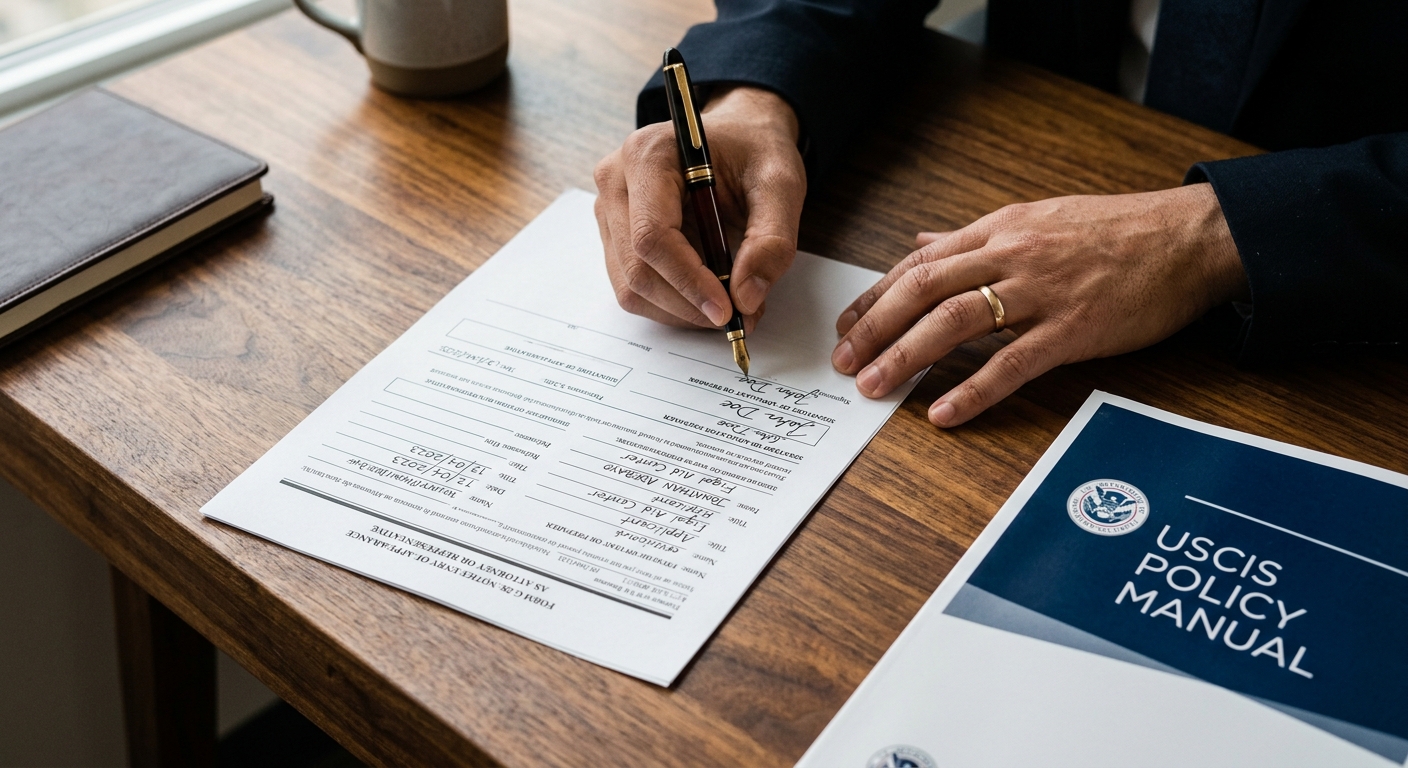
The consolidated manual details the exact procedures required for establishing legal representation in pending cases. Representatives must follow specific administrative steps to be formally recognized by the agency. Properly establishing representation ensures that all official correspondence, notices, and decisions are routed correctly to both the applicant and their authorized advocate.
Without following these precise procedures, legal representatives cannot receive information about pending petitions or participate in scheduled actions. The updated guidance provides clear instructions on the necessary documentation and filing methods required to establish a formal representative of record with the agency.
Steps for Changing Representatives of Record
The updated instructions explain the proper administrative steps for changing a legal representative of record. When an applicant or petitioner decides to retain new counsel, specific administrative tasks must be completed to update the agency files. This ensures a seamless transition and prevents delays in the processing of pending applications.
These instructions describe how the previous representation is terminated and how the new representative of record is recognized. Following these administrative steps precisely prevents confusion regarding who receives official notifications and who is authorized to act on behalf of the applicant in ongoing matters.
The updated instructions address the administrative workflow for pending applications, ensuring that any transitions between representatives do not disrupt the processing timeline. Clear guidelines prevent administrative errors that could arise when multiple representatives attempt to access case files or submit documents on behalf of the same applicant.
Our Commitment to Compliant Representation
The agency relies on its official Policy Manual to standardize decision-making across all field offices and service centers. By incorporating the updated guidance on legal representation directly into this manual, the agency ensures that officers apply the same standards uniformly when evaluating who can represent applicants in different jurisdictions.
Our firm monitors these Policy Manual updates to ensure our clients receive compliant and effective legal representation. At Zava Immigration Law Group, we review changes to administrative procedures to maintain complete compliance with federal expectations. Keeping pace with these guidance updates is a foundational part of our professional service.
By aligning our practices with the updated guidelines, we help clients navigate administrative requirements smoothly. Our team ensures that all documentation required to establish or transition legal representation is executed accurately under the new standards, protecting our clients’ interests throughout the entire administrative process.
Sources and official resources
- USCIS Policy ManualOfficial source

Jessica Anleu (formerly Jessica Lewis) is an experienced immigration lawyer in Phoenix with a decade of immigration experience.
All Posts