
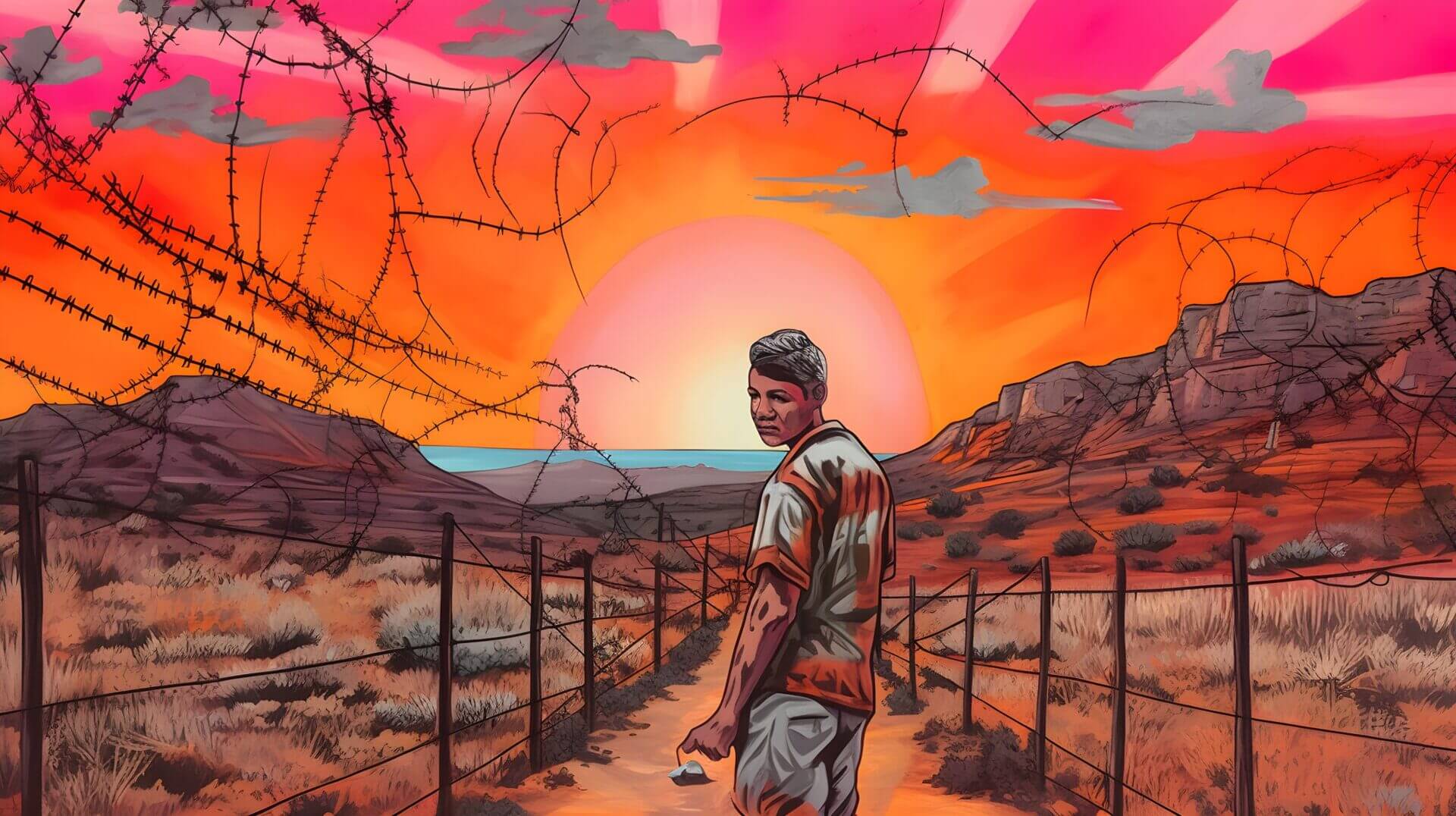
Special Immigrant Juvenile Status (SIJS)
Table of contents
The special immigrant juvenile status (SIJS), commonly known as SIJS, protects certain immigrant minors who have suffered abuse, abandonment, or neglect. It is not a traditional visa: it is a status designation that, once granted by USCIS, can open a path toward permanent residency in the United States.
If a minor qualifies, the process begins with an order from a state juvenile court, followed by a petition to USCIS. Every case is different, and having special immigrant juvenile status (SIJS) lawyers from the start makes a meaningful difference in the outcome.
What is Special Immigrant Juvenile Status (SIJS)?
Special immigrant juvenile status is an immigration classification created by Congress to protect certain immigrant minors who have experienced abuse, abandonment, or neglect. It is not a visa in the technical sense: it is a status that, once adjudicated by USCIS through Form I-360, allows the minor to apply for permanent residence through adjustment of status.
The term “juvenile visa” is widely used in everyday conversation, but in official forms and under the law the process is called SIJS and is filed through Form I-360 with USCIS. The authoritative reference for requirements, processing details, and policy updates is USCIS Special Immigrant Juveniles (current as of the date of this guide).
A critical point many families do not know: SIJS approval does not automatically provide protection against deportation. SIJS improves the minor’s immigration position, but it does not by itself suspend active removal proceedings before EOIR — the immigration court — which is an entirely separate agency from USCIS.
Benefits of SIJS
Obtaining SIJS opens a set of immigration benefits for the qualifying minor. Among the most relevant, according to USCIS (as of the date of this guide), are:
- A pathway to permanent residency (green card) through Form I-485, once a visa becomes available in the EB-4 category.
- The ability to request work authorization (EAD) once the adjustment of status process has begun.
- A stronger immigration position when facing proceedings before EOIR.
- Potential access to certain benefits available to permanent residents, such as educational assistance depending on the state.
There is an important limitation the process does not cover: a minor with an approved SIJS cannot use that approval to confer any immigration benefit on their parents. Federal law expressly prohibits this for beneficiaries of this category. SIJS also does not, by itself, automatically grant work authorization — the EAD must be applied for separately.
Our adjustment of status lawyers at Zava Immigration can guide the minor and their guardian on which benefits are available in their specific situation and how to request them in the correct order.

SIJS requirements
To qualify for SIJS, the minor must meet all requirements established by USCIS in its Policy Manual (Volume 6, Part J). Meeting only some of them is not enough: all must be satisfied at the time of filing and at the time USCIS makes its decision.
- Under 21 years of age and unmarried when filing Form I-360 and at the time of the USCIS decision.
- Currently residing in the United States both when filing and when USCIS decides the petition.
- An order from a state juvenile court (or equivalent depending on the state) determining dependency or custody, and finding that reunification with one or both parents is not viable due to abuse, abandonment, or neglect (or a similar basis under state law).
- That it is not in the minor’s best interest to return to the country of nationality or last habitual residence.
- USCIS consent eligibility: the court order must have been sought to protect the minor, not primarily to obtain an immigration benefit.
- HHS/ORR consent if the minor is in the custody of the Department of Health and Human Services (HHS) or the Office of Refugee Resettlement (ORR) and the court order changes their custody or status.
In certain cases, under current law, the minor does not need to remain under the jurisdiction of the court that issued the original order. This exception applies when that jurisdiction ended because the minor was adopted, placed under permanent guardianship, or aged out of the juvenile court’s jurisdiction (USCIS Policy Manual Vol. 6, Part J).
The SIJS process step by step
The SIJS process involves two distinct stages before two different authorities: first the state juvenile court, then USCIS. Confusing the steps or the order can delay the case or create problems that are difficult to correct later.
Step 1: Verify the minor’s eligibility
Before starting any formal proceeding, confirm that the minor meets all requirements: age, marital status, residence in the United States, and a documentable basis of abuse, abandonment, or neglect. An attorney can evaluate the situation and determine whether the case is viable before investing time and resources in the process.
Step 2: Obtain a state juvenile court order
The first formal step is obtaining an order from a state juvenile court (or its equivalent depending on the state). That order must find that the minor is dependent on the court or under the custody of a designated agency or person; that reunification with one or both parents is not possible due to abuse, abandonment, or neglect; and that returning to the country of origin is not in the minor’s best interest. This step must come before any filing with USCIS.
Step 3: File the I-360 petition with USCIS
With the court order in hand, the next step is filing Form I-360 (Petition for Amerasian, Widow(er), or Special Immigrant) with USCIS. This petition formally requests recognition of SIJS. It is important to file while the minor still meets the age and marital status requirements, since USCIS verifies both at the time it makes its decision.
Step 4: USCIS interview (if required)
In some cases, USCIS may schedule the minor — and, if necessary, their guardians or representatives — for an interview with an immigration officer. The officer reviews the details of the petition and verifies the information submitted. Not every case requires an interview; USCIS determines this based on individual circumstances.
Step 5: I-360 approval
If USCIS approves the petition, the minor receives recognition of SIJS. At this point the immigration situation improves, but permanent residency is not yet guaranteed: it depends on visa availability in the EB-4 category (see the timelines section below). For a detailed look at what comes next, see our guide on what happens after the juvenile visa is approved.
Step 6: Adjustment of status (Form I-485)
Once the I-360 is approved and a visa in the EB-4 category is available, the minor can file Form I-485 to apply for adjustment of status and obtain the green card. This step is handled by USCIS, not EOIR. Together with the I-485, the minor can also apply for work authorization (I-765) and advance parole (I-131) if travel outside the United States is needed while the case is pending.

Documents you need for the SIJS petition
To file the I-360 petition with USCIS, the following documentation is generally required. Depending on the circumstances of the case, additional documents may be necessary.
- Form I-360 (Petition for Amerasian, Widow(er), or Special Immigrant), available at uscis.gov/i-360.
- Proof of age: birth certificate, passport, or another official document establishing the minor’s age.
- Valid state juvenile court order(s) establishing dependency or custody, including findings on abuse, abandonment, or neglect and the minor’s best interest.
- Written consent from HHS/ORR if the minor is in the custody of those entities and the court order changes their status or custody.
- Form G-28 (Notice of Entry of Appearance as Attorney or Accredited Representative), available at uscis.gov/g-28, if the minor has legal representation.
The exact list varies by circumstances and by the state where the petition is filed. Our SIJS attorney team at Zava Immigration can help prepare a complete file and avoid delays caused by missing documents or form errors.
Processing times and the SIJS visa backlog
The SIJS process has two distinct stages with different timelines — and it is important not to confuse them: the adjudication of the I-360 by USCIS, and the availability of a visa in the EB-4 category before the minor can file for adjustment of status.
For the I-360, USCIS has a general processing target of approximately 180 days (six months) from the date of filing. In practice, times vary depending on the office’s workload and the specifics of the case. Current processing times can be checked at Check Case Processing Times on uscis.gov (subject to change).
Once the I-360 is approved, the next step depends on the EB-4 category (Special Immigrants). This category has an annual visa limit set by Congress, and in certain periods there is retrogression: priority dates move backward and applicants must wait before they can file the I-485.
EB-4 visa availability is published monthly in the Visa Bulletin from travel.state.gov. Monitoring this bulletin is a necessary part of managing any SIJS case that is waiting for a visa date.
In short: some minors can complete the entire process in under a year; others — particularly when there is EB-4 retrogression — may wait considerably longer. Timelines are not fixed or guaranteed, and depend on factors outside the applicant’s and the attorney’s control. If the minor’s situation involves detention of minors, urgency can change which steps to prioritize and consulting an attorney immediately is especially important.
At Zava Immigration Law Group we represent minors and their families in Phoenix and the greater Arizona area. If you have questions about a minor’s situation, contact us to review the case and understand the specific steps to take.
Frequently asked questions about SIJS
How long does the SIJS process take?
USCIS has a general target of approximately 180 days (six months) to adjudicate Form I-360, though this can vary depending on caseload and individual circumstances. Once the I-360 is approved, filing the I-485 depends on EB-4 visa availability published monthly in the Visa Bulletin. During periods of retrogression, the wait can extend significantly. Current processing times are listed at egov.uscis.gov/processing-times.
Who qualifies for Special Immigrant Juvenile Status?
A minor may qualify if, at the time of filing and at the time of USCIS’s decision, they are under 21 years of age, unmarried, and residing in the United States. They must also have a valid state juvenile court order finding that reunification with one or both parents is not viable due to abuse, abandonment, or neglect, and that returning to their country of origin is not in their best interest. All requirements must be met simultaneously.
Can I be deported while my SIJS case is pending?
Having a pending SIJS petition with USCIS does not automatically stop an active removal proceeding before EOIR (the immigration court). These are separate agencies with independent processes. In some cases an attorney can raise the pending petition as a mitigating factor, but there is no automatic protection. If removal proceedings are active, informing your attorney immediately is essential to evaluate the options available.
Can my parents or family get a green card through my SIJS?
No. Federal law expressly prohibits an SIJS beneficiary from using that approval to petition for their parents. SIJS also does not provide derivative immigration benefits to other family members. This classification is designed exclusively to protect the minor; it is not an immigration pathway for the family.
Can I apply for SIJS with a criminal record?
It depends on the nature and seriousness of the record. USCIS reviews each case individually: some offenses can trigger inadmissibility and affect eligibility for adjustment of status, while others may not carry the same impact. In some situations, waivers may be available. Consulting an attorney before filing any petition is essential to assess the specific risk in each case.
Can I travel or leave the U.S. while my SIJS case is pending?
Leaving the United States while a SIJS case is pending can put the application at risk, particularly if advance parole (Form I-131) has not been obtained. Without that travel authorization, departing the country can be treated as abandonment of the adjustment of status. Before making any travel plans, consult the attorney handling the case.
What happens after my SIJS application is approved?
Once the I-360 is approved, the next step is monitoring EB-4 visa availability in the Visa Bulletin. When a visa becomes available, the minor can file Form I-485 to adjust status and obtain the green card. At the same time, work authorization (I-765) and advance parole (I-131) can also be requested. The adjustment of status is handled by USCIS, not by the immigration court.
Sources and official resources
- USCIS Special Immigrant JuvenilesOfficial source
- uscis.gov/i-360Official source
- uscis.gov/g-28Official source
- Check Case Processing TimesOfficial source
- USCIS Policy ManualOfficial source

Jessica Anleu (formerly Jessica Lewis) is an experienced immigration lawyer in Phoenix with a decade of immigration experience.
All PostsRelated Posts

An immigration detainer and the 48 hour hold in Maricopa County
What an immigration detainer really means for a 48 hour hold in a Maricopa County jail, and the exact steps families should take before that window closes.

Preparing for your hearing at the Florence immigration court
The Florence immigration court operates inside one facility, but a nearby complex often gets confused with it. Here is how to tell them apart.

How the judge decides if you go home at an immigration bond hearing
An immigration bond hearing decides if you can leave detention while your case continues. Here is what the judge weighs before deciding your case.
Your privacy, your choice
With your permission, Google Analytics and Microsoft Clarity help us understand site use. Google Ads and Meta measure advertising. You can decline all or choose each category. Forms work with any choice.
Checked options stay off until you save them.