
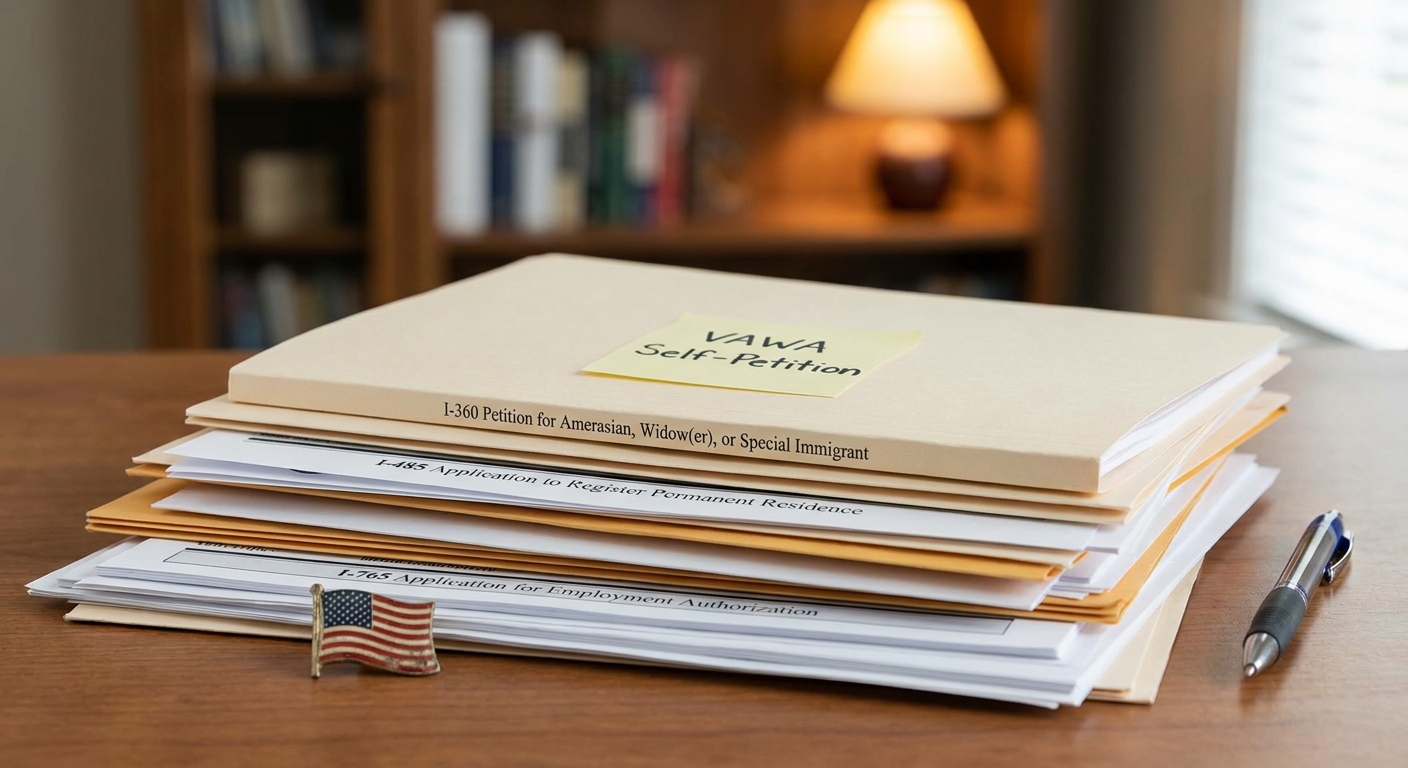
How to file the VAWA application step by step
Table of contents
8 minute read
Many people believe filing a VAWA application is a single step, but it involves a specific sequence of forms and evidence submission to USCIS. Understanding this process thoroughly is your first step towards safety and securing a stable legal future in the United States. This path allows survivors of domestic violence to seek immigration relief independently from their abuser.
Navigating the complexities of immigration law while dealing with the aftermath of abuse can be incredibly daunting. We understand the unique challenges faced by survivors, and our VAWA attorneys offer dedicated support to help you understand your status and plan strategically for final approval, always prioritizing your confidentiality and well-being.
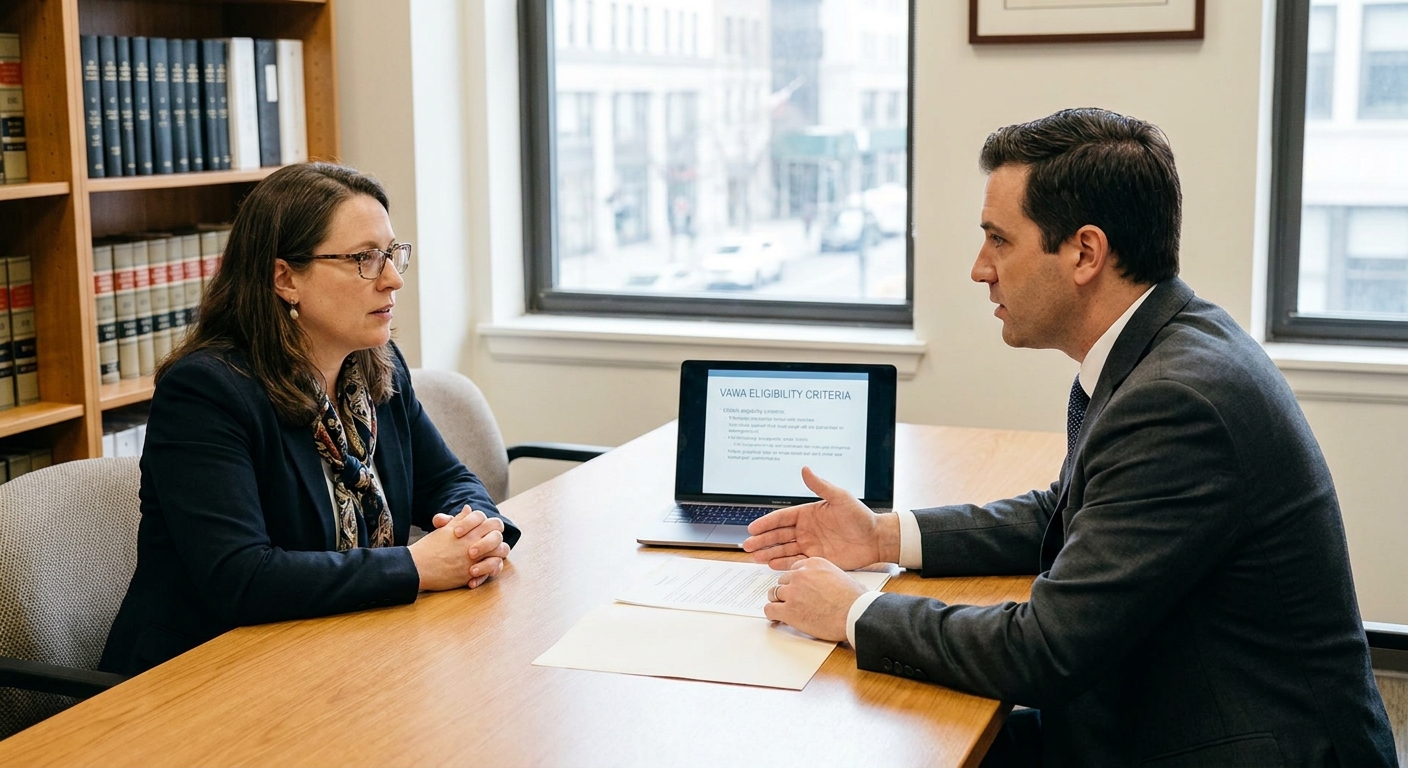
What is a VAWA application for?
The Violence Against Women Act (VAWA) offers a necessary pathway for survivors of abuse to self-petition for immigration benefits, meaning you can apply without the abuser’s knowledge or consent. This protection mechanism recognizes that many individuals in abusive relationships depend on their abuser for legal status, creating a cycle of vulnerability. It is also worth understanding how a VAWA case affects the abuser and the legal consequences involved.
This allows individuals to break free from abusive situations and seek legal residency independently. These protections are available to individuals of all genders. The law specifically protects spouses, children, and parents of abusive U.S. citizens or lawful permanent residents (LPRs) who have experienced battery or extreme cruelty.
- Independence: You can file this petition without the abuser’s participation, signature, or knowledge. This eliminates a significant barrier for many survivors.
- Confidentiality: USCIS is legally bound to protect your privacy. Information about your VAWA case is not shared with the abuser, and you can use a safe alternative mailing address.
- Path to residency: An approved VAWA self-petition can be a direct path to obtaining a green card, providing long-term stability and protection.
- Available to men and women: VAWA protections apply to all genders who meet the criteria, addressing domestic violence broadly.
Who can file a VAWA petition and what makes you eligible?
Determining your eligibility for a VAWA petition hinges on several key factors, primarily focusing on your relationship with the abuser, the nature of the abuse, and your own character. Remember that VAWA eligibility includes various forms of abuse, not just physical violence, such as emotional, psychological, financial, or sexual abuse. To qualify, you must generally meet the following criteria. Our team meticulously reviews each of these points to help build a strong case that reflects your unique circumstances:
| Eligibility criterion | Explanation |
|---|---|
| Qualifying relationship | You must be the spouse, former spouse, child (under 21, or 25 in some cases), or parent of an abusive U.S. citizen or lawful permanent resident (green card holder). |
| Residency with the abuser | You must have resided with the abuser in the United States. Brief periods of separation are typically considered. |
| Battery or extreme cruelty | You must show you experienced battery or extreme cruelty. This encompasses physical, emotional, psychological, sexual, or financial abuse. |
| Good moral character | You must demonstrate good moral character, which generally means you have not committed certain crimes that would disqualify you. |
| Bona fide marriage (if applicable) | If filing as a spouse, you must show you entered the marriage in good faith, not solely for immigration benefits, even if the marriage later ended due to abuse. |
Even if your marriage ended through divorce, you may still qualify if you filed your VAWA petition within two years of the divorce and the divorce was related to the abuse. Understanding these conditions is crucial for assessing your specific VAWA eligibility and preparing your submission.
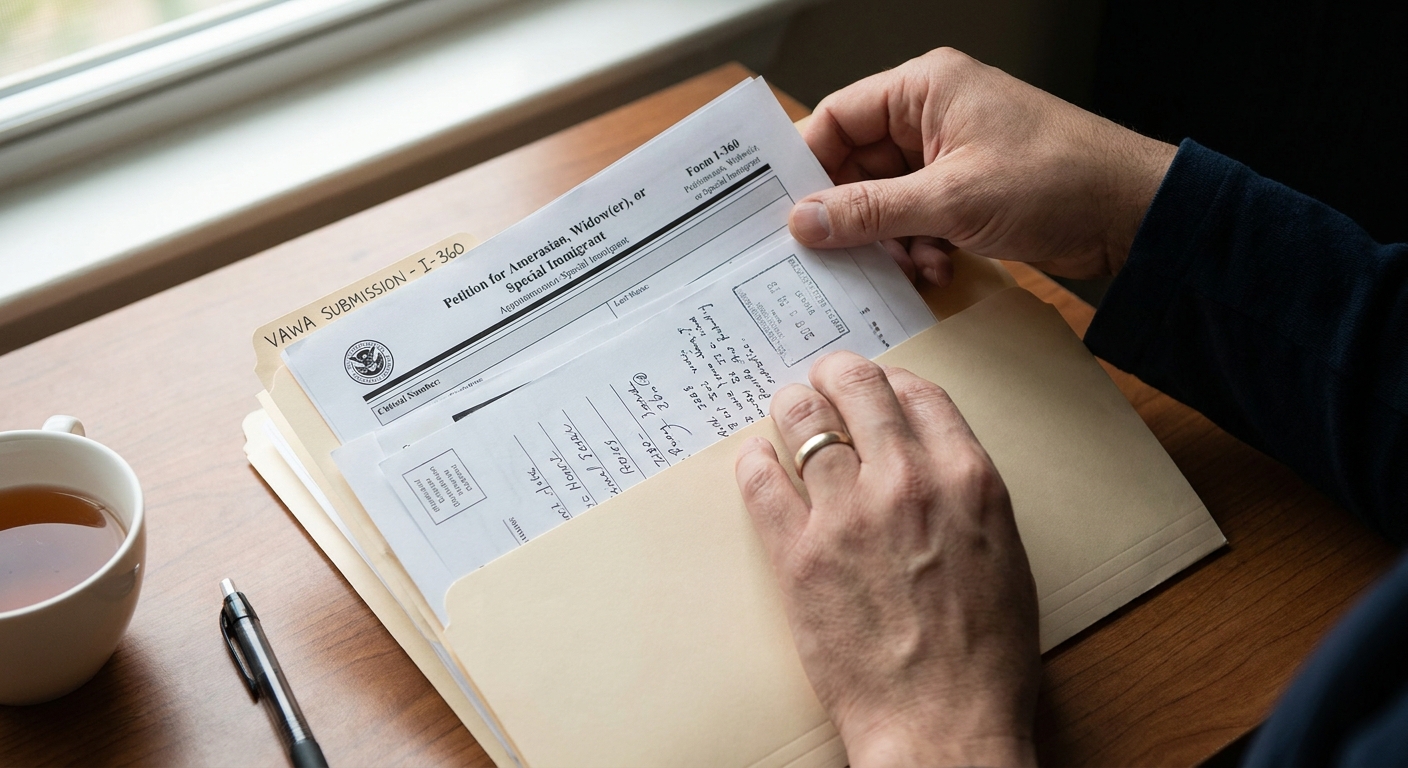
What documents do you need for a strong VAWA application?
Building a compelling VAWA application requires comprehensive documentation to establish your eligibility and substantiate your claims of abuse. The central form for this process is Form I-360, Petition for Amerasian, Widow(er), or Special Immigrant. USCIS applies an “any credible evidence” standard, which means they must consider all evidence you submit, even if it is not “official” documentation.
While gathering every type of evidence might feel overwhelming, it is manageable. Focus on these categories to strengthen your VAWA petition:
- Your personal declaration: This is arguably the most powerful piece of evidence. Your detailed, sworn statement describing the abuse, your relationship with the abuser, and your good moral character forms the core of your evidence.
- Proof of qualifying relationship: Provide documents like marriage certificates, birth certificates, divorce decrees (if applicable), or adoption papers to establish your relationship with the abuser.
- Proof of abuser’s status: Include copies of the abuser’s birth certificate, naturalization certificate, passport, or green card to show they are a U.S. citizen or LPR.
- Evidence of battery or extreme cruelty: This can include police reports, medical records, court orders (e.g., protective orders), counseling records, affidavits from friends, family, or professionals who witnessed or were told about the abuse, photos, and even text messages or emails.
- Proof of cohabitation: Joint leases, utility bills, bank statements, or affidavits from witnesses can confirm you resided together.
- Evidence of good moral character: Generally, this is established by your declaration, but can be supported by police clearances or letters of support.
For any documents not in English, you must include certified English translations. Preparing this evidence carefully is a significant step in your overall VAWA application.
How does USCIS process your VAWA application step by step?
Once you submit your VAWA application, USCIS follows a specific sequence of steps, which can span several years. Understanding this timeline and what to expect at each stage helps manage your expectations and prepare for potential requests for more information.
- Filing Form I-360: You submit Form I-360, Petition for Amerasian, Widow(er), or Special Immigrant, to USCIS. There is no filing fee for VAWA self-petitioners.
- Receipt notice: USCIS sends a Form I-797C, Notice of Action, confirming receipt of your application. This notice will include a receipt number you can use to track your case online.
- Prima facie determination: For strong cases, USCIS may issue a prima facie determination notice within 4-8 months. This indicates that your case appears eligible for VAWA, allowing you to apply for deferred action and a work permit sooner.
- Biometrics appointment: You will receive a notice to attend a biometrics appointment at an Application Support Center (ASC) for fingerprints, photos, and a signature.
- Request for Evidence (RFE): USCIS may send an RFE if they need additional information or clarification. Responding thoroughly and on time is vital to avoid delays or denials.
- Interview (rare): While most VAWA cases are decided without an interview, USCIS may schedule one in some instances.
- Final decision on I-360: USCIS makes a decision on your Form I-360. If approved, you receive a Form I-797, Approval Notice.
Current processing times for the I-360 process can range from 36 to 48 months. These times can vary significantly by the USCIS service center processing your case, with some centers like Vermont processing faster than others like California. Your residential address usually dictates which center handles your case.
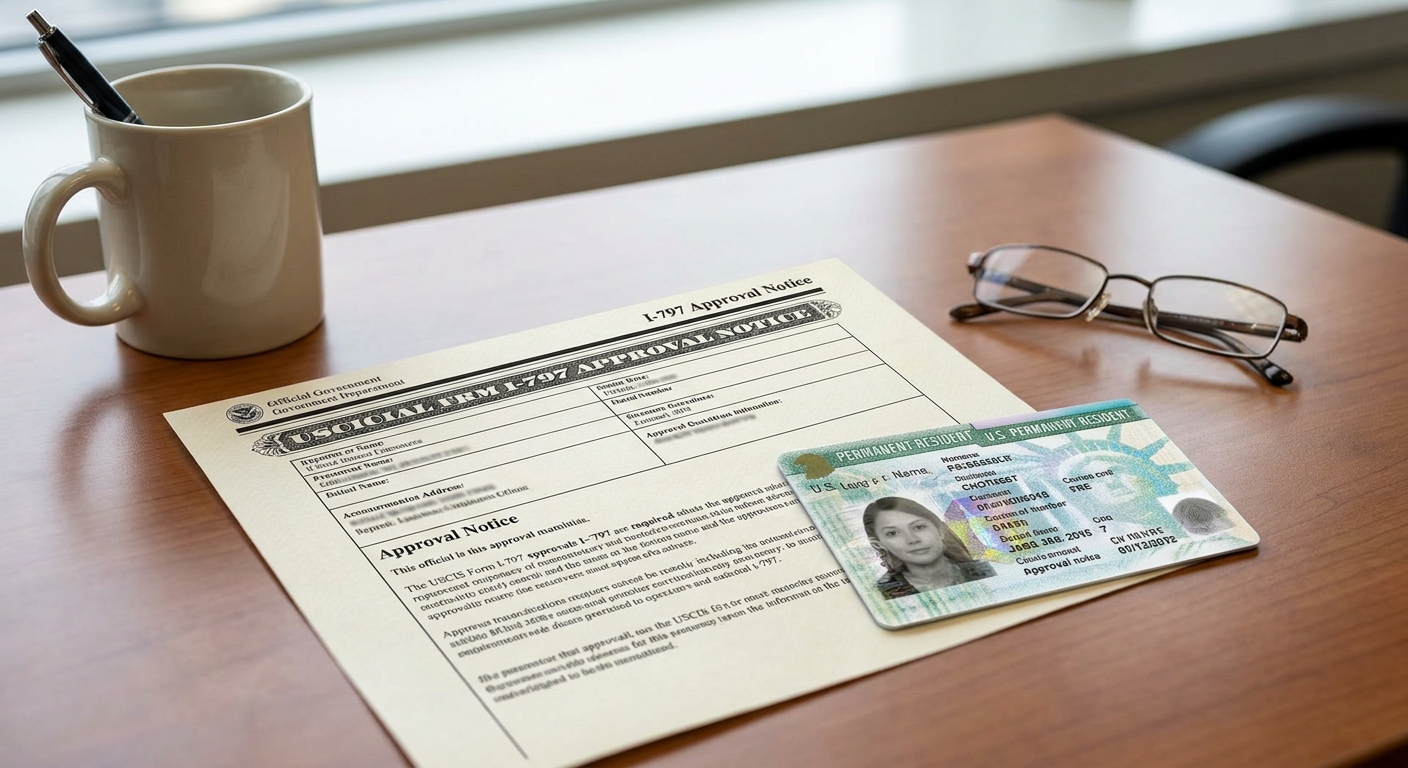
What happens after your VAWA petition is approved?
An approved VAWA petition is a significant milestone, but it is not the final step toward permanent residency. The I-360 approval means USCIS recognizes you as a VAWA self-petitioner, allowing you to proceed with applying for a green card. These next steps are important for securing your long-term stability.
- Adjustment of Status (Form I-485): If you are physically present in the United States and meet specific criteria, you can file Form I-485, Application to Register Permanent Residence or Adjust Status. This allows you to obtain a green card without leaving the country. You can often file for adjustment of status concurrently with your VAWA petition or after its approval. Legal counsel for adjustment of status can help you prepare this filing efficiently.
- Consular Processing: If you are outside the U.S. when your VAWA petition is approved, you will apply for your green card through consular processing at a U.S. embassy or consulate in your home country.
- Interim benefits (work permits and travel documents): While your I-360 or I-485 is pending, you can apply for an Employment Authorization Document (EAD or work permit) using Form I-765 and a Travel Document using Form I-131. These are often granted within 5-9 months of filing, providing immediate relief. Our attorneys with experience in work permit attorneys can help you with these filings.
Processing times for the I-485 vary, typically taking another 8-24 months after I-360 approval. This cumulative process means obtaining a green card attorneys through VAWA can take several years, but the interim benefits provide stability during this wait.
What if you do not have all the perfect documents for your VAWA case?
A common concern for many survivors is the fear that they lack “perfect” or official documents like police reports or medical records, which can delay filing this discretionary relief. However, USCIS recognizes the difficulties survivors face in obtaining such evidence due to the dynamics of abuse. This is where the “any credible evidence” standard truly demonstrates its value.
Do not assume you need an extensive paper trail of official reports to prove your case. Here are examples of secondary evidence that can be highly effective:
- Affidavits: Sworn statements from friends, family members, teachers, counselors, medical professionals, or religious leaders who witnessed the abuse or to whom you disclosed it.
- Personal diary entries or journals: Your own written accounts detailing incidents of abuse can serve as powerful evidence.
- Letters from professionals: Statements from therapists, social workers, or domestic violence advocates describing their observations or your statements about the abuse.
- Photographs: Pictures of injuries, damaged property, or abusive environments.
- Text messages or emails: Communications from the abuser that show control, threats, or abusive language.
- Financial records: Joint bank accounts, bills, or property deeds showing cohabitation, or evidence of financial control by the abuser.
- School or employment records: Documents showing an abuser’s interference with your education or job.
- Explanations for missing documents: A detailed explanation in your personal declaration or a supplemental statement explaining why certain “official” documents are unavailable strengthens your case.
USCIS adjudicators are specifically trained to understand the complexities of domestic violence and the barriers survivors face. Your detailed personal declaration, supported by whatever credible evidence you can gather, often forms the backbone of a successful VAWA self-petition. Working with our team specializing in family-based immigration can help you strategically organize and present all available evidence, even when primary documents are scarce.
Navigating the VAWA application process can be complex, especially when facing an abusive situation. Understanding the legal criteria and documentation requirements is the first step toward securing your safety and stability. For personalized guidance and strategic planning, Zava Immigration Law Group is dedicated to supporting immigrants in Phoenix, AZ and beyond. As immigrants helping immigrants, we are here to discuss your unique situation and help you move forward with confidence.
Frequently asked questions about VAWA self-petitions
Does my abuser get notified if I file for VAWA?
No, USCIS is legally bound to protect your privacy and confidentiality throughout the VAWA process. Information about your case is not shared with the alleged abuser. You can also use a safe alternative mailing address on your application forms. This protection mechanism is fundamental, allowing survivors to seek safety and legal status independently without fear of further harm or retaliation.
What if my abuser is not a U.S. citizen or green card holder?
For VAWA eligibility, your abuser must generally be a U.S. citizen or a lawful permanent resident (green card holder) at the time of the abuse or petition filing. If your abuser does not hold one of these statuses, you typically would not qualify for a VAWA self-petition. However, other immigration relief options, such as a U visa for victims of certain crimes, may be available, and our team can assess your specific situation to explore all potential pathways.
Can my minor children be included in my VAWA petition?
Yes, if your children are under 21, unmarried, and experienced battery or extreme cruelty by the same abusive U.S. citizen or lawful permanent resident, they can often be included in your VAWA petition. If they are not included in your initial I-360 petition, they may still be eligible to derive benefits from your approved petition. Our team helps ensure all eligible family members are considered, providing a pathway to stability for your entire family.
What kind of non-traditional evidence can I use for battery or extreme cruelty?
USCIS applies an ‘any credible evidence’ standard, recognizing that survivors may lack official documents. Powerful non-traditional evidence includes your detailed personal declaration, sworn affidavits from friends, family, or professionals who witnessed or were told about the abuse, personal journals, letters from therapists or social workers, photos of injuries or property damage, and text messages or emails from the abuser. Explaining why certain documents are unavailable also strengthens your case.
Is there a filing fee for the VAWA self-petition?
No, there is no filing fee for the VAWA self-petition (Form I-360). USCIS waives this cost because survivors of abuse often have limited access to financial resources, especially when the abuser controlled the household finances. Related filings tied to your VAWA case, such as the work permit application (Form I-765), are also generally fee-exempt. This helps ensure that cost is never a barrier to seeking safety and legal protection.
How long does it typically take to get a green card after VAWA approval?
An approved VAWA petition (Form I-360) is a major milestone, but obtaining your green card is a separate step through an Adjustment of Status application (Form I-485). After your I-360 approval, the processing for your green card can typically take an additional 8 to 24 months. While the cumulative process to permanent residency can take several years, interim benefits like work permits provide important stability and authorization during this waiting period.
Sources and official resources
- USCIS: Immigration Options for VictimsOfficial source
- USCIS Policy ManualOfficial source

Jessica Anleu (formerly Jessica Lewis) is an experienced immigration lawyer in Phoenix with a decade of immigration experience.
All PostsRelated Posts

An immigration detainer and the 48 hour hold in Maricopa County
What an immigration detainer really means for a 48 hour hold in a Maricopa County jail, and the exact steps families should take before that window closes.

Preparing for your hearing at the Florence immigration court
The Florence immigration court operates inside one facility, but a nearby complex often gets confused with it. Here is how to tell them apart.

How the judge decides if you go home at an immigration bond hearing
An immigration bond hearing decides if you can leave detention while your case continues. Here is what the judge weighs before deciding your case.
Your privacy, your choice
With your permission, Google Analytics and Microsoft Clarity help us understand site use. Google Ads and Meta measure advertising. You can decline all or choose each category. Forms work with any choice.
Checked options stay off until you save them.