
How to Locate People Detained by ICE in the United States?
Table of contents
4-minute estimated reading time
Not knowing the whereabouts of a loved one after an immigration intervention generates deep anguish and overwhelming uncertainty. It is essential to stay calm, as there is an official U.S. government tool specifically designed to locate individuals detained by ICE. This system provides centralized information about people in federal custody, allowing you to confirm whether your family member is currently in an authorized detention center.
Quickly obtaining this information is vital for organizing any support strategy or establishing early communication with the detainee. Understanding immigration status and knowing the exact location facilitates the work of immigration attorneys specializing in deportations, who need precise data to intervene promptly in managing the case and ensuring that proper procedures are followed.

Steps to use the official locator system
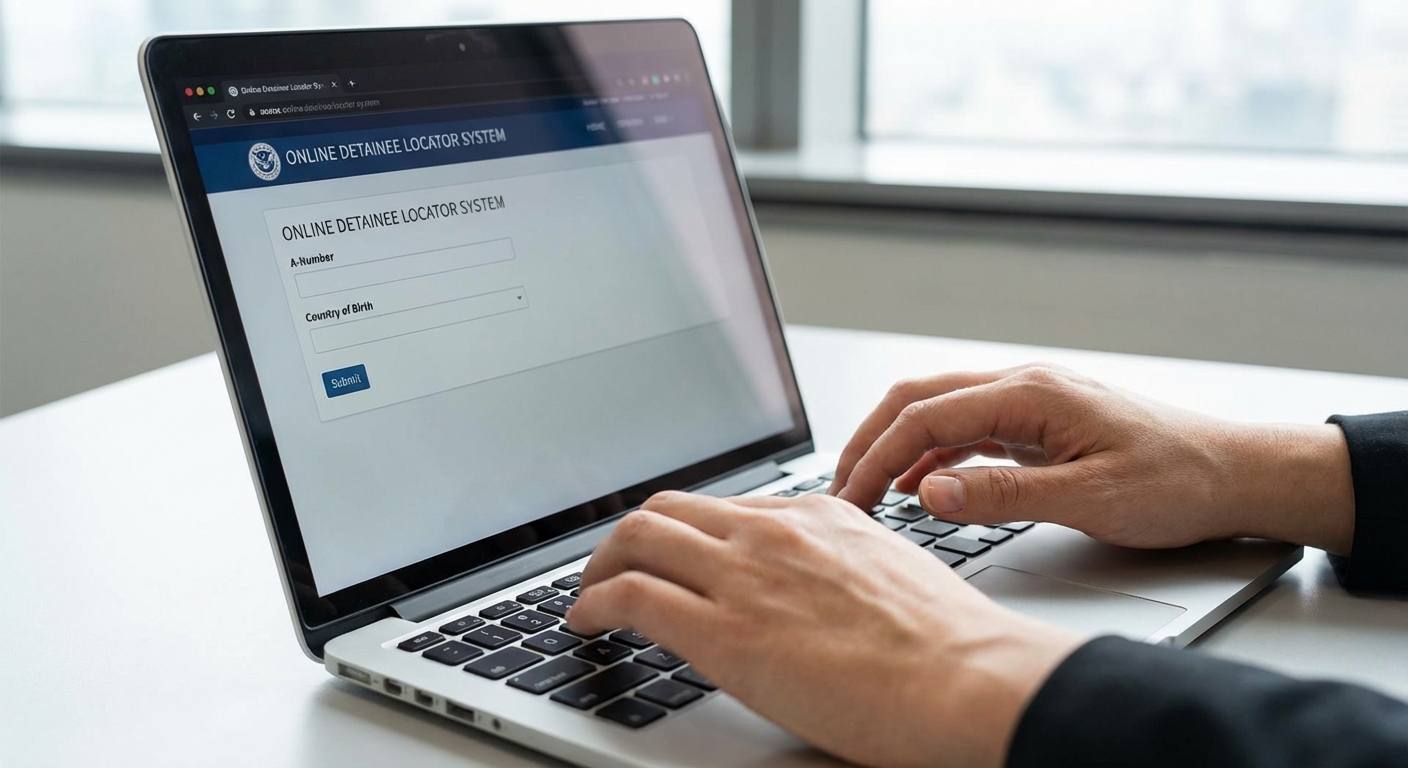
The official way to find someone in immigration custody is the Online Detainee Locator System (ODLS), available at locator.ice.gov/odls/. This digital platform is accessible from any browser, is available in Spanish and seven other languages, and is the only reliable government source for verifying the location of individuals in ICE detention facilities nationwide.
To use this tool, you need specific information. The system allows two main search methods: by alien registration number, known as the A-Number, or by using the individual’s complete biographical data. Having this information on hand is the essential requirement to begin the search immediately.
Essential information for accurate results
The accuracy of the information entered is crucial to avoid errors or false negatives. When you have the A-Number, locating the person is usually straightforward, as this identifier is unique to each individual in the immigration system. If you have this number, use it as the priority search method to ensure accurate results.
If you do not have the A-Number, the system allows you to search using the full name, country of birth, and exact date of birth. The system performs an exact-match search, meaning you must enter the data exactly as it appears in the detention record. If the person’s name is common, the date of birth becomes critical for distinguishing them within the official database.

What search results mean
When you use the locator, the system will return one of two possible scenarios. First, it may indicate that the person is indeed in ICE custody, displaying the name and specific location of the facility where they are being held, which is the confirmation needed to begin communication efforts.
On the other hand, the system may show a message indicating there are no records of the individual in immigration custody. This response could mean that the person has been released, has not yet been processed within ICE’s central system, or is under the jurisdiction of a different agency that does not report to this platform.
Limitations of the official locator
It is important to manage expectations about the scope of ODLS. This system only provides information about individuals under ICE’s direct authority. If your family member was arrested by local police, state patrols, or is in a county jail without an active immigration detainer, the system will not return results.
Additionally, the information in the ODLS can be up to 8 hours old following a recent detention, depending on the administrative workload of the center and the flow of transfers. If the result is initially negative, perform new searches intermittently over the following hours, as the system does not update in real time immediately after a detention.
How to contact the detention center once located
Once the system confirms the location, the next practical step is to consult the ICE facility directory available on the official website. Each center has an administrative phone number you can call to inquire about visitation policies, permitted hours, or how to establish phone communication with the detainee.
When contacting the detention center, make sure you have your family member’s full name and registration number on hand. Center officials will guide you on current protocols for establishing contact. Remember to bring a government-issued photo ID if you decide to visit the facility, as it is a mandatory entry requirement.

The importance of documentation in detention cases
Maintaining an organized copy of immigration records is an essential preventive measure for any family. Having documents such as the case number, date of entry into the country, or any previous permits readily available greatly facilitates the ability to react to an unforeseen event. Keep this information in an accessible and secure place for your immediate family members.
Centralize emergency contacts, including numbers for immigration attorneys specializing in deportations, along with your most important legal documents. Having a prepared file not only speeds up case location and management but also provides valuable support that reduces uncertainty and improves responsiveness during immigration crisis situations.
If you need help locating a detained family member or evaluating the available legal options, at Zava Immigration we have experience in detention and deportation cases to guide you through every step of the process.
Frequently asked questions about locating ICE detainees
How long does it take for a detainee to appear in the ICE search system?
The information in the Online Detainee Locator System (ODLS) can be up to 8 hours old from the time of detention. The exact time depends on the administrative workload of the detention center and the flow of transfers. There is no fixed timeframe, but it is advisable to wait a few hours and perform intermittent searches if the result is negative, as the system does not update in real time immediately after a detention.
What is the difference between searching by A-Number and by personal data in the ICE locator?
The main difference lies in accuracy. Searching by A-Number is the fastest and most precise method, as this identifier is unique to each person in the immigration system. Searching by personal data (full name, country, and date of birth) requires entering the information exactly as it appears in the detention record, and can lead to confusion if the name is common. In those cases, the date of birth becomes crucial for correctly identifying the individual.
Are there other ways to locate someone if the ICE locator does not provide information?
If the ODLS does not show results, it is important to consider that the person may not be under direct ICE custody but rather with local or state agencies such as municipal police or county jails that do not report to the federal system. It could also mean the person was released or that the information has not yet been processed. In these cases, contact the local authorities in the area where the detention occurred or an ICE Enforcement and Removal Operations (ERO) field office directly.
What information is most critical to have on hand to expedite the search for an ICE detainee?
The most important piece of information is the A-Number if it exists, followed by the exact full name, date, and country of birth. Additionally, any copies of previous immigration records, visas, permits, or prior case numbers, as well as contact information for immigration attorneys, are essential. Keeping this information organized and accessible to trusted family members greatly facilitates the location process and case management.
What common mistakes should you avoid when trying to locate a detained family member?
One of the most common mistakes is entering incomplete information or misspelling names, which leads to false negatives. It is also a mistake to assume the system updates in real time or to limit yourself to a single search without retrying hours later. Another frequent error is not considering that the detention could be under local rather than federal jurisdiction. It is crucial to stay calm, gather all available information before starting the search, and carefully verify the data entered.
Sources and official resources
- EOIR: Learn About Immigration CourtOfficial source
- USCIS Policy ManualOfficial source

Jessica Anleu (formerly Jessica Lewis) is an experienced immigration lawyer in Phoenix with a decade of immigration experience.
All PostsRelated Posts

An immigration detainer and the 48 hour hold in Maricopa County
What an immigration detainer really means for a 48 hour hold in a Maricopa County jail, and the exact steps families should take before that window closes.

Preparing for your hearing at the Florence immigration court
The Florence immigration court operates inside one facility, but a nearby complex often gets confused with it. Here is how to tell them apart.

How the judge decides if you go home at an immigration bond hearing
An immigration bond hearing decides if you can leave detention while your case continues. Here is what the judge weighs before deciding your case.
Your privacy, your choice
With your permission, Google Analytics and Microsoft Clarity help us understand site use. Google Ads and Meta measure advertising. You can decline all or choose each category. Forms work with any choice.
Checked options stay off until you save them.