Questions and documents to review before your affirmative asylum interview
Table of contents
In your affirmative asylum interview, a USCIS officer asks questions like “Why did you leave your country?”, “What happened and when?” or “What do you fear if you return?” The possible questions come from your Form I-589, your declaration and the documents you submitted, so preparation starts with your own file.
With your appointment in hand, start with your notice and with what you filed. Our asylum immigration lawyers can go over that material with you so that differences and doubts come up in time.
Confirm that your appointment is an affirmative interview
What follows applies if you applied for asylum with USCIS without being in proceedings before a judge and have received an interview notice. That notice controls: the date, time, location or format and instructions are all there, and anything that depends on your case is checked against it.
If your notice summons you before a judge, you are at a different stage: defensive asylum in immigration court is prepared differently, and an interview that follows a credible fear determination follows other rules and deadlines. It is worth speaking as soon as possible with a deportation defense lawyer.
Asylum interview questions to expect
The interview is nonadversarial: the officer is looking for the information needed to decide whether you qualify for asylum. That does not make it informal or free of consequences. It begins with an oath to tell the truth (your interpreter swears to interpret accurately), and if you do not understand a question, ask for it to be repeated or clarified before you answer.
USCIS describes these topics: your identity and background, your reasons for seeking asylum and legal bars. The questions under each topic are illustrative examples, worded by us; in the interview they may sound different and come in another order.
Identity and background
The officer verifies your identity, and you must give complete information about it: name, date and place of birth and nationality. Background questions follow, for example:
- Who is in your family, and where do they live now?
- Where did you live and what did you do before leaving your country?
- When and how did you come to the United States?
Compare your answers with your passport, your certificates and your I-589: a name spelled two ways or a different date is among the first things to clear up.
Your reasons for seeking asylum
This part connects directly to your declaration. Some illustrative questions:
- What happened, when and where?
- Who was involved and what did they do?
- Why do you think it happened to you?
- What do you fear will happen if you return?
Answer in your own words and from what you remember. If you do not remember a date exactly, say so and share what you do remember, because inventing certainty hurts more than admitting a gap. USCIS acknowledges that talking about what you lived through can be painful and, even so, says it is very important that you describe it so the officer can decide.
Legal bars
The officer also asks questions to determine whether any legal bar prevents you from applying for or being granted asylum. A few illustrative examples:
- Have you ever been arrested or charged, in any country?
- Did you live in another country before coming to the United States?
Any doubt about your history at this point is worth reviewing before the appointment, because it is evaluated case by case. If you have an arrest or a criminal charge, a team of criminal immigration lawyers can review how your criminal case and your asylum application intersect.
Recover what you filed and organize it in a timeline
To answer precisely, first gather copies of your I-589, your declaration, the translations and every attachment that was actually submitted. What counts is what USCIS has in your file, even if your memory or one of your drafts says something different.
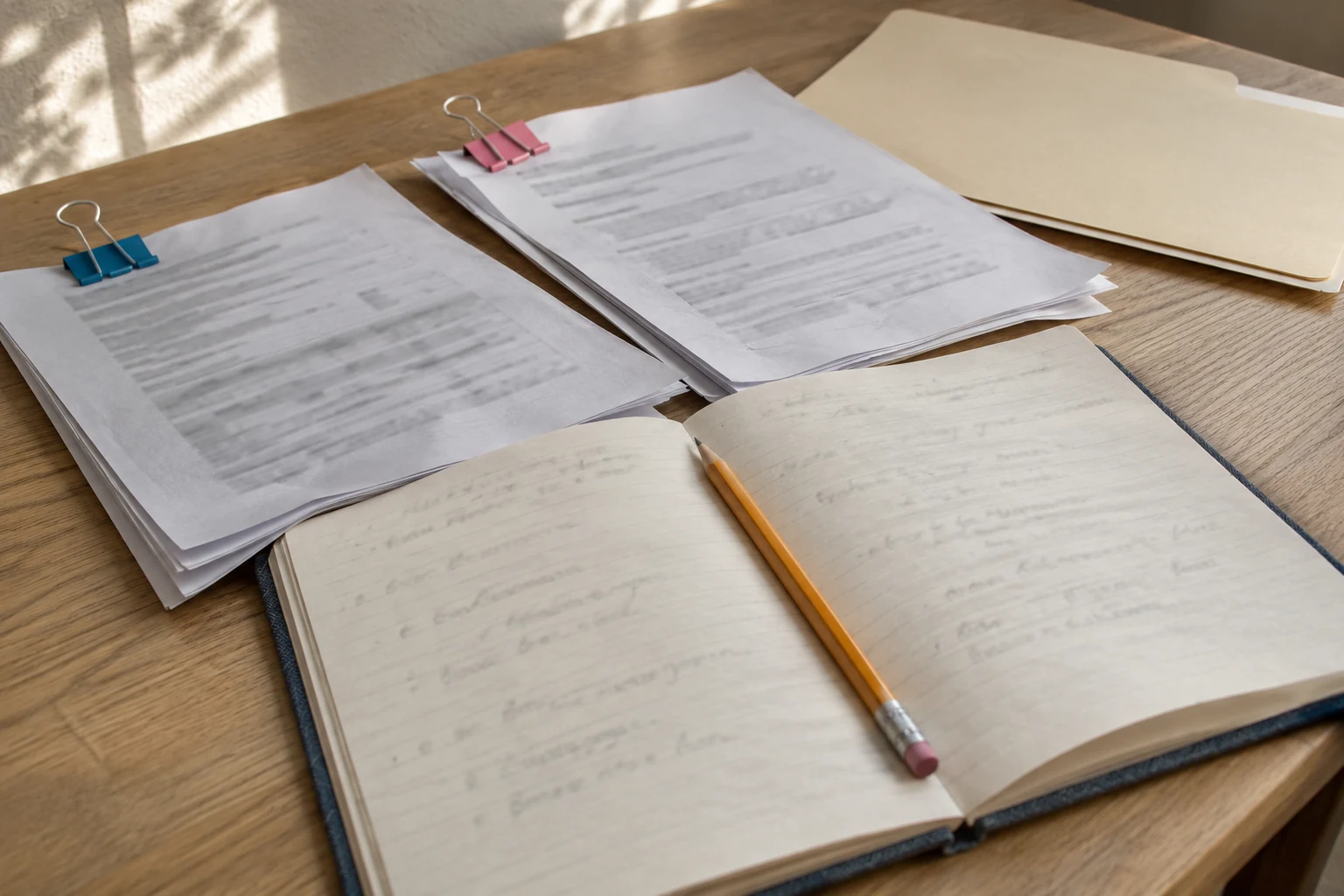
With those papers in front of you, build a private timeline, just for you and whoever advises you. It is a tool of your own for reviewing in an orderly way, and USCIS does not require it. Each important event gets four pieces of information:
- What happened: the event, in one sentence.
- When: the exact date or, if you do not remember it, an approximate one marked as such.
- Where it appears: the document, the paragraph of your declaration or the attachment that supports it.
- What you doubt: anything that does not match or that you do not remember with certainty.
The last point is the most useful, because it brings out in time the real differences between what you filed and what you remember.
When something does not match
When you find a difference while reviewing, write it down with both documents and raise it before the appointment. Think, as a hypothetical example, of a declaration that places an event in March while a document says May, or a translation that spells your last name differently.
The next step is deciding whether to correct, clarify or explain, and it is best done with an attorney. When something happened differently from how it was written, the way forward is to tell it truthfully and through the proper channel, without adjusting your story to the papers.
What to bring and what to submit before the appointment
These are two different things: what you carry with you on interview day, and the new evidence you want the officer to consider, which has its own deadline.
What you bring on interview day
According to USCIS preparation guidance, you should bring:
- Identification: any passports you have, other identity or travel documents and, if you received one when you arrived, your I-94.
- Originals: birth certificates, marriage certificates or other documents you already submitted with your I-589.
- Copies: of your I-589 and the additional material you sent, in case the office is missing something.
- Your interpreter: if you cannot do the interview in English.
- Your derivative family: your spouse and children under 21, if you included them as derivatives when you filed, each with whatever identity or travel documents they have.
Every document in another language needs a complete English translation, with the translator's certification that it is complete and correct and that the translator is competent to translate that language.
Although you must list all your family members on the application, only those you included as derivatives attend. If something changed in your family since you filed, confirm with your notice who needs to appear.
New evidence is submitted beforehand
Bringing a new document on interview day is not enough. In the ordinary affirmative process, the federal rule on the interview requires documentary evidence to be submitted at least 14 calendar days before the appointment. If it arrives within those 14 days, the officer may consider it or grant a brief extension, at the officer's discretion, and such an extension counts as a delay caused by you for work permit purposes.
Send it by the method and to the office your notice indicates; if it does not say, ask an attorney before sending anything. If your appointment is close to that 14-day mark, raise it the same day: late evidence may or may not be considered.
Interpreter, attorney and what to do if you cannot attend
Three matters depend on you and are best settled weeks ahead: who interprets, who accompanies you and what you do if an obstacle comes up.
Your interpreter
Anyone who does not speak enough English for the interview brings their own interpreter: USCIS does not provide one, except for people who are deaf or hard of hearing, who can request help through an accommodation request before the appointment.
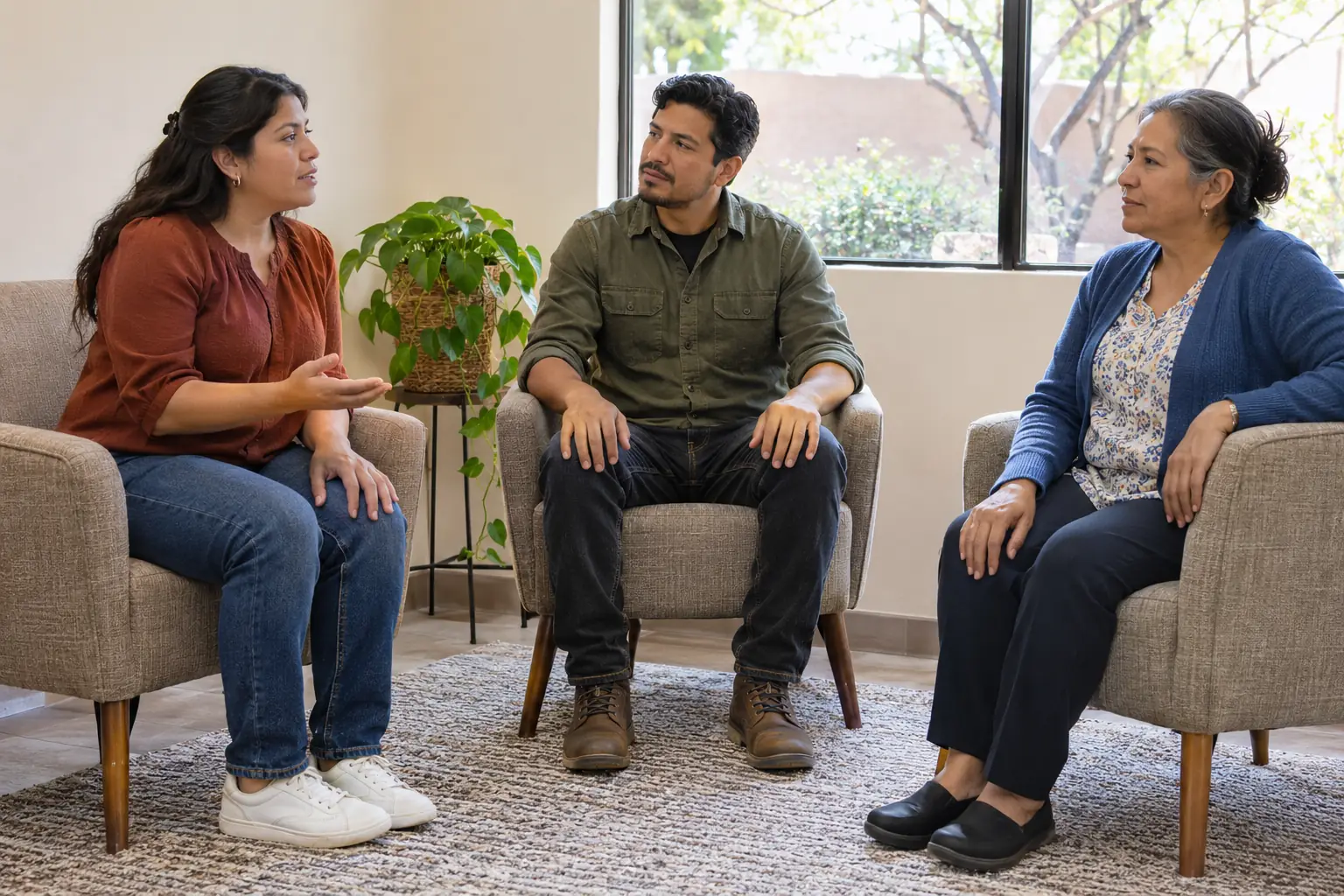
Your interpreter must speak English and a language you speak fluently, and be at least 18 years old. Your attorney or representative, a witness testifying for you and a representative or employee of your country's government cannot interpret for you.
Without a competent interpreter, USCIS cancels and reschedules the interview, and that delay counts as yours for your work permit; if the interpreter is missing without good cause, it may treat it as if you had not appeared.
USCIS also uses contract interpreters who listen by phone to monitor the interpretation and may step in if it is not adequate, so it is worth making sure yours arrives prepared. Translating your documents is a separate matter and does not replace the interpreter.
Your attorney or representative
You have the right to bring an attorney or representative at no cost to the U.S. government, meaning the government does not pay for one. For your attorney to accompany you, you and your attorney must file Form G-28 with USCIS.
Filing it does not stop the process if your attorney cannot attend: if USCIS denies rescheduling, you can sign a waiver and continue without your attorney, or accept referral to immigration court, which would be treated as if you had not appeared for the interview. Making sure your attorney is present is your responsibility, so confirm the date with your attorney as soon as the notice arrives.
If you cannot attend
Faced with a real obstacle to attending, act as soon as possible: USCIS says to call its Contact Center at 1-800-375-5283 before the appointment, on the day or within 10 days after you could not attend, explain the reason and provide evidence. It reviews these requests under an exceptional circumstances standard and notifies you in writing whether it will reschedule, with the new date. You can find the details on the official USCIS page.
With a pending work permit, keep in mind that asking to reschedule can affect your eligibility. Review it with a work permit lawyer before you decide.
Settle what is pending before your appointment
Who will interpret, which documents need translating and whether your evidence will arrive in time are what most deserve settling before the appointment. Contact us with the date on your notice: we help you sort out what to resolve first and what the next step is, without promising how USCIS will decide your case.
Frequently asked questions about the affirmative asylum interview
Can I bring witnesses to the interview?
Yes, the federal rule on the interview allows you to present witnesses and witness statements along with other evidence, and a witness cannot be your interpreter. If you plan to, check with an attorney first and read what your notice says, because new evidence has a deadline.
How long does the interview last?
It usually lasts at least an hour, although it varies by case. It is a conversation with the officer, without a judge, but your answers are given under oath.
Will I get a decision on the day of the interview?
No, USCIS states that a decision is not made during the interview. The federal rule on the interview says you must appear in person to receive the decision, at the time and place the officer designates unless the officer provides otherwise, and failing to appear counts as a delay caused by you for work permit purposes. At the end of the interview, you or your attorney may make a closing statement or add information.

Jessica Anleu (formerly Jessica Lewis) is an experienced immigration lawyer in Phoenix with a decade of immigration experience.
All Posts